
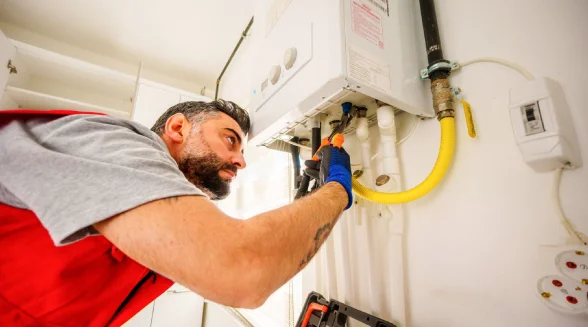

F24 appears on Vaillant boilers when the system detects poor water circulation, and a failing central heating pump is one of the leading causes. Other common triggers include closed isolation valves, trapped air, sludge blocking the heat exchanger, and faulty wiring between the pump and the circuit board, so the fault needs a bit of checking to pin down the actual cause.
A boiler that shuts down and shows a vaillant f24 fault code is usually telling you that water isn’t circulating properly through the heating system, and a failing central heating pump is one of the most frequent reasons behind it. The boiler measures the temperature difference between the water flowing out and the water coming back, and when that gap gets too wide because water has slowed down or stopped moving, it locks out rather than risk overheating the heat exchanger. This guide covers how pump failure ties into this fault, how to tell it apart from the other common causes, and what to check before booking an engineer.
What Does the F24 Fault Mean?
F24 is a temperature fault Vaillant boiler display when the difference between the flow and return water temperature becomes too large, which usually means water has slowed down or stopped moving through the system. Rather than let the heat exchanger keep firing while water sits still around it, the boiler locks out as a safety measure until the circulation issue is resolved.
Why Pump Failure Is Such a Common Cause
Central heating pumps do the actual work of pushing water around the system, so when one starts to fail, circulation drops off and the flow to return the temperature gap widens quickly. A Vaillant F24 error tied to the pump usually comes from one of a handful of underlying problems rather than the pump simply wearing out overnight.
1. Seized or Worn Internal Components
Bearings and seals inside the pump wear down over years of constant running. Once a component seizes or drags, the pump struggles to push water at the rate the boiler expects, and the temperature gap between flow and return widens enough to trip the fault.
2. Debris Trapped Inside the Pump Housing
Sludge and limescale that build up in an older system don’t just sit in radiators. Fine debris can work its way into the pump housing itself, restricting the impeller and slowing circulation even when the pump motor is otherwise fine.
3. Incorrect Pump Speed Settings
Larger properties with more radiators need more flow to keep temperatures even across the system. A pump left on a lower speed setting than the property needs can struggle to circulate enough water, which shows up as the same fault even though nothing is actually broken.
Signs the Pump May Be Causing the Problem
If the circulation pump is faulty or not working efficiently, you may notice one or more of these warning signs:
- The pump housing feels unusually hot and may be too hot to touch comfortably instead of just warm.
- Unusual noises such as humming, grinding, or excessive vibration can be heard from the pump while the heating or hot water is running.
- Uneven radiator heating, where radiators closest to the boiler become hot but those further away remain cold, indicating that water is not circulating properly through the system.
Ruling Out the Other Common Causes First
Before assuming the pump itself is at fault, it’s worth ruling out the simpler explanations, since they’re behind a good share of F24 faults too.
1. Closed Isolation Valves
Isolation valves under or near the boiler are sometimes left closed after a service or repair. Check that the handles sit in line with the pipework, which usually means open, rather than at right angles to it.
2. Trapped Air in the System
Air pockets in radiators or the pump itself can slow circulation in a way that looks identical to a pump fault from the outside. Bleeding radiators with a key, and checking the boiler’s own air vent, clears this in many cases.
3. Sludge in the Wider System
Even with a healthy pump, years of internal corrosion can leave enough sludge in the pipework and heat exchanger to restrict flow. This usually needs a proper flush rather than a simple bleed.
F24 Causes at a Glance
This table gives a quick side by side view of where pump failure sits among the other usual suspects.
| Cause | How It Shows Up | Fix Type |
| Faulty or seized pump | Pump hot to touch, humming or grinding noise | Engineer repair or replacement |
| Closed isolation valves | No flow at all, valves in off position | DIY, open the valves |
| Airlock in system | Gurgling, some radiators stay cold | DIY, bleed radiators and pump |
| Sludge or debris blockage | Uneven heating, cold spots on radiators | Power flush by an engineer |
| Faulty PCB or wiring | F24 with no obvious mechanical cause | Engineer diagnostic and repair |
What to Check Before Calling an Engineer
1. Check the pressure gauge reads between 1.0 and 1.5 bar, and top up if it’s low.
2. Confirm isolation valves under the boiler are open, with handles running parallel to the pipe.
3. Bleed all radiators, including ones in less used rooms, and re-check pressure afterward.
4. Listen and feel for the pump running when the heating calls for hot water, noting any heat or noise.
5. Reset the boiler once. If F24 returns quickly, stop resetting and book a Vaillant boiler repair instead of repeating the process.
When It Needs a Professional
A seized pump, a suspected wiring or PCB fault, or a system that needs a proper power flush all fall outside safe DIY territory. Vaillant boiler repair for these issues involves opening the casing and working around live electrical and gas components, which is exactly the kind of job a Gas Safe registered engineer is trained and legally required to handle.
Frequently Asked Questions
1. What does the F24 fault code mean on a Vaillant boiler?
It means the boiler has detected a water circulation problem, based on too large a gap between the flow and return temperatures. The boiler locks out to prevent the heat exchanger from overheating while water isn’t moving properly.
2. Can a faulty pump really cause the F24 code?
Yes, a failing or seized central heating pump is one of the most common causes of F24, since it directly affects how well water circulates through the system.
3. How can I tell if my pump has failed?
A pump that feels excessively hot, makes grinding or humming noises, or produces no vibration at all when the heating is on are all signs worth having checked by an engineer.
4. Can I fix an F24 fault myself?
Simple causes like closed isolation valves or trapped air can often be sorted at home. A faulty pump, wiring fault, or blocked heat exchanger needs a Gas Safe registered engineer.
5. Does low boiler pressure cause the F24 fault?
Low pressure can contribute to poor circulation and trigger F24, so checking and topping up the pressure gauge is one of the first things to try before assuming the pump has failed.
6. Why does F24 keep coming back after resetting the boiler?
A fault that clears briefly after a reset but returns quickly usually means the underlying cause, whether that’s the pump, an airlock, or sludge, hasn’t actually been fixed yet.
7. Can sludge in the system cause the same fault as a broken pump?
Yes. Sludge and debris restricting flow through the heat exchanger or pipework can produce the same temperature gap that a failing pump does, which is why a flush is sometimes needed alongside a pump check.
8. Is it safe to keep running a boiler with an F24 fault?
No. The boiler locks out on purpose to prevent damage from overheating, so it shouldn’t be forced to run and instead needs the circulation issue diagnosed and resolved.
9. How often should a Vaillant pump be checked or serviced?
An annual boiler service usually includes a check of the pump’s condition and performance, which is the easiest way to catch early wear before it causes a full fault.
10. Can incorrect pump speed settings trigger F24 in a larger house?
Yes. A pump set too low for a larger property with more radiators may not circulate enough water, producing the same fault as an actual mechanical failure.
Final Word
F24 is one of those fault codes that can mean several different things, but a struggling pump is behind a large share of the cases engineers see. Working through pressure, valves, and airlocks first rules out the easy fixes, and if the fault keeps coming back after that, the pump itself is usually the next place to look.
If your Vaillant keeps locking out with this code and the simple checks haven’t cleared it, the heating engineers at 0800 Homefix can test the pump properly, rule out wiring or PCB issues, and get your circulation sorted rather than leaving you resetting the same fault over and over.