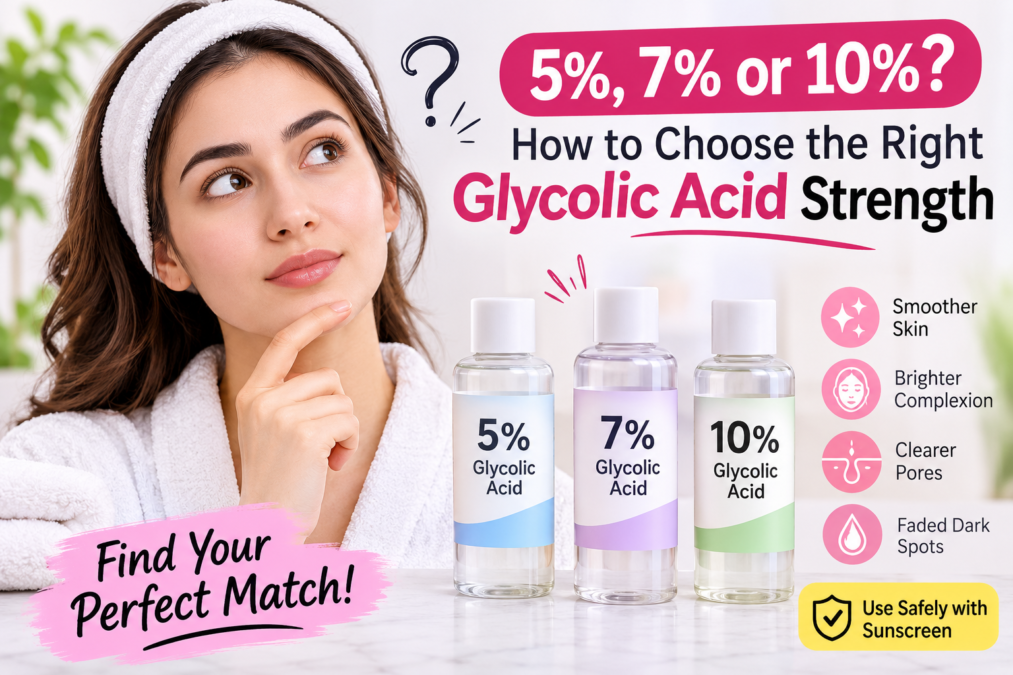

You’ve decided to try glycolic acid, but now you’re stuck on the label. One toner says 5%, another says 10%, and some go even higher. Is stronger better? Will a low percentage do anything at all? For most people starting a home routine, a 7% glycolic acid toner hits the sweet spot, but the right choice depends on your skin.
This guide explains what those numbers really mean, so you can pick the strength that gives you results without irritation.
Why the Percentage Matters
Glycolic acid is an AHA, or alpha hydroxy acid. It loosens the dead skin cells on the surface of your skin so they shed, revealing smoother, brighter skin underneath.
The percentage tells you how much glycolic acid is in the product. In general:
- Too low, and you may see very little change
- Too high, and you risk redness, stinging and peeling
- The right amount gives steady, visible results your skin can handle
Glycolic Acid Strengths Explained
| Strength | What it does | Best for |
| Below 5% | Very mild exfoliation, slow results | Very sensitive skin, complete beginners |
| 5–7% | Gentle but visible exfoliation | Regular home use, most skin types |
| 8–10% | Stronger exfoliation, more risk of irritation | Experienced users, oily or thicker skin |
| 10–15% | Strong; not for frequent use | Experienced users only, occasional use |
| 20% and above | Peel strength | In-clinic use by professionals |
Why 7% Works for So Many People
A 7% strength sits in the middle: strong enough to make a real difference, gentle enough to use a few nights a week at home.
With regular use, it can help:
- Brighten dull, tired-looking skin
- Smooth rough, bumpy texture
- Fade dark spots and post-acne marks
- Keep pores looking clearer
- Help your other products absorb better
It’s also a good level to stay at long term. Many people never need to go higher.
Is Stronger Always Better?
No. This is one of the most common skincare myths.
A higher percentage can work faster, but it also raises the risk of irritation. And irritated skin doesn’t heal or glow. It turns red, flaky and sensitive, and it can even make dark spots worse.
In most cases, a moderate strength used consistently gives better results than a strong one used occasionally.
How to Choose Your Strength
| Your skin | Good starting point |
| Very sensitive or reactive | Below 5%, once a week |
| Dry skin | 5–7%, once or twice a week |
| Normal or combination | 7%, 2–3 evenings a week |
| Oily or thicker skin | 7%, then 8–10% only if needed |
| First time using acids | 5–7%, starting slowly |
How to Use It Safely
- Use it in the evening, after cleansing.
- Pat your skin completely dry.
- Apply with a cotton pad over your face and neck, avoiding eyes and lips.
- Leave it on. Don’t rinse.
- Wait 3–5 minutes, then moisturize.
- Wear SPF 50 the next morning.
How often
| Time | How often |
| Weeks 1–2 | 2 evenings a week |
| Weeks 3–4 | 3 evenings a week |
| After that | Up to 3–4 evenings a week |
Other Things to Check on the Label
The percentage isn’t the only thing that matters. Also look for:
- A leave-on formula, so the acid has time to work
- Fragrance-free, if your skin is sensitive
- Soothing ingredients like aloe or rose water
- A generous size, since you’ll use it for months
- Clear directions and realistic promises
Some brands make this simple. Dermasation, a skincare brand in Pakistan, formulates its glycolic acid toner at 7%, fragrance-free, in a 250ml bottle designed for regular home use.
Signs Your Strength Is Too High
- Burning that lasts more than a minute
- Redness that doesn’t fade
- Peeling or raw patches
- Products that suddenly sting
If you notice these, use it less often, focus on moisturizer, or switch to a lower strength.
Signs It’s Working
- Skin feels softer within the first week
- A brighter look by week two
- Smoother texture by week three or four
- Dark marks fading over six to eight weeks
Don’t Forget Sunscreen
Whatever strength you choose, glycolic acid makes fresh skin more sensitive to the sun. Wear a broad-spectrum SPF 50 every morning, or your dark spots can get darker instead of lighter.
The Bottom Line
The best glycolic acid strength isn’t the highest one. It’s the one your skin can use consistently without irritation. For most people, that’s around 7%.
Start slowly, moisturize every time and wear sunscreen daily. Your skin will reward you with steady, lasting results.