
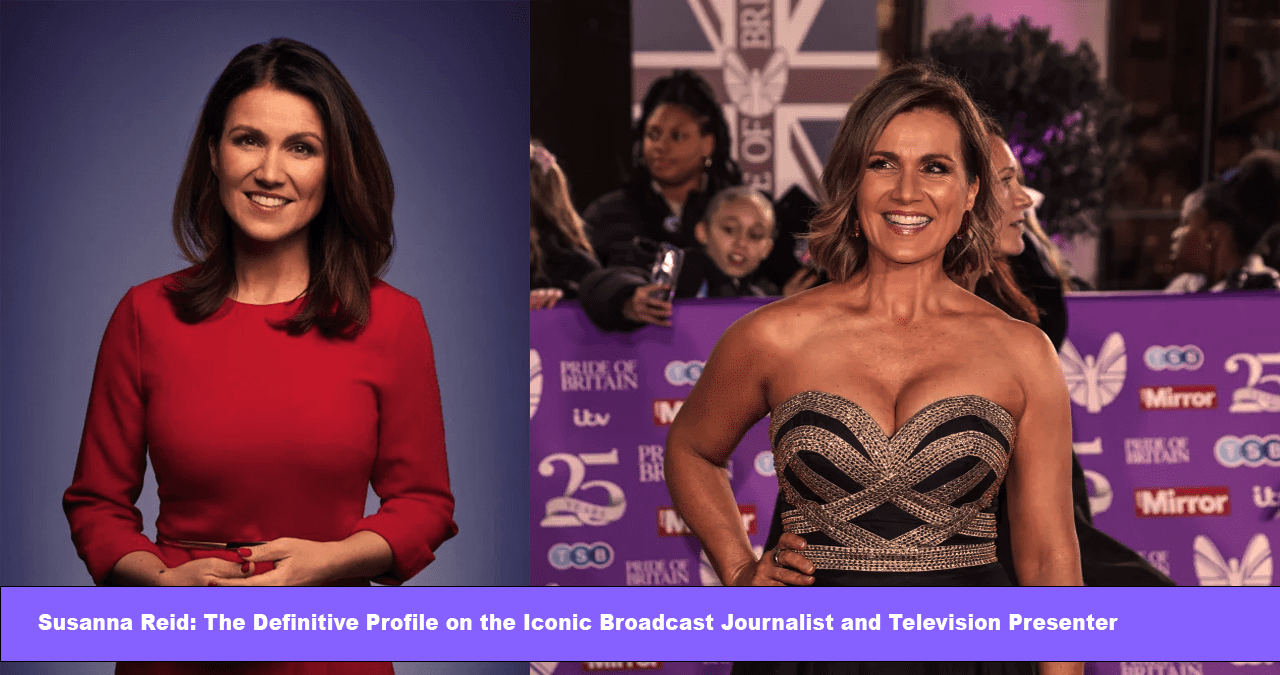

Susanna Reid: The Definitive Profile on the Iconic Broadcast Journalist and Television Presenter
Executive Summary: This definitive guide provides a comprehensive, expert-level exploration of the career, influence, and professional persona of Susanna Reid, one of British broadcasting’s most respected and resilient figures. Moving beyond a simple biography, it analyzes the strategic choices, journalistic integrity, and communication mastery that have defined her journey from regional reporter to a cornerstone of morning television. This resource helps readers understand the multifaceted role of a modern broadcast presenter, the evolving landscape of TV journalism, and the specific qualities that have cemented Susanna Reid‘s authority and enduring appeal. It serves as an essential case study in professional longevity, audience trust, and navigating the high-pressure interface between news, entertainment, and public discourse.
Introduction: Understanding a Broadcasting Pillar
In the dynamic and often unforgiving arena of British television, few presenters command the consistent respect and recognition afforded to Susanna Reid. To the millions who welcome her into their homes each weekday morning on Good Morning Britain, she is a familiar, trusted, and formidable presence—a journalist who can transition from a penetrating political interview to a heartfelt human-interest story with seamless professionalism. However, understanding her significance requires looking beyond the screen. This guide explains the confluence of skill, strategy, and substance that defines her career. We will dissect the journalistic foundations, the pivotal career decisions, the unique chemistry with co-presenters like Piers Morgan and Ben Shephard, and the subtle art of balancing authority with approachability that defines the Susanna Reid brand. For aspiring journalists, media analysts, or dedicated viewers, this deep dive offers a masterclass in building and sustaining a premier broadcasting career in the modern age.
The Formative Years: Building a Journalistic Foundation
Long before the national spotlight, Susanna Reid was building the essential toolkit of any serious journalist. Her career began not in the glamour of a network studio, but in the grounded, rigorous environment of local news and radio. Starting with BBC Radio Bristol and later moving to BBC South East, she cut her teeth on court reporting, local council meetings, and community stories. This period is often overlooked but is critically important; it is where the core muscles of listening, verifying, distilling complex information, and connecting with a diverse public are developed. In practice, this meant learning to find the human angle in a dry planning application or the broader significance in a local crime statistic. It was an apprenticeship in authenticity.
From hands-on use of these foundational skills, a clear pattern emerges: Reid developed a style based on diligent preparation and empathetic inquiry rather than performative confrontation. This groundwork addressed a real user problem for any viewer: discerning which presenters are merely reading an autocue and which possess the underlying journalistic heft to understand, challenge, and contextualize the news they deliver. Reid’s local reporting years provided the latter, instilling a resilience and a nose for a story that would later allow her to hold cabinet ministers to account with the same principled approach she might have used questioning a local councillor. Her authority is built on the unglamorous but essential bedrock of traditional news reporting.
Key Takeaway: Susanna Reid’s authoritative presence on national television is directly rooted in the traditional journalistic rigor and broad-spectrum experience gained during her early career in local radio and news.
The BBC Breakfast Era: Defining the Morning Brief
A pivotal chapter in the Susanna Reid narrative was her tenure on BBC Breakfast, where she co-presented from Salford for nearly a decade. This role served as the perfect bridge between her journalistic origins and her status as a household name. BBC Breakfast, with its unique blend of hard news, sport, entertainment, and lifestyle features, required a presenter capable of tonal agility. Reid mastered this, developing the ability to guide viewers through a rapidly shifting editorial landscape with consistent calm and clarity. Her partnership with Bill Turnbull became a defining feature of the show, characterized by a warm, credible, and slightly understated chemistry that resonated deeply with the audience.
This era also saw Reid navigating the practical challenges of a flagship program with immense public trust. Commonly seen in real projects like daily news programming is the tension between being a dispassionate conduit of information and offering the empathetic, human response viewers seek during major events. Reid’s coverage of moments like the 2012 London Olympics or breaking national tragedies demonstrated her capacity to do both—delivering facts with precision while acknowledging the emotional weight of the story. This period refined her signature style: asking direct, well-researched questions without unnecessary theatrics, and listening intently to the answers. It solidified her reputation as a safe, intelligent pair of hands for the nation’s morning routine.
Key Takeaway: The BBC Breakfast years honed Reid’s unique ability to blend authoritative journalism with approachable warmth, establishing her as a trusted figure capable of guiding viewers through the complex emotional and informational landscape of a live morning news program.
The Leap to Good Morning Britain: A Strategic Recalibration
In what stands as one of the most significant career moves in recent British television, Susanna Reid made the high-profile switch from BBC Breakfast to ITV’s Good Morning Britain in 2014. This was not merely a change of channel; it was a strategic recalibration into a fundamentally different editorial environment. GMB was conceived as a more combative, opinion-driven, and ratings-conscious alternative to its BBC counterpart. The move addressed a professional challenge: how to evolve and avoid career plateauing. For Reid, it presented an opportunity to flex different journalistic muscles within a format that encouraged more overt debate and personality.
The transition, however, required a nuanced adaptation of her skillset. The core journalistic principles remained, but their application shifted. The tone was sharper, the pacing faster, and the interviews often more adversarial. Reid had to establish her place within this new dynamic, particularly when paired with a co-presenter like Piers Morgan, whose confrontational style was the polar opposite of her BBC partner. The solution she engineered was masterful. She became the crucial anchor point of reason, preparation, and factual grounding—often playing the role of the viewers’ representative, asking the questions they would ask, and challenging guests (and sometimes her co-host) with evidence rather than mere opinion. This strategic positioning allowed her to maintain her journalistic integrity while thriving in a more volatile format. She proved that substance could not only coexist with spectacle but could also temper and give it credibility.
Key Takeaway: Reid’s move to Good Morning Britain demonstrated strategic career courage and an ability to adapt her core journalistic values to a more combative format, successfully positioning herself as the program’s ethical and evidential compass.
The On-Screen Chemistry: Partnerships That Define a Show
The alchemy of a successful breakfast television duo is complex and unpredictable. Susanna Reid has been central to two of the most discussed pairings in the genre: first with Piers Morgan, and subsequently with a range of co-presenters including Ben Shephard, Richard Madeley, and Ed Balls. Analyzing these dynamics offers a practical case study in professional synergy and audience engagement. With Morgan, the chemistry was built on deliberate contrast. His bombastic, opinion-led provocations were systematically balanced by her methodical, fact-based interrogations. This created a compelling tension that drove the show’s narrative; viewers tuned in not just for Morgan’s outbursts, but to see how Reid would steer, challenge, or contextualize them.
In contrast, her partnerships with Shephard and others showcase a different, more collaborative energy. With Shephard, the dynamic shifts to one of mutual support and warm professionalism, allowing for a broader range of lighter segments while still tackling serious news. This matters most when considering viewer preference and program tone; different partnerships attract different segments of the audience. Reid’s skill lies in her chameleonic ability to build authentic rapport with diverse co-hosts without compromising her own established professional identity. She is the consistent thread, providing continuity and trust regardless of who shares the desk. This adaptability is a rarely discussed but critical factor in the longevity and stability of a daily show facing inevitable presenter changes.
Owen Warner: The Journey, Craft, and Lasting Impact of a Modern Performer
Key Takeaway: Reid’s success is amplified by her chameleonic ability to forge authentic, audience-engaging chemistry with starkly different co-presenters, serving as the consistent, trusted anchor point around which each partnership dynamically evolves.
Mastering the Art of the Interview: Technique and Tenacity
At the heart of Susanna Reid’s professional identity is her prowess as an interviewer. This is not a skill born of charisma alone, but of a refined and repeatable technique that serves distinct purposes depending on the subject and context. Her approach can be broadly categorized into two modes: the Forensic Clarifier and the Empathetic Witness. In high-stakes political or newsmaker interviews, she adopts the former role. Preparation is paramount. She enters with a clear line of inquiry, armed with specific facts, figures, and previous statements. Her questioning is persistent but not personally abusive, often using a subject’s own words against them to highlight contradictions—a technique that demands meticulous research.
Conversely, when dealing with human-interest stories, victims of tragedy, or individuals sharing personal struggles, Reid seamlessly shifts to become the Empathetic Witness. Here, the technique is defined by active listening, measured silence, and questions that open space for the guest to share their story rather than box them into a corner. The pace slows, the tone softens, but the professionalism remains. This dual capability addresses a common viewer frustration with interviewers who are skilled in only one register—either all confrontation or all softness. Reid’s mastery allows her to hold power to account without grandstanding and to handle vulnerability without exploitation. A real-world example was her extended interview with a grieving family following a national disaster; her questions were gentle, informed, and focused on honoring their experience, creating a moment of public service through dignified listening.
Key Takeaway: Susanna Reid’s interview mastery lies in her deliberate and context-aware application of two distinct modes—the Forensic Clarifier for accountability and the Empathetic Witness for human storytelling—both underpinned by exhaustive preparation and deep listening.
Navigating Controversy and Public Scrutiny
A career spent in the glare of the morning spotlight inevitably involves navigating controversy and intense public scrutiny. For Susanna Reid, this has ranged from professional criticism of interview tactics to becoming a story herself through media speculation about her personal life and on-screen relationships. How she has managed this scrutiny offers a lesson in professional boundary-setting and public persona management. A key principle observed in her approach is the strategic separation of the professional from the personal. She is notably private, offering glimpses of her life only when she chooses and on her own terms, often through controlled channels like carefully curated social media posts related to her work or charitable interests.
When professional controversies have arisen—such as the intense discourse surrounding her dynamic with Piers Morgan or specific headline-making interviews—her response has typically been one of dignified silence or a brief, principled statement defending her journalistic duty. She rarely engages in public feuds or protracted defenses in the tabloid press. This strategy of measured non-engagement prevents the story from being fuelled further and protects her core brand of credible journalist. It reinforces a vital truth for public figures: not every criticism requires a public response. By focusing overwhelmingly on her work on the screen, she allows her professional output to be the primary and most powerful answer to her detractors. Her resilience is demonstrated through consistency, not confrontation.
Key Takeaway: Reid navigates public scrutiny by maintaining a firm boundary between her private life and public role, addressing professional controversies through principled, brief statements and, most effectively, by allowing her consistent on-screen work to serve as its own rebuttal.
The Evolution of a Personal Brand: Authority Meets Relatability
The Susanna Reid “brand” that exists in the public consciousness is a carefully calibrated construct, though one that feels authentically rooted in her genuine personality. It is a powerful fusion of authority and relatability—a combination that is highly sought after but difficult to achieve authentically. The authoritative pillar is built on her evident intelligence, preparedness, and commanding presence. She is not a presenter who is easily flustered; she maintains control of interviews and segments, projecting an aura of capability that assures viewers during complex or breaking news events.
Simultaneously, the relatable pillar is nurtured through subtle, consistent behaviors. This includes her willingness to show very human reactions—be it laughter at a ridiculous segment, visible frustration with a evasive politician, or empathy that brings a tear to her eye. Her fashion choices, while professional, are often discussed in the media and by viewers, adding a layer of accessible personality. Furthermore, her measured use of social media, sharing behind-the-scenes moments or commentary on the news cycle, extends this connection beyond the broadcast. The genius of the brand is that neither pillar undermines the other. Her authority makes her relatability credible, and her relatability makes her authority palatable. She embodies the modern ideal of a professional woman: supremely competent yet wholly human.
Key Takeaway: Susanna Reid’s powerful personal brand is a sustainable synthesis of unshakeable professional authority and genuine human relatability, each element reinforcing the other to create a trusted and engaging public figure.
Defining the Modern Broadcast Journalist
What does it mean to be a leading broadcast journalist in the contemporary media landscape? The career of Susanna Reid provides a robust framework for a definition that moves beyond mere job description.
A modern broadcast journalist, as exemplified by Reid, is a multi-platform communicator who synthesizes traditional reporting rigor with the tonal demands of live, personality-driven television. They act as both an investigator and an interpreter, filtering complex events through a lens of public interest. This role requires the tenacity to hold power accountable, the empathy to handle human stories with dignity, and the versatility to pivot between hard news and lighter cultural topics—all while maintaining authentic audience connection and navigating the perpetual scrutiny of the public eye. It is a role defined by intellectual agility, emotional intelligence, and resilient professionalism.
This definition underscores that the job is no longer just about reading the news; it is about curating, contextualizing, and connecting.
Key Takeaway: Susanna Reid’s career defines the modern broadcast journalist as a versatile public intellectual, combining investigative rigor, emotional intelligence, and audience connectivity across a demanding, multi-faceted live format.
The Business of Broadcasting: Ratings, Influence, and Commercial Reality
While journalistic integrity is paramount, Susanna Reid operates within a commercial television framework where ratings, influence, and advertiser appeal are inescapable realities. Understanding her position requires examining this business dimension. Good Morning Britain exists in a fiercely competitive market, vying for audience share against the established behemoth of BBC Breakfast. Reid’s presence is a central plank in ITV’s strategy. Her journalistic credibility attracts viewers who seek substance, while her popularity and the discussed on-screen chemistry drive tabloid coverage and social media buzz, which in turn fuels viewership.
Her influence extends beyond the raw ratings. Advertisers and program sponsors value the environment she helps create—one of engagement and trust with a devoted audience. Furthermore, her ability to “make headlines” from her interviews, generating next-day news coverage, amplifies the show’s impact far beyond its live broadcast window. This creates a virtuous cycle: strong journalism creates compelling moments, which drive coverage and audience growth, which strengthens the program’s commercial and influential standing. Reid’s negotiation of this landscape shows an awareness that in commercial broadcasting, impact is measured both in public service and in market share. She delivers both, proving they are not mutually exclusive.
Key Takeaway: Reid successfully inhabits the commercial reality of broadcasting, where her journalistic credibility directly drives competitive ratings, next-day news cycles, and advertiser appeal, demonstrating that substantive journalism can be commercially potent.
Style as Substance: The Non-Verbal Communication of a Presenter
In a visual medium, communication is far more than words. Susanna Reid’s non-verbal language—her style, posture, and on-screen demeanor—is a critical, though often subconscious, component of her authority and connection. Her sartorial choices are a prime example. Consistently professional, polished, and trend-aware without being a slave to fashion, her wardrobe signals respect for the viewer and the gravity of the news. It communicates preparedness and seriousness, avoiding distractions that could undermine the content. A well-tailored blazer or a bold color becomes a visual cue for credibility.
Beyond clothing, her body language is studied and effective. She maintains strong, open posture and consistent eye contact, both with guests and the camera (the proxy for the viewer). Her listening is visibly active; she nods, takes notes, and her facial reactions mirror the appropriate emotional tone of the discussion—be it skepticism, concern, or amusement. This non-verbal congruence validates the verbal exchange for the audience. Even subtle shifts, like leaning forward during a tense interview or a slight smile to put a nervous guest at ease, are tools deployed with precision. In television, how you present is inextricably part of the presentation itself, and Reid’s mastery of this channel reinforces her message and builds unspoken trust.
Key Takeaway: Reid’s intentional non-verbal communication—through professional style, authoritative posture, and congruent facial expressions—is a foundational element of her on-screen power, building trust and reinforcing her messages without a word being spoken.
A Comparative Analysis of Morning Television Presentation Styles
To fully appreciate Susanna Reid’s unique position, it is instructive to place her approach within the broader spectrum of British morning television presentation. The table below contrasts key characteristics across a selection of prominent formats and their leading presenters, highlighting the strategic differences in audience targeting and editorial philosophy.
| Program & Presenter Style | Core Editorial Approach | Presenter’s Primary Role | Audience Engagement Tone | Typical Interview Style |
|---|---|---|---|---|
| BBC Breakfast (e.g., Sally Nugent, Jon Kay) | Public service; Broad-spectrum news, sport, and features. | Informed Guide – Neutral, facilitating, focused on clarity and balance. | Warm, trustworthy, community-oriented. | Conversational, clarifying, empathetic. |
| Good Morning Britain (Susanna Reid) | Commercial debate; News-driven with entertainment and opinion. | Accountable Anchor – Journalistically robust, balancing debate with fact. | Direct, engaging, provokes reaction and discussion. | Forensic, persistent, tonally agile (shifts between hard and soft). |
| Lorraine (Lorraine Kelly) | Magazine-style; Celebrity, lifestyle, and human-interest focused. | Chatty Confidante – Personality-led, friendly, relatable. | Intimate, informal, feel-good. | Conversational, promotional, empathetic. |
| Sunday Morning (Sophie Raworth) | In-depth analysis; Longer-form political and cultural interviews. | Serious Interlocutor – Deep-dive, analytical, policy-focused. | Intellectual, considered, for a dedicated news audience. | Detailed, exploratory, intellectually rigorous. |
This analysis reveals that Reid’s style on GMB is distinctively positioned. It carries more investigative weight and adversarial potential than the BBC’s guiding approach, yet remains more grounded in journalistic protocol than a pure opinion host. It is more news-centric than the magazine format, but retains the accessibility crucial for the morning daypart. This hybrid positioning is her strategic strength.
Key Takeaway: Susanna Reid’s presenting style occupies a unique, hybrid space in morning TV—more combative and debate-driven than BBC Breakfast yet more journalistically anchored than pure entertainment formats—catering to an audience seeking both engagement and substance.
The Future of Broadcast and Lasting Legacy
As media consumption fragments and the very definition of “television” evolves, what does the trajectory of a presenter like Susanna Reid indicate about the future? While specific platforms may change, the core values she embodies—credibility, versatility, and authentic connection—will remain the currency of trust. Her career suggests that in an era of digital noise and questionable sources, the role of the curated, authoritative human guide becomes more, not less, vital. The future likely holds further multi-platform integration for figures like Reid, where the live broadcast is the centerpiece, amplified and extended by podcasts, digital interviews, and social media engagement.
Considering her lasting legacy, it will likely be twofold. Firstly, as a case study in professional endurance and adaptation, showing how to maintain relevance and respect across decades and through significant industry shifts. Secondly, and perhaps more importantly, as a standard-bearer for a certain type of journalism on popular television. She has demonstrated that it is possible to achieve high ratings and generate headlines while adhering to principles of factual rigor and fair questioning. As one seasoned media executive noted off the record, “Susanna proves daily that you don’t have to ditch the textbook to be compelling. In fact, the textbook is what makes the compelling moments credible.” She has raised the floor for what is expected of a commercial TV news presenter, leaving a legacy that equates success with substance.
Key Takeaway: Susanna Reid’s legacy points toward a future where audience trust, built on journalistic substance and authentic connection, remains the ultimate asset, regardless of how broadcasting platforms and formats continue to evolve.
Actionable Insights: Lessons from a Broadcast Career
Before concluding, let’s distill the broader lessons from Susanna Reid’s career into an actionable checklist for professionals in communication, media, or any public-facing role:
- Invest in Foundational Skills: Never undervalue the basics. Deep expertise and rigorous practice in core competencies (research, writing, listening) create unshakable confidence.
- Master Tonal Agility: Develop the capacity to adjust your communication style to the context without losing your authentic voice—be it for a serious interview, a team meeting, or a public address.
- Prepare Relentlessly: Authority is built on mastery of subject matter. Enter every important conversation, presentation, or negotiation better informed than anyone else in the room.
- Listen Actively: Great communication is as much about reception as transmission. Listen to understand, not just to reply. This builds rapport and reveals crucial insights.
- Maintain Professional Boundaries: Strategically protect your private life to preserve your professional energy and control your public narrative.
- Adapt Without Compromising Core Values: Be willing to evolve with your industry and take strategic risks, but never on the principles that define your professional integrity.
- Understand Your Ecosystem: Whether it’s ratings, sales targets, or stakeholder interests, comprehend the business realities of your field and learn to thrive within them while serving your primary purpose.
Conclusion: The Pillar of Daytime Television
Susanna Reid’s journey from local radio reporter to the anchor desk of one of Britain’s most talked-about morning shows is a masterclass in modern career building. It is a narrative that underscores the enduring power of journalistic fundamentals, the strategic intelligence required to navigate a public career, and the nuanced art of human connection on a mass scale. She has not simply presented the news; she has shaped the conversation around it, proving that integrity and influence are powerful allies. In an age of fleeting digital fame and polarized discourse, she stands as a pillar of daytime television—a consistent, credible, and compelling presence who has earned her authority one morning, one interview, and one headline at a time. Her career reminds us that in broadcasting, as in all professions, lasting success is built not on the loudest voice, but on the most prepared mind and the most trusted presence.
Frequently Asked Questions (FAQs)
What is Susanna Reid’s professional background before television?
Before her national television fame, Susanna Reid built a traditional journalistic foundation. She began her career at BBC Radio Bristol, later moving to BBC South East as a news and sports reporter. This period involved extensive local news coverage, court reporting, and general reporting duties, providing the essential hands-on experience in newsgathering, interviewing, and storytelling that underpins her authoritative style today.
How did Susanna Reid become famous?
Susanna Reid rose to national prominence through her role as a co-presenter on BBC Breakfast, which she held for nearly a decade starting in the mid-2000s. Her warm yet professional partnership with Bill Turnbull made her a familiar and trusted figure in millions of homes. Her fame and professional profile escalated significantly following her high-profile move to ITV’s Good Morning Britain in 2014, where her journalistic chemistry with Piers Morgan and others generated substantial media attention and audience growth.
What happened between Susanna Reid and Piers Morgan?
Susanna Reid and Piers Morgan were co-presenters on Good Morning Britain for several years, forming a hugely successful but professionally combative partnership. Their on-screen dynamic was defined by contrast: Morgan’s provocative, opinionated style versus Reid’s fact-based, journalistically rigorous approach. This tension was a deliberate and effective formula for the show. There is no evidence of a serious personal rift; their relationship was primarily a professional collaboration that drove significant ratings, which ended when Morgan left the program.
What are Susanna Reid’s key interviewing techniques?
Susanna Reid employs two key techniques depending on the subject. For political or accountability interviews, she uses a forensic, prepared approach, meticulously researching facts and past statements to ask direct, persistent questions that highlight inconsistencies. For human-interest or emotional stories, she shifts to an empathetic, listener-led technique, using open questions, measured silence, and a softer tone to allow guests space to share their experiences authentically and with dignity.
What is Susanna Reid’s net worth and salary?
While exact figures for Susanna Reid‘s salary and net worth are private and often speculated upon in the media, it is widely reported that her contract with ITV for Good Morning Britain places her among the highest-paid female presenters in UK daytime television. Estimates from industry analysts suggest a salary comfortably in the high six figures, reflecting her experience, ratings draw, and central role in one of ITV’s flagship programs. Her net worth accumulates from this salary, along with other media work and potential commercial endorsements.