
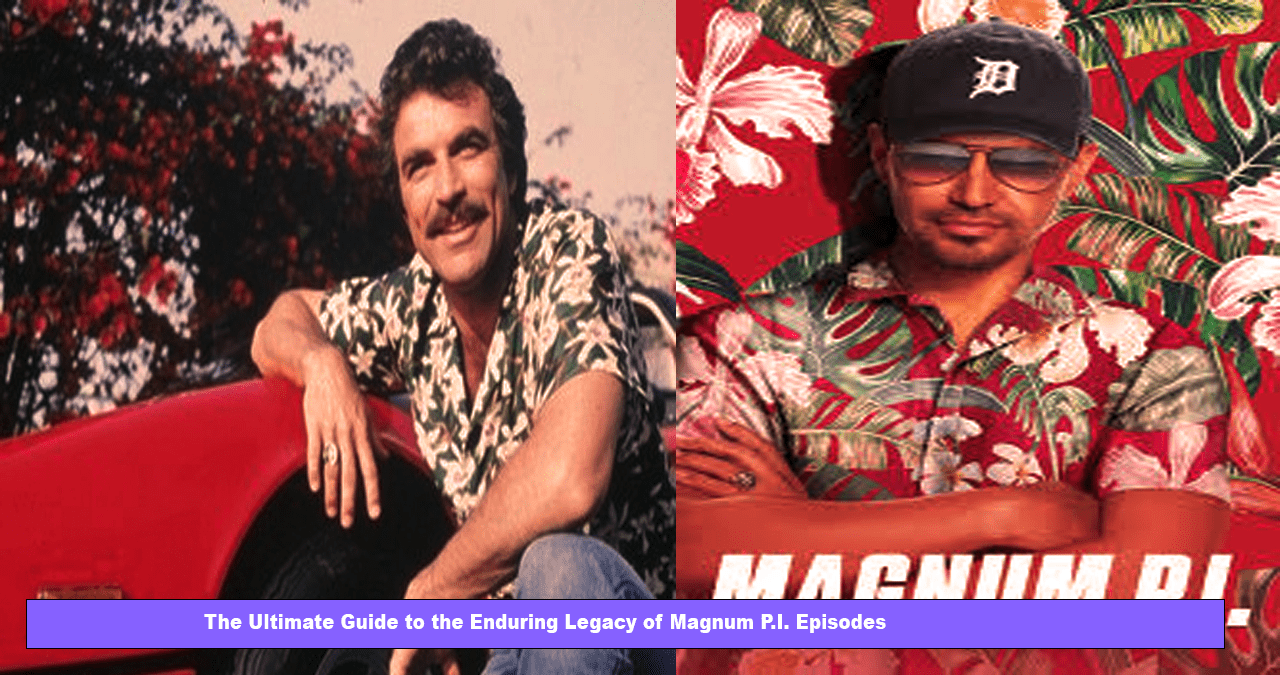

The world of television has rarely produced a character as effortlessly cool, charming, and surprisingly complex as Thomas Magnum. For millions of viewers across eight seasons, the sun-drenched shores of Oahu became a weekly escape, a backdrop for adventure, humor, and genuine human drama. At the heart of this escape were the Magnum P.I. episodes, a collection of stories that deftly blended the lighthearted with the profound. Premiering in 1980, the series starred Tom Selleck in a role that would define his career and capture the zeitgeist of a generation. The show wasn’t just a detective procedural; it was a character study, a post-Vietnam narrative, and a love letter to a lifestyle that seemed both aspirational and accessible.
What set the Magnum P.I. episodes apart from other crime dramas of the era was their unique tonal balance. One week, Magnum could be embroiled in a deadly serious case involving stolen military hardware or a haunted past from his Naval Intelligence days. The next, he might be chasing a stolen pet iguana or bickering with Jonathan Quayle Higgins III over the use of the Robin Masters’ estate’s guest cottages and the prized Ferrari 308 GTS. This versatility became the show’s signature. The episodes served as windows into the soul of a man trying to reconcile his disciplined, traumatic past with a present-day life of seemingly carefree independence. The Ferrari, the board shorts, and the Detroit Tigers cap were icons, but they were merely the wrapping for stories that often explored themes of loyalty, friendship, and the search for identity.
The Iconic Foundations and Unforgettable Characters
A television series lives or dies by the strength of its characters, and Magnum P.I. was blessed with one of the most dynamic and beloved ensembles in TV history. Thomas Magnum, as portrayed by Tom Selleck, was the perfect everyman hero. He was highly capable, a master of surveillance and deduction honed by his time as a SEAL, but he was also flawed, impulsive, and often found himself in over his head. His charm was never sleazy; it was rooted in a fundamental decency and a wry, self-deprecating sense of humor. Selleck’s physicality and expressiveness sold both the action sequences and the quieter, more introspective moments. The character’s background as a Vietnam veteran was not a mere footnote; it was a crucial part of his psychology, lending weight and authenticity to his worldview and his deep bond with his fellow veterans.
This bond was embodied by his two closest friends: Orville “Rick” Wright and Theodore “T.C.” Calvin. Rick, the smooth-talking owner of the King Kamehameha Club, and T.C., the pilot of Island Hoppers Helicopter Service, were more than just sidekicks; they were Magnum’s brothers-in-arms and moral compass. Their shared history in Vietnam provided an unshakeable foundation of trust. The chemistry between Selleck, Larry Manetti (Rick), and Roger E. Mosley (T.C.) was palpably genuine, making their camaraderie the emotional core of the series. Their constant banter, unwavering loyalty, and willingness to drop everything to help each other made their friendship aspirational. Opposing this trio, yet somehow inextricably linked to them, was Jonathan Quayle Higgins, played with Shakespearean gravitas by John Hillerman. Higgins was the orderly, militaristic counterpoint to Magnum’s chaotic freedom. Their legendary clashes over property, protocol, and philosophy were the comedic engine of the show, yet the episodes gradually revealed a profound, unspoken respect and even paternal affection between them. Hillerman’s brilliant performance ensured Higgins was never a mere foil; he was a co-protagonist with his own rich history and unshakeable code.
A Deep Dive into the Signature Story Arcs and Themes
While many Magnum P.I. episodes functioned as satisfying stand-alone mysteries, the series was a pioneer in weaving serialized elements into a primarily episodic format. Long before “binge-watching” was a concept, viewers tuned in weekly to follow lingering questions and evolving character relationships. The most famous of these was the overarching mystery of Robin Masters, the never-seen, best-selling author who owned the luxurious estate where Magnum lived. Higgins served as the majordomo, and the dynamic of whether Higgins was, in fact, Robin Masters himself became a delicious running gag and point of contention. The show teased this possibility for years, crafting an elaborate mythology around the elusive writer. This central mystery tied directly to Magnum’s living situation, his friction with Higgins, and the very premise of his investigative work, which often involved cases connected to Robin’s vast and mysterious network of associates.
Beyond the Robin Masters enigma, the Magnum P.I. episodes were deeply concerned with the lingering effects of the Vietnam War on those who served. Magnum, Rick, and T.C. were not portrayed as stereotypical action heroes untouched by their past. The series frequently revisited their wartime experiences through flashbacks and present-day storylines involving old comrades, unresolved missions, and psychological scars. Episodes like “Did You See the Sunrise?” and “Home from the Sea” tackled these themes with a gravity that was rare for primetime television in the early 80s. These stories added tremendous depth to the characters, explaining their loyalty, their occasional recklessness, and their unique understanding of life and death. This commitment to character history made the show feel real and grounded, even amidst the tropical paradise and playful capers. The show also explored Magnum’s personal life, most notably his on-again, off-again relationship with insurance investigator Carol Baldwin, and his search for his estranged father. These arcs ensured that Thomas Magnum grew as a person throughout the series, moving from a somewhat aimless, though charming, beach bum to a man confronting his past and considering his future.
The Evolution of the Series Across Its Eight-Season Run
The tone and focus of the Magnum P.I. episodes evolved significantly from the pilot in 1980 to the series finale in 1988. The early seasons, particularly the first two, had a grittier, more serious edge. Magnum’s detective work was often straightforward, the threats felt more visceral, and the Vietnam backstory was a fresh and prominent element. The camaraderie with Rick and T.C. was established quickly, but the adversarial relationship with Higgins was at its most pointed. As the show found its footing and massive popularity, it began to lean more confidently into its unique blend of humor and drama. The middle seasons, often considered the show’s golden age, perfected the formula. The mysteries became more inventive, the dialogue sharper, and the character interactions reached a sublime balance. Higgins evolved from a purely antagonistic force to a grudging ally and, ultimately, a friend, allowing for more nuanced storytelling.
Later seasons experimented with the show’s structure and introduced higher-stakes personal dramas. The episode “Limbo” was a landmark, featuring a critically wounded Magnum in a coma, navigating a surreal dream state that forced him to confront his life choices. This two-part story was a bold narrative departure that showcased the series’ willingness to take creative risks. The final season was largely built around the mystery of Magnum’s presumed-dead father and culminated in the iconic two-part finale, “Resolutions.” This conclusion was a masterclass in providing satisfying closure. It resolved the central romantic tension, addressed Magnum’s relationship with Higgins in a profoundly moving way, and provided a definitive, if bittersweet, end to Thomas Magnum’s journey as a freelance investigator. The evolution of the series reflected both the natural aging of the characters and the creative team’s desire to avoid stagnation, ensuring that the Magnum P.I. episodes remained compelling television for nearly a decade.
The Most Celebrated and Defining Episodes in the Canon
Among the 162 episodes produced, several stand out as quintessential examples of the series’ range and quality. These are the installments that fans revisit most often and that critics point to when discussing the show’s legacy. “Did You See the Sunrise?” from the third season is arguably the most famous Magnum P.I. episode of all. This chilling two-part story brought Magnum’s past crashing into his present with the arrival of a ruthless KGB officer he encountered in Vietnam. The episode was notable for its high stakes, intense action, and shocking, morally complex conclusion that broke standard television rules of the time. It was a stark reminder of the darkness lurking beneath the Hawaiian sun and the permanent cost of Magnum’s service. Equally powerful, but in a different key, was “Home from the Sea,” an Emmy-winning episode where Magnum and Higgins are stranded on a disabled boat. With minimal action, the episode unfolds as a deep character piece, relying entirely on superb dialogue and acting to explore Magnum’s survivor’s guilt and Higgins’s own hidden wounds from World War II.
For pure, character-driven comedy, few episodes top “The Jororo Kill.” Framed for murder, Magnum is forced to go on the run, leading to a series of hilarious disguises and a climax where he, dressed as a nun, commandeers the estate’s lawn tractor in a slow-speed chase with the police. It was slapstick of the highest order, executed with perfect comic timing by Selleck and the cast. “Memories Are Forever” is a pivotal two-part episode that introduced the great love of Magnum’s life, Michelle, who he believed died in Vietnam. Her sudden reappearance forced Magnum to question everything about his past and his present feelings. This storyline showcased the series’ strength in romantic drama and personal mystery. Another fan favorite, “The Case of the Red-Faced Thespian,” is a delightful farce that sees Higgins’s amateur theater production become the backdrop for a real murder, with Magnum reluctantly stepping into a lead role. As one critic noted, “The genius of Magnum P.I. was its ability to pivot from a wartime trauma drama to a theatrical murder mystery without ever losing the essential spirit of its characters.”
The Million-Dollar Mustache: A Deep Dive into Tom Selleck Net Worth and His Enduring Empire
The Cultural Footprint and Lasting Influence of the Show
The impact of Magnum P.I. extends far beyond its original broadcast. It became a defining piece of 1980s pop culture, influencing fashion, attitudes, and the television landscape itself. Tom Selleck’s Magnum became an icon of masculine style that was both rugged and relaxed. The Hawaiian shirt, the shorts, the Tigers cap, and of course, the mustache, were emulated worldwide. The Ferrari 308 GTS became one of the most famous cars in television history, a symbol of cool that was somehow attainable—a working detective’s car, albeit a borrowed one. The show also popularized a specific vision of Hawaii for a global audience, moving beyond tourist postcards to present the islands as a lived-in, complex community. The scenic beauty was undeniable, but the episodes also incorporated local culture, history, and social issues with a degree of respect that was commendable for its time.
In terms of television storytelling, Magnum P.I. episodes helped bridge the gap between the purely episodic series of the 1970s and the heavily serialized dramas of the 21st century. By maintaining a “case of the week” format while developing long-running character arcs and mysteries, it offered viewers both immediate satisfaction and long-term investment. This model can be seen in countless successful series that followed, from The X-Files to the modern reboot of Magnum P.I. itself. The show’s nuanced portrayal of Vietnam veterans contributed to a broader cultural reassessment of that generation, depicting them as complex individuals rather than stereotypes. The dynamic between Magnum and Higgins—the free spirit versus the disciplined authority figure—has been replicated in various forms across genres, but rarely with the same depth of chemistry. The series proved that a detective show could be about more than solving crimes; it could be about friendship, healing, and finding one’s place in the world.
A Comparative Look: Classic Versus the Modern Reboot
The 2018 reboot of Magnum P.I., starring Jay Hernandez as Thomas Magnum, invited inevitable comparisons to the original series. The reboot adopted the core premise: a former Navy SEAL living in the guest house of a luxurious Hawaiian estate, solving cases with the help of his veteran friends and a wary overseer, Juliet Higgins (played by Perdita Weeks). The modern version understandably updated certain elements for a contemporary audience. The pacing is faster, the action sequences are more elaborate, and the technology reflects the 21st century. The interpersonal dynamics were also altered; the romantic tension between Magnum and Higgins was introduced much earlier and became a central driving force of the reboot’s narrative, whereas in the original, it was a slow-burn subtext that only crystallized at the very end.
While both shows share DNA, they offer distinct experiences. The original Magnum P.I. episodes were often characterized by a more deliberate pace, allowing for lengthy character dialogues and atmospheric shots of the Hawaiian landscape. Its storytelling, while sometimes formulaic, had a warmth and sincerity that came from its focus on middle-aged characters reflecting on their lives. The reboot is a more conventional, though well-executed, action-drama with a younger, more physically dynamic cast. The original’s deep exploration of post-Vietnam psychology is replaced in the reboot with a focus on post-Afghanistan service, though with less thematic weight. Both versions have their merits, and the reboot’s success over several seasons proves the enduring appeal of the core concept. However, the cultural imprint of the original, with its unique 80s sensibility and the once-in-a-lifetime chemistry of Selleck and Hillerman, remains unparalleled. The table below highlights some of the key distinctions between the two incarnations.
| Feature | Classic Magnum P.I. (1980-1988) | Reboot Magnum P.I. (2018-2024) |
|---|---|---|
| Thomas Magnum | Tom Selleck; charismatic, wry, introspective; Vietnam veteran. | Jay Hernandez; charming, agile, tech-savvy; Afghanistan veteran. |
| Jonathan/Juliet Higgins | John Hillerman as Jonathan Higgins; formal, military, paternal. | Perdita Weeks as Juliet Higgins; former MI6 agent, combat-skilled, sharp-witted. |
| Core Dynamic | Antagonistic friendship evolving into deep, familial respect. | Immediate partnership with overt romantic and competitive tension. |
| Pacing & Style | Methodical, character-driven; blends drama, comedy, and introspection. | Fast-paced, action-oriented; modern TV serialized storytelling. |
| Themes | Post-Vietnam adjustment, brotherhood, aging, and personal legacy. | Modern warfare impacts, digital-age mysteries, romantic partnership. |
| Iconic Vehicle | Ferrari 308 GTS (borrowed, frequently debated). | Ferrari 488 Spider (also borrowed, with similar debates). |
| Supporting Veterans | T.C. (helicopter pilot) and Rick (club owner); close, familial bond. | Rick (same) and T.C. (NCO, then bar owner); strong, loyal bond. |
The Technical Craft Behind the Scenes of Paradise
The magic of the Magnum P.I. episodes was not accidental; it was the product of exceptional craftsmanship in writing, direction, and music. The show was created by Donald P. Bellisario and Glen A. Larson, two prolific producers with a knack for hit television. Bellisario’s touch, in particular, was significant; his own military background informed the respectful and detailed portrayal of Magnum’s service history. The writing staff mastered a difficult tonal alchemy, ensuring that even the most serious episode had a moment of levity and that the silliest caper still respected the characters’ intelligence. Directors like Ray Austin, who helmed many iconic episodes including “Did You See the Sunrise?,” brought a cinematic quality to the action and a keen eye for leveraging the Hawaiian locations to enhance the story’s mood.
Perhaps no element is more instantly evocative than the show’s theme music. Composed by Mike Post and Pete Carpenter, the iconic Magnum P.I. theme is a masterpiece of 80s television scoring. Its driving synth beats, punctuated by powerful horns and that unforgettable melodic hook, perfectly encapsulated the show’s spirit: energetic, stylish, cool, and hinting at underlying danger. The music became synonymous with adventure itself. The production also made strategic use of popular music, with episodes often featuring classic rock tracks that complemented the narrative. Furthermore, the show was shot almost entirely on location in Hawaii, a commitment that paid off immensely. The visuals of the Robin’s Nest estate (the real-life Anderson Estate), the winding coastal highways, and the vibrant streets of Honolulu were integral characters. This authenticity created a palpable sense of place that studio backlots could never replicate, immersing viewers in the island paradise that Thomas Magnum called home.
Where to Watch and How to Experience the Series Today
For new viewers curious about the phenomenon or longtime fans wishing to revisit paradise, accessing the classic Magnum P.I. episodes is easier than ever in the digital age. The complete series is available for purchase on DVD and Blu-ray, with the latter offering a notable upgrade in picture quality that brings the vibrant Hawaiian colors and 80s fashion to life with new clarity. These physical sets often include valuable special features like cast commentaries, behind-the-scenes documentaries, and retrospective interviews that provide rich context for the show’s production. For streaming audiences, the series frequently cycles through major platforms. Subscription services often secure the rights, making all eight seasons available for binge-watching with the push of a button.
The streaming experience offers a fascinating opportunity to observe the evolution of the series in a compressed timeframe, a luxury original weekly viewers did not have. Watching multiple Magnum P.I. episodes in succession highlights the careful character development and the subtle shifts in storytelling style across the seasons. It also underscores the remarkable consistency of the core performances. Whether on physical media or through a digital stream, the show retains its power to entertain. The mysteries remain engaging, the humor still lands, and the emotional beats continue to resonate because they are built on universal themes of friendship, honor, and finding one’s way. The period setting now adds a layer of nostalgic charm, making it a perfect example of timeless television storytelling.
Conclusion
The legacy of Magnum P.I. is as enduring as the waves crashing against the North Shore of Oahu. More than just a successful detective show from the 1980s, it was a series that mastered tone, deepened character, and painted an irresistible portrait of a lifestyle defined by freedom, loyalty, and beauty. The Magnum P.I. episodes collectively form a body of work that is both a product of its time and remarkably timeless. They delivered action and intrigue but were always more interested in the heart and soul of Thomas Magnum and the unique family he built with Rick, T.C., and Higgins. From its iconic theme music and legendary Ferrari to its thoughtful handling of veterans’ issues and its perfectly balanced blend of comedy and drama, the show set a standard that few series have matched. It created a world where adventure was always just down the road, friendship was unconditional, and paradise was a state of mind earned through integrity and courage. That is a legacy that continues to captivate audiences, proving that some icons, like a well-worn Tigers cap, never go out of style.
Frequently Asked Questions
What is the correct order to watch Magnum P.I. episodes?
The ideal way to experience the series is to watch the Magnum P.I. episodes in their original broadcast order, starting with the pilot episode, “Don’t Eat the Snow in Hawaii.” The series does have a number of stand-alone mystery plots, but the character development and several key story arcs—such as Magnum’s backstory, his evolving relationship with Higgins, and the mystery of Robin Masters—unfold progressively across the seasons. Watching in order allows you to appreciate the subtle growth of the characters and the payoff of long-running jokes and dramatic threads. While you can jump in at almost any point and enjoy a single episode’s mystery, the full emotional impact of the series, especially its later seasons and legendary finale, is best earned by following Thomas Magnum’s journey from the beginning.
How many seasons and episodes of the original Magnum P.I. are there?
The original Magnum P.I. series starring Tom Selleck ran for eight seasons on CBS, from 1980 to 1988. In total, there are 162 episodes of the classic series. This includes the two-hour pilot movie and several other multi-part episodes that are counted as two or more individual entries in the season counts. The series maintained strong popularity throughout its run, allowing it to reach a robust episode count that has provided decades of rerun and home video value. Each season typically contained between 18 and 22 episodes, following the traditional network television model of the time. This extensive library of Magnum P.I. episodes ensures there is a wealth of content for fans to explore, from gritty early cases to the more character-focused stories of the later years.
What are considered the absolute best Magnum P.I. episodes?
While “best” lists are subjective, a consensus among fans and critics often highlights a few standout Magnum P.I. episodes. “Did You See the Sunrise?” (Parts 1 & 2, Season 3) is universally praised as a peak dramatic achievement for the series. “Home from the Sea” (Season 5) is a masterclass in character-driven storytelling. For comedy, “The Jororo Kill” (Season 4) and “The Case of the Red-Faced Thespian” (Season 5) are perennial favorites. “Memories Are Forever” (Parts 1 & 2, Season 2) is essential for its deep dive into Magnum’s romantic past. The poignant “Limbo” (Parts 1 & 2, Season 7) and the perfect series finale, “Resolutions” (Parts 1 & 2, Season 8), are also consistently ranked at the top for their emotional weight and narrative closure. These episodes showcase the incredible range and depth the series was capable of achieving.
Why did the original Magnum P.I. series end?
The decision to end the original Magnum P.I. series after eight seasons was largely a creative one, driven by star Tom Selleck and the producers. By the eighth season, the show remained popular, but the creative team felt they had explored Thomas Magnum’s journey to a natural conclusion. Selleck was concerned about the show overstaying its welcome and becoming repetitive. He and the writers crafted the two-part finale, “Resolutions,” to provide definitive closure to Magnum’s key relationships and personal arcs—particularly his will-they-won’t-they dynamic with childhood friend Lynn (standing in for the earlier character of Agatha) and his professional and personal relationship with Higgins. The finale was designed as a true ending, giving Magnum a new path in life and allowing the characters, and the audience, to say a heartfelt goodbye. It is widely regarded as one of television’s most satisfying series finales.
Did Tom Selleck do his own stunts in Magnum P.I. episodes?
Tom Selleck was famously committed to the physical authenticity of his role and performed a significant number of his own stunts throughout the Magnum P.I. episodes. His athletic background and natural coordination allowed him to engage in many of the show’s action sequences, including fights, jumps, and much of the driving of the iconic Ferrari. However, like any responsible production, the show employed professional stunt performers for the most dangerous and specialized sequences, such as complex high falls, precision driving maneuvers, or any scene with a high risk of injury. Selleck’s willingness to be physically involved contributed greatly to the character’s believable capability and grounded the action in a reality that audiences could feel, making Thomas Magnum’s exploits all the more exciting and relatable.