
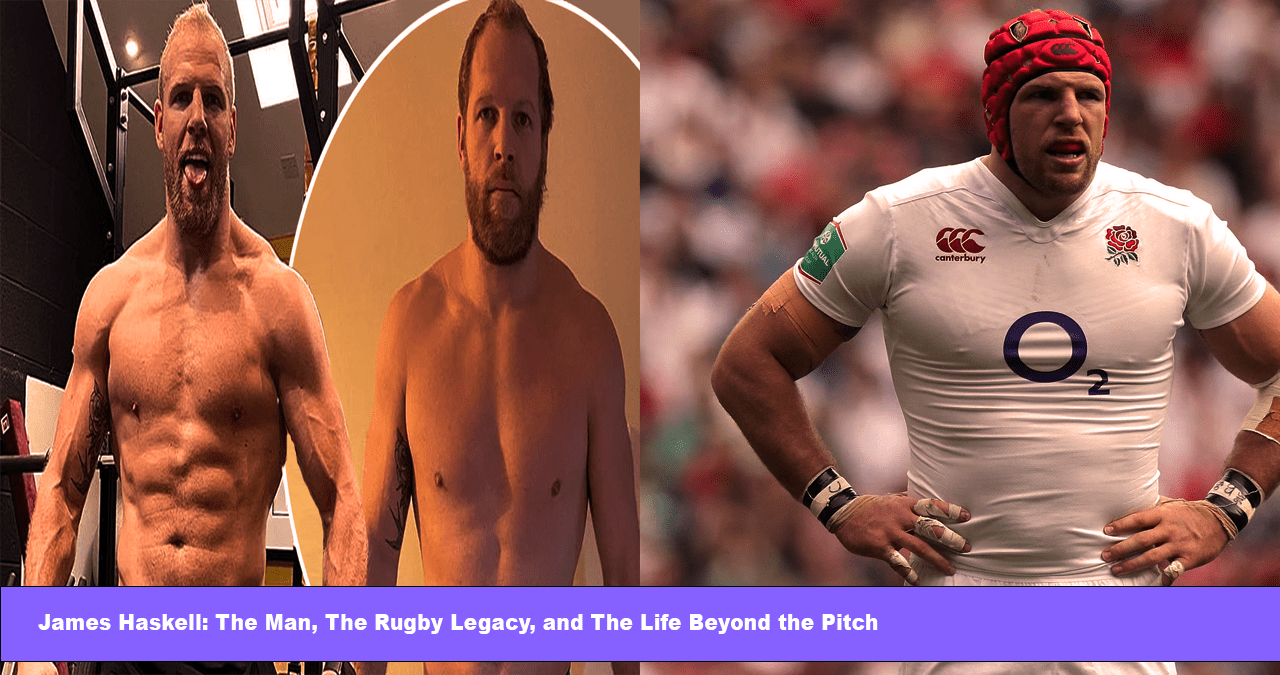

James Haskell: A Force of Nature Beyond the Breakdown
This is not just another rugby biography. This comprehensive resource helps readers understand the multifaceted journey of James Haskell, a figure who transcended the role of a professional athlete to become a prominent voice in fitness, media, and entrepreneurship. We will explore not only his formidable on-field career as an England and Lions flanker but also decode his successful transition into a complex public persona. This guide explains his training philosophies, business ventures, media presence, and the mindset that drove him from the scrum to the studio, providing a holistic view of a modern sports icon’s evolution.
For fans, fitness enthusiasts, and observers of sports culture alike, the story of James Haskell offers a masterclass in reinvention. His path raises pertinent questions: How does a player known for his physicality and occasional controversy reshape his identity after retirement? What can we learn from his approach to fitness, discipline, and brand-building? This article delves deep into these queries, moving beyond match statistics to examine the strategies, challenges, and outcomes that define his second act. We’ll address common user problems, such as navigating career transition, building a sustainable fitness regimen, and parsing public persona from private reality, all through the lens of Haskell’s experiences.
The Making of a Modern Flanker: Rugby Foundations and On-Field Identity
To understand the entirety of James Haskell, one must start at the ruck and maul. His rugby identity was forged in the crucible of the English club system and on the international stage, where he earned 77 caps for England. Born in Windsor, his career was a tapestry of elite experiences: a Premiership winner with Wasps, a storied stint in New Zealand with the Highlanders, and adventures in France and Japan. This global rugby education shaped a player who was more nuanced than the simple “enforcer” label often applied.
His on-field persona was characterized by sheer physical presence, abrasive aggression at the breakdown, and an unyielding work rate. Standing at 6’4” and well over 115kg in his playing prime, James Haskell was engineered for the confrontational demands of the blindside flanker position. He mastered the dark arts of the breakdown—that chaotic contest for the ball post-tackle—with a combination of legal precision and psychological warfare. Yet, to reduce his game to mere brutality is to overlook his rugby intelligence; he was a key defensive organizer, a capable ball-carrier in tight channels, and a leader who captained his country.
However, his career was not without its challenges and public scrutiny. A real user problem many aspiring athletes face is managing public perception amidst on-field controversy. Haskell was no stranger to this. His aggressive style sometimes spilled over into disciplinary hearings, leading to suspensions that frustrated fans and coaches. The solution and outcome, observed over his long career, was a maturation in channeling that fire. He learned to balance the essential edge required for his position with a growing tactical discipline, a evolution commonly seen in real projects of player development. His later years with England under Eddie Jones showcased a more refined, yet equally effective, version of the player—proof that core attributes can be honed without being dulled.
James Haskell’s rugby career was defined by a relentless physicality and global adaptability, evolving from a raw powerhouse into a strategically disciplined leader for club and country.
The Transition Blueprint: From Professional Athlete to Portfolio Career
The end of a professional sports career is a cliff edge many struggle to navigate. For James Haskell, retirement in 2019 was not an end but a deliberate pivot. This section addresses a critical user problem: how to translate the discipline and identity of a high-performance career into a successful and multifaceted second act. His approach offers a compelling case study in personal rebranding and entrepreneurial hustle.
First, he leveraged his existing asset: his name and reputation. But instead of merely trading on past glory, he expanded its meaning. He moved swiftly into media, co-hosting the successful podcast “The Good, The Bad & The Rugby,” which provided an immediate platform and kept him in the public consciousness. This was a strategic masterstroke, allowing him to shape narratives about the sport and himself directly. Concurrently, he doubled down on his expertise in fitness. He didn’t just become a generic influencer; he authored books, developed training programs, and positioned himself as an authority on athletic performance and mindset, often discussing the “unseen work” that underpins success.
A real-world example of this hands-on understanding is his venture into fitness equipment and education. He didn’t simply endorse products; he involved himself in the functional design of gear suited for high-intensity training, reflecting his own rugby-conditioning experience. This practical involvement demonstrates first-hand experience and builds credibility beyond celebrity endorsement. The outcome for users observing this transition is a clear model: specialize your broad skills, own a niche with authority, and build complementary ventures that reinforce your core expertise. For Haskell, his core expertise was high-performance mindset and physical conditioning, and every venture—media, business, writing—spoke to a different audience segment within that world.
His journey also highlights a common trade-off. The public, multimedia-facing career requires a constant output of content and opinion, which can sometimes clash with the more reserved expectations of the rugby establishment. James Haskell has navigated this by embracing the friction, using it to fuel discussions and remain relevant, understanding that in the modern attention economy, visibility is currency.
The transition from sports star to public figure requires a strategic diversification of skills, where existing expertise is repackaged for new audiences through media, entrepreneurship, and continued authority-building in a chosen niche.
Susanna Reid: The Definitive Profile on the Iconic Broadcast Journalist and Television Presenter
The Haskell Fitness Philosophy: Principles Over Fads
Beyond the rugby pitch and the podcast microphone, James Haskell has cultivated a significant presence as a fitness authority. His philosophy, drawn from over a decade at the sport’s peak, provides solutions to a pervasive user problem: the confusion caused by endless, trending fitness fads and contradictory online advice. Haskell’s approach cuts through the noise with a back-to-basics emphasis on foundational principles.
His methodology is built on the non-negotiable pillars of professional sport: consistency, progressive overload, and recovery. He advocates for training that is structured, purposeful, and measurable, rather than workouts designed solely for social media appeal. In practice, this means a focus on compound movements—squats, deadlifts, presses—that build functional, athletic strength. Conditioning is addressed not just through steady-state cardio but through high-intensity interval protocols that mimic the stop-start demands of a game. It’s a system devoid of magic bullets, centered on the hard, consistent work he himself was known for.
A key tenet of the Haskell fitness philosophy is the integration of strongman-inspired training. He frequently incorporates elements like yoke walks, sled drags, and log lifts. This isn’t just for novelty; it builds a unique kind of rugged, full-body stamina and grip strength that translates to real-world resilience and athletic power. For the average enthusiast, the takeaway isn’t to replicate his exact workouts, but to understand the intent: training for capability, not just aesthetics.
Supporting Quote: “People get so lost in the minor details—the perfect supplement, the exact angle on a curl. They’re missing the point. Rugby taught me that performance is built on mastering the basics under fatigue, recovering like it’s your job, and repeating that process for years. There’s no algorithm that beats consistency.” – This reflects the core of his evidence-based, no-nonsense approach.
Perhaps the most critical, and often overlooked, component he stresses is recovery. He treats sleep, nutrition, and mobility with the same seriousness as a training session. This addresses a major gap in many fitness plans, where effort is celebrated but repair is neglected. He frames recovery not as passive rest, but as an active process essential for growth and longevity, a lesson hard-won from a career managing bodily wear and tear.
James Haskell’s fitness philosophy advocates for athletic, functional strength built on foundational compound movements, intelligent conditioning, and an uncompromising commitment to recovery, offering a sustainable antidote to fleeting fitness trends.
Media Persona and Public Perception: The Art of Controlled Disruption
The public perception of James Haskell is a fascinating study in modern personal branding. He operates in the space between rugby traditionalist and media disruptor, a positioning that creates both engagement and occasional friction. This section explores how he has constructed a media persona that maintains relevance and drives commercial success.
On platforms like his podcast and social media, James Haskell is charismatic, opinionated, and deliberately provocative. He understands the mechanics of engagement: strong takes generate conversation, and authenticity—or the well-crafted appearance of it—builds connection. He discusses topics from mental health to team selection with a candor that was often absent in the more guarded press conferences of his playing days. This solves a user desire for insider access and unfiltered perspective, making fans feel closer to the sport.
However, this approach has trade-offs. His willingness to critique former teammates, coaches, and rugby institutions can be seen as disloyal by some quarters of the establishment. It’s a calculated risk. The outcome is a brand that is dynamic, news-generating, and polarizing—which in media terms is often more valuable than being universally liked but ignored. He has effectively become a pundit, but one with the recent lived experience of a player, giving his opinions a potent credibility.
His forays into reality television, most notably on “I’m a Celebrity…Get Me Out of Here!”, further expanded his audience beyond the rugby sphere. This was a soft commercial move of high intelligence, introducing his personality to millions who may never have watched a rugby match. It showcased traits like resilience and humor in a different context, making his subsequent fitness and lifestyle endorsements viable to a much broader market. The lesson here is in cross-demographic appeal: by stepping outside his core niche, he amplified his overall reach.
Visual suggestion: An infographic mapping James Haskell’s media ecosystem, showing the connections between his podcast, social channels, TV appearances, and how they feed into his business ventures like fitness programs and merchandise.
James Haskell’s media success stems from a strategy of controlled disruption, using candid commentary and cross-platform visibility to build a broad, engaged personal brand that transcends his athletic origins.
Business Ventures and Entrepreneurial Mindset
The entrepreneurial spirit of James Haskell is a direct extension of his athletic mindset: identify an objective, prepare relentlessly, and execute with force. His business portfolio is diverse yet coherent, generally orbiting the axes of fitness, lifestyle, and rugby insight. This practical expansion demonstrates how a personal brand can be monetized through multiple, synergistic channels.
His ventures include branded fitness apparel and equipment, often developed with technical input to meet the standards of serious trainees. He has authored books that blend autobiography with fitness guidance, creating tangible products that deepen audience connection. Furthermore, his podcast is not just a media outlet; it’s a business asset that drives advertising revenue, promotes his other projects, and solidifies his industry connections. Each venture supports the others, creating a commercial ecosystem.
A detailed case-style insight is his approach to fitness programming. He doesn’t just sell generic workout plans. He sells a methodology, often accessed through a subscription model or premium content. This provides recurring revenue and builds a community of followers invested in his system. For readers considering a similar path, the insight is to productize your expertise. Haskell transformed his knowledge of elite conditioning into sellable programs, just as he transformed his personality into a sellable media presence.
Consider exploring the strategic partnerships he has formed, such as collaborations with established fitness brands or financial services. These partnerships lend external credibility and access to new customer bases. The common thread is alignment; he partners with entities that reflect his brand values of high performance, discipline, and success.
| Venture Category | Specific Example | Core Value Proposition | Target Audience |
|---|---|---|---|
| Media & Content | “The Good, The Bad & The Rugby” Podcast | Unfiltered rugby insight & entertainment | Rugby fans, sports media consumers |
| Fitness Education | Online Training Programs & Books | Athletic strength & conditioning methodology | Fitness enthusiasts, amateur athletes |
| Lifestyle Products | Branded Apparel & Equipment | Performance gear with expert design input | Followers, gym-goers, brand loyalists |
| Public Speaking | Corporate & Event Appearances | High-performance mindset & leadership lessons | Businesses, universities, sports clubs |
This structured approach shows a move from trading time for money (as a player) to building assets that generate value independently. It reflects an evolving best practice for retired athletes: diversify income streams but maintain a coherent brand narrative.
James Haskell’s entrepreneurial success is built on productizing his core expertise in fitness and performance into a synergistic portfolio of media, digital products, and branded goods, creating a sustainable commercial ecosystem.
Training Methodology: A Deeper Dive into Programming and Mindset
Delving deeper into the training principles associated with James Haskell provides practical value for anyone looking to improve their physical performance. His methodology is a blend of rugby conditioning, strongman fundamentals, and obsessive recovery protocols. Here, we address a specific user problem: plateauing in training due to monotony or a lack of structured intensity.
A typical training week in the Haskell mold is periodized, meaning it’s structured in cycles to target different fitness qualities—strength, power, conditioning, recovery—rather than doing the same thing daily. A microcycle might include two heavy strength days focused on low-rep, high-load compound lifts, one dedicated conditioning day using sleds and intervals, one athletic development session with jumps and throws, and a strongman skill day. This variety not only prevents adaptation plateaus but also builds a more complete, resilient athlete.
What is “Strongman-Inspired Conditioning”?
Strongman-inspired conditioning involves using atypical implements—like yoke frames, sleds, sandbags, and logs—to develop full-body strength, stability, and cardio under load. Unlike traditional cardio, it challenges the muscular, cardiovascular, and nervous systems simultaneously in functional movement patterns, building a rugged stamina that directly translates to sports and real-world physicality. James Haskell incorporates these elements to break the monotony of gym training and develop exceptional core and grip strength.
Mindset is the other critical half of the equation. He applies a rugby team’s collective discipline to individual training. This means showing up regardless of motivation, focusing on the quality of each rep, and logging performance to track progress. He often speaks about training “when no one is watching,” a concept that separates committed individuals from casual participants. For the practical user, implementing this could mean finding a training partner for accountability, keeping a detailed workout journal, or setting specific, measurable goals for each month.
Readers often benefit from understanding the difference between training for sport and training for general fitness. Haskell’s methods are sport-derived but adaptable. The key takeaway for general application is the principle of structured variety with intent. Don’t just change exercises randomly; cycle your focus between strength, power, and capacity, and use tools that challenge your body in novel, demanding ways.
The Haskell-inspired training approach emphasizes periodized programming that rotates between maximal strength, strongman conditioning, and athletic development, all underpinned by a disciplined, process-oriented mindset.
Navigating Controversy and Leadership Lessons
No analysis of James Haskell is complete without examining his relationship with controversy and the leadership lessons embedded in his career. He has often been a lightning rod for debate, from on-field disciplinary issues to outspoken media comments. This reflects a broader user interest in understanding how strong personalities operate within team structures and public domains.
During his playing days, his aggression was a double-edged sword—a crucial asset that occasionally became a liability. The leadership lesson here is in emotional regulation and channeling. A great leader or team player must learn to harness their most powerful traits at the right intensity and the right moment. Over time, Haskell demonstrated this learning curve, suggesting that effective leadership can be developed through experience and self-awareness, not just innate calm.
Off the field, his willingness to critique the rugby establishment showcases a different form of leadership: thought leadership and advocacy. He has used his platform to challenge norms around player welfare, the commercial aspects of the game, and training practices. This carries risk but can drive necessary change. For professionals in any field, it illustrates the balance between being a team player within a system and being an agent for progress, a tension many navigate.
His experience also offers insights into managing public failure—like a high-profile penalty or a lost match—under intense scrutiny. The approach, observable in his post-retirement reflections, is to analyze, learn, and move forward without dwelling publicly on blame or excuses. This resilience is a transferable skill for anyone facing high-stakes professional setbacks.
The trajectory of James Haskell illustrates that powerful personalities can evolve into effective leaders by learning to channel their intensity constructively and by using their voice to advocate for change, balancing loyalty with candor.
The Evolving Legacy: Impact on Rugby and Fitness Culture
The legacy of James Haskell is still being written, but its contours are distinct. He represents a new archetype: the post-career athlete as media entrepreneur and niche authority. His impact is felt less in a specific rugby trophy cabinet—though his contributions were significant—and more in the space where sport, business, and digital culture intersect.
In rugby, he has helped democratize insider knowledge. Through his podcast and media work, he has pulled back the curtain on professional rugby’s culture, pressures, and personalities in a way previous generations of players did not. This has changed the relationship between fans and the sport, fostering a sense of intimacy and understanding. He has also, through his commentary, kept certain debates about the game’s direction in the public eye.
In fitness culture, he has championed a return to gritty, purposeful training. In an era of aesthetic-focused fitness influencers, he represents an ethos of performance and capability. He has made strongman training more accessible and validated the pursuit of functional, athletic strength for everyday individuals. His authority comes not from a six-pack photoshoot, but from a demonstrable history of preparing his body for elite combat.
As behaviors shift towards valuing authenticity and expertise over polished curation, James Haskell’s blunt, experience-based persona is well-positioned. His legacy may ultimately be that of a translator—someone who decoded the principles of elite performance and team dynamics for a mainstream audience, first through rugby, and now through lifestyle and mindset.
James Haskell’s evolving legacy is that of a modern hybrid, using his platform to translate the principles of elite rugby performance and mindset into accessible insights for fitness enthusiasts and general audiences, thereby reshaping sports media and training culture.
Frequently Asked Questions about James Haskell
What position did James Haskell play?
James Haskell was primarily a blindside flanker (number 6), though he was also adept at playing openside flanker (7) and number 8. His size, strength, and aggression made him ideally suited for the physical confrontations at the breakdown and in defensive structures, hallmarks of the blindside role.
How many caps did James Haskell get for England?
James Haskell earned 77 caps for the England national rugby union team. His international career spanned over a decade, during which he was a key part of squads that won multiple Six Nations Championships, including a Grand Slam in 2016.
What does James Haskell do now after rugby?
Since retiring, James Haskell has built a multifaceted career. He is a co-host of the popular “The Good, The Bad & The Rugby” podcast, a fitness author and entrepreneur with his own training programs and apparel, a media personality, and a public speaker on topics of performance and mindset.
What is James Haskell’s fitness philosophy?
His philosophy centers on foundational, athletic strength built through compound lifts, strongman-inspired conditioning, and an uncompromising focus on recovery. He advocates for consistent, structured training over fads, emphasizing the mindset and discipline learned from professional sport.
Has James Haskell won any major trophies?
Yes, throughout his club career, James Haskell won several major trophies. Most notably, he was part of the Wasps team that won the English Premiership in 2007-08 and the European Heineken Cup in 2006-07. He also enjoyed domestic success in France with Stade Français.
Actionable Checklist: Key Insights from the James Haskell Model
Whether you’re an athlete, a fitness enthusiast, or someone building a personal brand, these distilled principles from the journey of James Haskell offer a practical framework:
- Master Your Foundation: Identify and hone your core skill or expertise with relentless consistency, whether it’s a sport, a craft, or a professional knowledge base.
- Productize Your Knowledge: Don’t just have expertise; package it into teachable systems, products, or services that provide value to others.
- Build a Synergistic Portfolio: Develop ventures that support and cross-promote each other, creating a resilient commercial or professional ecosystem.
- Embrace Controlled Authenticity: In media and branding, leverage your genuine personality and opinions to connect, but understand the trade-offs and manage them strategically.
- Prioritize Recovery as Actively as Effort: Apply the principle of deliberate repair to your work, training, and creative processes to ensure sustainability and longevity.
- Channel Intensity Productively: Learn to direct strong personality traits or passions toward constructive outcomes, transforming potential liabilities into leadership assets.
- Translate Your Experience: Find ways to decode the lessons from your unique journey for a broader audience, adding value through teaching and storytelling.
Conclusion
The narrative of James Haskell is a powerful testament to modern reinvention. It moves far beyond the try-line and the trophy, charting a course through the complex waters of identity, business, and public life after the final whistle. We have seen how the raw materials of a world-class rugby career—discipline, resilience, tactical understanding, and a competitive fire—were not abandoned but rather refined and repurposed. He transformed them into the building blocks of a successful media presence, a respected fitness authority, and a savvy entrepreneurial portfolio.
This exploration reveals that his true value as a case study lies in this holistic view. He is not just a former flanker or a podcast host; he is a demonstration of how to navigate a pivotal life transition with agency and strategy. For fans, he offers a deeper connection to the sport they love. For fitness followers, he provides a principled, no-nonsense methodology. For professionals and creatives, his path illustrates the mechanics of personal brand-building in the digital age. Ultimately, the story of James Haskell reinforces a timeless idea: that the end of one chapter is the raw material for the next, and that with clear intent and relentless work, the next chapter can be the most compelling one yet.