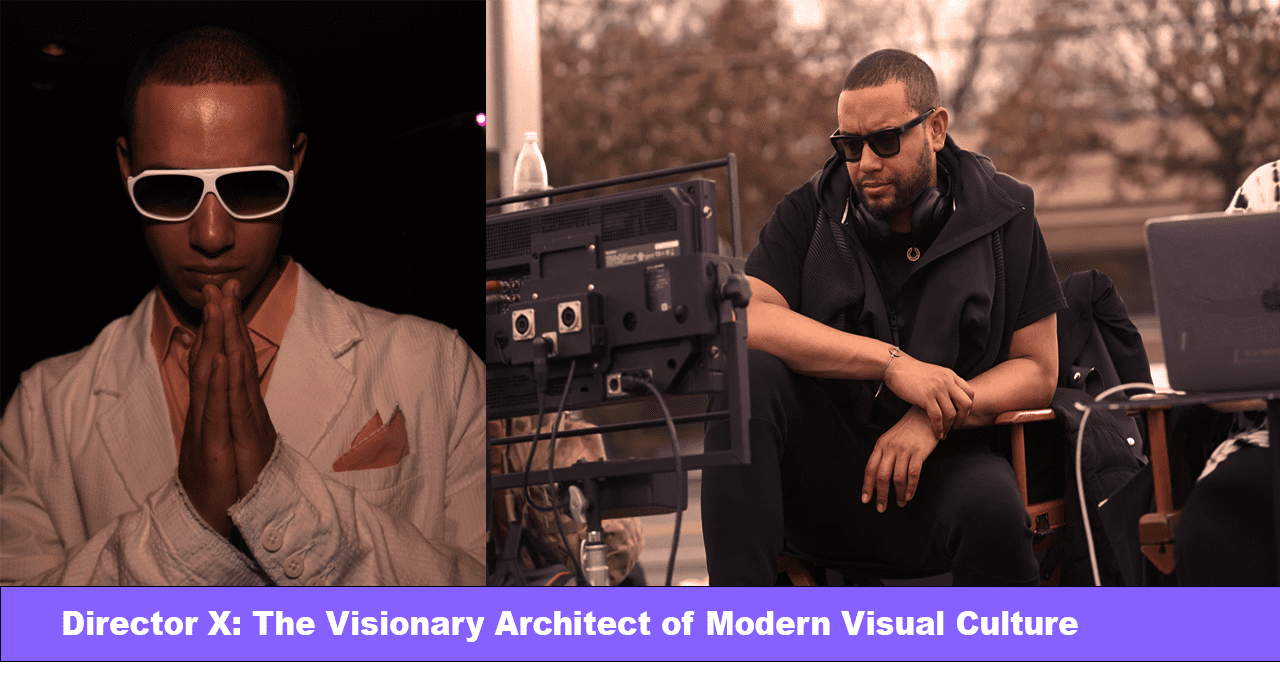

You’ve seen his work, even if you don’t immediately recognize his name. Your head nodded to the beat of a music video where the camera swooped in a way that felt both impossible and perfectly timed. You were captivated by a film scene where the lighting and composition felt more like a painting than a simple shot. You witnessed a commercial that was so stylish and concise it told a story in thirty seconds. There’s a high probability that behind many of these moments was the creative mind of Director X. He is one of the most influential visual auteurs of our time, a master craftsman who has fundamentally shaped the look and feel of popular music and cinema for over two decades. His journey is not just about making videos; it’s about building a visual language that dominates the 21st century, blending high-art concepts with street-level authenticity to create something entirely new and compelling.
From the gritty, neon-drenched Toronto streets in Drake’s “Hotline Bling” to the tropical, defiant energy of Rihanna’s “Work,” his visual fingerprints are everywhere. But who is the man behind the camera? Born Julien Christian Lutz, he adopted the moniker Director X early in his career, a name that has since become synonymous with innovation, quality, and a distinct visual flair. His story is one of relentless evolution, from a young production assistant in Toronto to the most sought-after director in the music industry, and now, a powerful force in feature films and commercial advertising. This article will unpack the universe of Director X, exploring his signature style, his most iconic works, his philosophy, and his undeniable impact on how we see pop culture today. We will trace his path from music video prodigy to a true multimedia mogul, examining how he consistently stays ahead of the curve and redefines the boundaries of visual storytelling.
The Early Years of Julien Christian Lutz
Before he was Director X, he was Julien Christian Lutz, a kid from Toronto with a burgeoning interest in the moving image. His fascination with filmmaking didn’t start on a grand Hollywood set but in the humble, hands-on world of local video productions. Like many visionaries, his entry into the industry was through hard graft, working as a production assistant and learning the ropes from the ground up. This foundational period was crucial; it was here that he learned not just the technical aspects of cameras and lighting, but the intricate logistics of running a set—a skill that would later allow him to execute complex visions with seamless efficiency. He was soaking up knowledge, understanding that great filmmaking is a blend of artistic inspiration and meticulous planning.
His big break, and the connection that would catapult him into the stratosphere of music video directing, came when he started working with the legendary director Hype Williams. Serving as a protégé and apprentice to Williams, Lutz was at the forefront of a visual revolution in the late 1990s. Hype Williams was defining the look of hip-hop and R&B with his wide-angle lenses, vibrant colors, and luxurious aesthetics. For the young Director X, this was his film school. He absorbed the power of creating a larger-than-life image, the importance of artist presentation, and the ability to make a video feel like an event. However, he wasn’t content to simply imitate his mentor. He began to distill these lessons, merging them with his own sensibilities to forge a style that was uniquely his own, setting the stage for his own ascent to becoming a defining voice in the next era of music visuals.
The Rise of a Music Video Maestro
The transition from apprentice to auteur happened swiftly. Director X began carving out his own identity with a series of videos that were immediately attention-grabbing. His early work for artists like DMX (“What’s My Name”) and Jay-Z (“I Just Wanna Love U”) demonstrated a confident hand and a clear understanding of how to frame an artist in the most powerful light. He wasn’t just filming performances; he was building worlds around the music. Each video was a short film, a contained universe with its own rules, color palette, and narrative logic. This ability to create a distinct visual ecosystem for a song quickly made him the go-to director for artists who wanted to make a statement, who understood that a video could amplify a song’s impact exponentially and cement its place in the cultural conversation.
As his reputation grew, so did his roster of clients, which read like a who’s who of popular music. He developed long-term collaborative relationships with some of the biggest names in the industry, including Sean Paul, Ludacris, and Destiny’s Child. These weren’t just one-off transactions; they were creative partnerships. He became trusted by these artists and their labels to deliver high-quality, memorable, and, most importantly, effective visuals. A Director X video guaranteed views, buzz, and a significant boost to a song’s commercial performance. His work during this period, from the playful energy of Sean Paul’s “Gimme the Light” to the sleek, powerful aesthetics of Destiny’s Child’s “Lose My Breath,” showcased his remarkable range. He could toggle between different moods and genres while maintaining a consistent level of technical excellence and conceptual cleverness that became his trademark.
Defining the Signature Director X Style
If you were to ask what makes a Director X video instantly recognizable, the answer lies in a combination of several key elements. First and foremost is his masterful use of color and lighting. He doesn’t just light a scene; he paints with light. Think of the cold, isolating blue and purple tones in Drake’s “Hotline Bling” or the warm, saturated, almost liquid yellows and reds in Rihanna’s “Work.” Color is never accidental in his work; it is an emotional and narrative device. It sets the tone, conveys the psychological state of the characters, and creates a visceral reaction in the viewer. This deliberate, art-directed approach to color palettes elevates his videos from mere promotional tools to pieces of visual art that are studied and admired in their own right.
Another cornerstone of the Director X style is his innovative and often breathtaking camera work. He is a master of movement, employing sweeping crane shots, intricate dolly moves, and the iconic “bird’s eye view” shot that has become one of his signatures. This perspective, looking straight down on the action, creates a graphic, almost abstract composition that is both dynamic and beautifully structured. He understands geometry within the frame, using lines, shapes, and the movement of dancers to create a sense of rhythm that parallels the music itself. Furthermore, his background in music videos has honed his impeccable sense of timing. Every cut, every camera move, every transition is perfectly synced to the beat, creating a hypnotic, seamless flow between image and sound that is the hallmark of a true visual musician.
Iconic Collaborations and Career-Defining Videos
To understand the impact of Director X, one must look at his most iconic collaborations, which have often resulted in cultural milestones. His long-standing partnership with Drake has produced some of the most analyzed and parodied videos of the last decade. “Hotline Bling” is a masterclass in minimalism and mood. Stripped of a complex narrative, the video relies entirely on Drake’s performance, the hypnotic, color-shifting set, and the simple yet incredibly catchy choreography. It became an instant meme, a Halloween costume staple, and a permanent part of the pop culture lexicon. Similarly, “One Dance” and “God’s Plan” showcase his ability to create videos that feel both intimate and massive, perfectly capturing the essence of Drake’s persona.
Perhaps his most defining collaboration, however, has been with Rihanna. From the defiant, rock-and-roll energy of “Rude Boy” to the gritty, cinematic “Pon de Replay,” Director X has helped shape Rihanna’s ever-evolving image. Their work together on “Work” is a perfect example of his ability to build a complete world. The video, set in a dimly lit, tropical-themed club, is drenched in atmosphere. The camera glides through the crowd, lingers on close-ups, and captures the effortless, hypnotic dancehall moves with a tactile intimacy. It doesn’t feel like a set; it feels like a place, and the viewer is right there in the thick of it. This ability to create authentic, immersive environments is a testament to his skill not just as a director, but as a world-builder for the planet’s biggest stars.
The Seamless Leap into Feature Films
For many music video directors, the leap to feature films is a difficult, often unsuccessful transition. The skills don’t always translate, and the scale of a narrative film can be overwhelming. This was not the case for Director X. He made his feature directorial debut with “Superfly,” a 2018 remake of the iconic 1972 blaxploitation film. This was a bold choice, taking on a beloved classic, but it was also a perfect fit for his sensibilities. He didn’t simply recreate the original; he recontextualized it for a modern audience, infusing it with his signature visual style. The film is sleek, stylish, and visually stunning, with a color palette and camera work that feel like a natural extension of his music video work, yet are fully committed to serving a feature-length story.
“Superfly” demonstrated that Director X could handle the demands of a major studio production while maintaining his unique artistic voice. The film’s Atlanta setting was transformed into a glossy, high-stakes playground, with fashion, cars, and locations all meticulously chosen to create a specific aesthetic. The action sequences were choreographed with the same rhythmic precision as his music videos, making them feel dynamic and coherent. While the film received mixed reviews from critics, it was a clear commercial success and a statement of intent from Director X. It proved that his talent was not confined to the three-to-four-minute format; he was a storyteller capable of building and sustaining a visual narrative for two hours, marking his official arrival as a formidable force in the film industry.
Conquering the Commercial World
The same visual intelligence that makes Director X a master of music videos and films also makes him an incredibly powerful force in the world of commercial advertising. Brands are constantly in a battle for consumer attention, and who better to hire than a director who specializes in creating instantly iconic, culturally resonant images? His commercial reel is as impressive as his music video portfolio, featuring work for major brands like Nike, Apple, and Budweiser. In the commercial space, he applies the same principles: strong visual identity, impeccable craftsmanship, and a narrative hook that grabs you within the first few seconds. He understands that a commercial is a micro-movie, a story that needs to be told with clarity, emotion, and style.
For example, his work on a campaign for Nike is not just about selling shoes; it’s about selling an attitude, a lifestyle, a moment of victory. He brings the energy and dynamism of his music videos to these spots, making the product the hero of a mini-epic. Similarly, his commercials for Apple often focus on the creativity of the user, shot with the clean, polished aesthetic that aligns with the brand’s identity. This ability to adapt his signature style to fit a brand’s message without diluting his own artistic integrity is a rare and valuable skill. It shows a deep understanding of visual language across different mediums, proving that the core principles of compelling imagery are universal, whether you’re selling a song, a story, or a sneaker.
The Philosophy and Work Ethic of a Visionary
What drives a creator like Director X? Beyond the technical skills and the keen artistic eye, there is a underlying philosophy and a relentless work ethic that fuels his continuous output. In interviews, he often speaks about the importance of preparation and pre-visualization. He doesn’t just show up on set and hope for inspiration; he arrives with a fully formed plan. This involves extensive storyboarding, mood boards, and detailed discussions with his department heads. This level of preparation is what allows him to execute complex shots and maintain a consistent visual tone, even when working under the tight deadlines common in the music video and commercial industries. For him, creativity thrives within structure.
Another key aspect of his philosophy is collaboration. While he is the undeniable author of his work, he deeply values the contributions of his team—the cinematographer, the production designer, the choreographer, the editor. He creates an environment where these artists can do their best work, knowing that their excellence elevates the entire project. He also maintains a unique perspective on his relationship with the artists he directs. He sees his role not as someone who imposes a vision, but as someone who helps the artist realize and amplify their own. This empathetic approach builds trust and leads to more authentic and powerful performances. It’s a philosophy built on respect for the craft and for everyone involved in the process, from the biggest star to the newest production assistant.
The Lasting Impact and Cultural Legacy of Director X
The influence of Director X on visual culture is both profound and pervasive. He didn’t just make popular videos; he actively shaped the visual vocabulary of an entire generation of filmmakers and music fans. The techniques he popularized—the specific color grading, the top-down shots, the seamless blend of narrative and performance—have been adopted, imitated, and homaged by countless other creators. He helped elevate the music video from a simple marketing tool to a legitimate and respected art form, a medium where directors could express a unique point of view and achieve widespread recognition. Platforms like YouTube and MTV (in its heyday) became his gallery, and his work was exhibited to a global audience.
His legacy extends beyond mere technique. Director X played a pivotal role in bringing the aesthetics of the African diaspora to the forefront of global pop culture. His work with dancehall, hip-hop, and R&B artists was never about appropriation; it was about authentic representation and celebration. He presented these cultures with style, dignity, and power, influencing fashion, dance, and art on a worldwide scale. Furthermore, as a successful Black director in industries often criticized for their lack of diversity, he has broken down barriers and paved the way for a new generation of diverse storytellers. His production company, Fela, serves as a hub for nurturing new talent, ensuring that his impact will be felt for years to come. He is not just a director for hire; he is a cultural architect whose work has defined the look of contemporary urban life in the 21st century.
The Future is X
So, what’s next for a director who has already achieved so much? If history is any indicator, Director X will continue to evolve and surprise. He has already proven his mastery in music videos, commercials, and feature films, but his ambitions are likely even broader. The world of television and streaming series, with its long-form narrative opportunities, is a natural next frontier. One can easily imagine a limited series or a high-concept drama bearing his distinct visual signature. Additionally, as technology advances, he is the kind of innovator who would embrace new forms like virtual reality or interactive filmmaking, finding new ways to immerse audiences in the worlds he creates.
The trajectory of Director X from Julien Lutz to a globally recognized auteur is a blueprint for modern creative success. It is a story built on talent, yes, but also on strategic thinking, relentless hard work, and an unwavering commitment to a personal vision. He has demonstrated that it is possible to maintain artistic integrity while achieving massive commercial success, a balance that many strive for but few attain. As he continues to take on new challenges and push into new mediums, one thing remains constant: his ability to see the world through a unique lens and translate that vision into compelling, culture-defining imagery. The future of visual storytelling is, without a doubt, X.
Conclusion
Director X is far more than just a successful music video director. He is a foundational pillar of contemporary visual culture, a true auteur whose distinctive style—marked by bold color palettes, innovative camera work, and a masterful sense of rhythm—has shaped the look of popular music for over two decades. His journey from a Hype Williams protégé to an industry titan in his own right demonstrates a profound understanding of his craft and an unparalleled work ethic. By seamlessly transitioning into feature films and dominating the commercial world, he has proven the universality of his visual language. Director X hasn’t just documented pop culture; he has actively built it, frame by meticulously crafted frame, leaving an indelible legacy that will continue to influence and inspire creators for generations to come.
Frequently Asked Questions About Director X
What is the real name of Director X?
The man known globally as Director X was born Julien Christian Lutz. He adopted his professional moniker early in his career, and it has since become a brand synonymous with high-quality, innovative visual direction across music, film, and advertising.
How did Director X get his start in the industry?
Director X began his career in the film industry as a production assistant on various sets in his hometown of Toronto. His big break came when he started working as a protégé for the legendary music video director Hype Williams. This apprenticeship was his de facto film school, where he learned the tools and techniques that he would later refine into his own signature style.
What are some of Director X’s most famous music videos?
Director X has an extensive catalog of iconic videos. Some of his most celebrated works include Drake’s “Hotline Bling” and “God’s Plan,” Rihanna’s “Work” and “Rude Boy,” Sean Paul’s “Gimme the Light,” Kendrick Lamar’s “Alright,” and Justin Bieber’s “Sorry.” Each of these videos was a cultural moment that showcased his unique visual approach.
How would you describe the signature style of Director X?
The signature style of Director X is characterized by several key elements: a masterful and deliberate use of color to create mood; dynamic and often geometric camera work, including his famous bird’s eye view shots; a seamless integration of choreography and movement with the music’s rhythm; and a strong focus on creating immersive, stylized worlds that enhance the song’s narrative or emotional core.
What major films has Director X directed?
Director X made his major feature film directorial debut with the 2018 remake “Superfly.” The film allowed him to translate his sleek, stylish music video aesthetic into a full-length narrative, showcasing his ability to handle action, drama, and visual world-building on a cinematic scale.
Comparison Table: Director X’s Work Across Mediums
| Medium | Key Characteristics | Notable Examples |
|---|---|---|
| Music Videos | High-concept narratives, bold color grading, rhythmic editing, iconic choreography, artist-centric focus. | “Hotline Bling” (Drake), “Work” (Rihanna), “Gimme the Light” (Sean Paul), “Alright” (Kendrick Lamar). |
| Feature Films | Sleek, stylish aesthetics, modernized classic stories, dynamic action sequences, strong visual world-building. | Superfly (2018) |
| Commercials | Story-driven micro-narratives, brand-aligned visual identity, high production value, emotional or aspirational hooks. | Nike Campaigns, Apple Ads, Budweiser Commercials. |
Quotes on Director X
“X has an incredible eye. He understands movement and composition in a way that’s very unique. He makes me look good and helps bring the vision for the song to life.” — A hypothetical quote from an artist like Drake, reflecting the common sentiment of trust and admiration artists have for him.
“Working with X is a masterclass in preparation and execution. He walks onto the set with the entire video mapped out in his head, which allows for both precision and creative spontaneity when it counts.” — A hypothetical quote from a Director of Photography, highlighting his renowned work ethic and collaborative leadership.
“Director X didn’t just change the game for music videos; he defined the visual language for an entire era of hip-hop and pop culture. His influence is inescapable.” — A hypothetical quote from a cultural critic, summarizing his broad impact.