
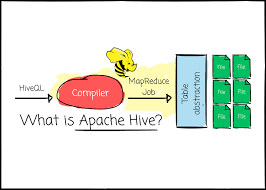

Apache Hive has spent years being described as the SQL layer of Hadoop, which is accurate, but increasingly incomplete. In modern enterprise data environments, the role of Apache Hive has expanded from batch querying into something more strategic: helping businesses modernize long-standing data warehouse investments without discarding the systems, skills, and pipelines they already depend on.
For organizations with years of Hive tables, ETL scripts, ORC files, partitioned datasets, and metastore dependencies, the question is no longer whether Hive is “old” or “new.” The better question is how Hive can be repositioned inside a lakehouse model where open table formats, cloud object storage, governance, and multi-engine analytics are now the standard.
Hive’s Place in the Modern Lakehouse
A lakehouse works best when it combines the scale of a data lake with the reliability of a warehouse. That is where Hive still matters. It gives enterprises a familiar SQL-based processing layer for large datasets, while its metastore remains a central point of reference for tables, schemas, partitions, and data discovery.
In this setting, Apache Hive plays a particularly important role for organizations that cannot simply replace their data platforms wholesale. Large banks, retailers, telecom companies, healthcare networks, and logistics businesses often continue to depend on legacy Hive environments for substantial workloads. Traditional though they may seem, these systems still support reporting, compliance, forecasting, pricing, risk analytics, and broader operational intelligence.
Modernization, thereby, is not about removing Hive from the picture, but about making Hive lakehouse-ready.
Why Apache Iceberg Changes the Conversation
One of the clearest shifts in Hive modernization is the move toward open table formats, most notably Apache Iceberg. Traditional Hive tables are frequently tied to directory-based partitioning and metadata approaches that become harder to sustain as scale increases. Schema changes are often awkward, partitioning choices may age poorly, and cloud object storage brings additional performance complexity.
Iceberg changes this by adding a stronger metadata layer. It supports schema evolution, partition evolution, snapshots, time travel, and more reliable multi-engine access. For businesses, that means Hive-based data can move closer to warehouse-grade reliability without giving up the openness of a data lake.
This is where the role of Apache Hive becomes more advanced. Hive is no longer only the query interface for historical Hadoop data. It can participate in a broader lakehouse architecture where Iceberg manages table reliability, while Hive continues to support SQL workloads, batch processing, and integration with existing enterprise data flows.
What Modern Hive Development Actually Involves
Strong Apache Hive development services should go far beyond writing HiveQL queries or setting up tables. A serious engagement now requires architectural thinking across metadata, storage, performance, governance, and migration.
Key areas include:
- Hive estate assessment: Reviewing existing tables, file formats, partition schemes, query performance, pipeline dependencies, and metastore health.
- Hive-to-Iceberg planning: Identifying which tables should be migrated first, which should remain as they are, and which require redesign before conversion.
- Metastore modernization: Improving reliability, reducing metadata bottlenecks, and preparing catalog integrations for Spark, Trino, Flink, Impala, and cloud-native platforms.
- Performance tuning: Addressing small files, compaction, partition pruning, Tez execution, ORC/Parquet layout, and object-storage read/write behavior.
- Governance readiness: supporting audit trails, access controls, retention rules, deletion workflows, and rollback-friendly data operations.
This is also where big data consulting services become valuable, because the challenge is not limited to code. It involves platform decisions, migration sequencing, cost control, workload mapping, and long-term operating models.
Metadata Is Now a Business-Critical Layer
One underappreciated part of Hive’s evolution is the metastore. In older architectures, the Hive Metastore was often treated as a technical dependency. In lakehouse environments, it becomes a strategic control point.
A weak metadata layer creates problems that are expensive to fix later: inconsistent table definitions, stale partitions, duplicated schemas, poor lineage, broken access policies, and slow discovery across engines. A well-managed metastore, on the other hand, helps teams coordinate analytics across multiple tools without losing trust in the data.
That is why the role of Apache Hive is strongly connected to metadata modernization. The metastore can serve as a bridge between legacy Hive workloads and modern lakehouse catalogs, provided it is cleaned, optimized, governed, and integrated properly.
Performance Moves from Cluster Tuning to Data Layout
Hive performance used to be discussed mainly in terms of cluster resources: memory, CPU, execution engines, and queue settings. Those still matter, but in cloud-first data platforms, performance is increasingly shaped by file layout and metadata quality.
Poor file sizing, outdated partition structures, excessive directory listing, and unmanaged compaction can make even well-provisioned infrastructure feel slow. In a lakehouse model, optimization depends on designing tables so query engines can avoid unnecessary data, read fewer files, and make better use of metadata. Hive, Iceberg, ORC, Parquet, and object storage need to be tuned as parts of one system rather than treated as separate components.
The Practical Future of Hive
The future of Hive is not rooted in the nostalgia for Hadoop, but rather in continuity. Enterprises have invested heavily in data assets built around Hive, and those assets warrant a practical route into the next phase of modernization.
The most useful view of the role of Apache Hive is this: Hive helps organizations move from legacy big data warehouses to smarter lakehouse ecosystems without forcing a disruptive reset. When paired with Iceberg, modern catalog strategies, cloud storage optimization, and governance-first design, Hive remains a powerful engine for large-scale analytics.
For businesses modernizing their data platforms, the goal is not to ask whether Hive still matters. The sharper question is whether their Hive environment is ready for the lakehouse era.