
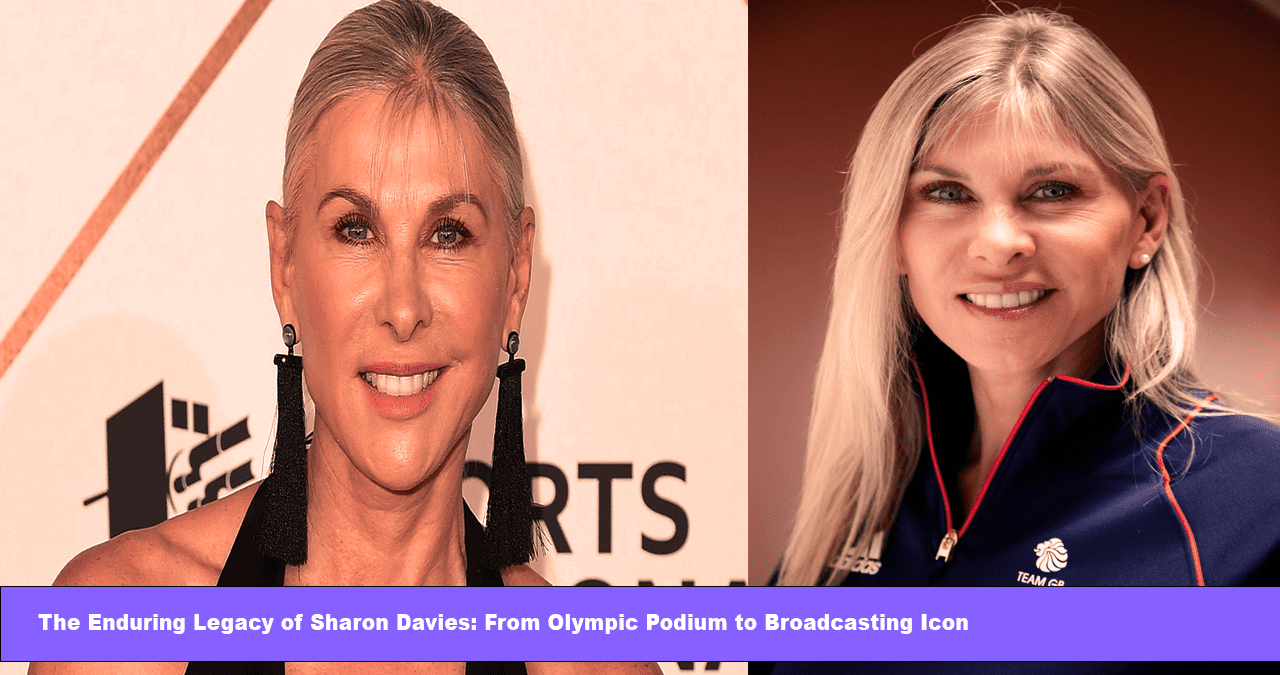

The name Sharon Davies resonates with a unique duality in British sporting culture. It evokes the powerful, streamlined form of a world-class swimmer slicing through water in pursuit of gold, and it equally conjures the familiar, authoritative, yet warm voice that has narrated aquatic triumphs into the nation’s living rooms for decades. Her story is not a simple tale of an athlete who retired and found a new job. It is a narrative of seamless transformation, of leveraging the discipline, insight, and grace from one demanding arena into mastery of another. Sharon Davies stands as a pillar in the British swimming community, her legacy etched not only in record books but in the very fabric of how the sport is perceived and consumed by the public. Her journey from a determined young girl in Plymouth to an Olympic silver medalist and, ultimately, to the trusted face of BBC’s swimming coverage, offers a masterclass in resilience, reinvention, and enduring passion.
The pool was both a crucible and a sanctuary for the young Sharon Davies. Showing prodigious talent from an early age, her dedication saw her rise rapidly through the national ranks. The international stage beckoned, and she answered with a presence that belied her years. Her career spanned an era of amateur sport, where the drive came from within, and the rewards were the colors of one’s country and the personal satisfaction of pushing the human body to its limits. The pinnacle of this athletic chapter came at the 1980 Olympic Games in Moscow, where her performance in the 400-meter individual medley secured a silver medal, a moment of national pride that cemented her status as a sporting heroine. Yet, the true measure of Sharon Davies would be taken in the years that followed, as she navigated the challenging transition that awaits every elite athlete. What she built from that foundation is a second act so influential that for many younger generations, Sharon Davies is synonymous not with the starting block, but with the commentary box, a testament to her profound and lasting impact.
Early Years and Ascent in Competitive Swimming
Long before the glare of Olympic lights, Sharon Davies’ relationship with water began in a much more humble setting. Growing up in Plymouth, she was a natural in the pool, her talent quickly identified by coaches who saw not just technique, but an exceptional feel for the water. Her early training was characterized by a grueling schedule that balanced education with countless hours of laps, a routine that forged the mental toughness for which she would later become renowned. The discipline of swimming, with its solitary focus and relentless pursuit of incremental improvement, shaped her character. It was in these formative years that she learned the value of process over outcome, a lesson that would serve her well far beyond her competitive days. Local and national meets became stepping stones, each victory and defeat a lesson absorbed, building towards the international stage.
Her breakthrough on the world scene was both dramatic and definitive. Competing against the world’s best, Davies showcased a versatility that is the hallmark of the greatest medley swimmers. Excelling in the 200-meter and 400-meter individual medley events, she combined the four core swimming strokes—butterfly, backstroke, breaststroke, and freestyle—into a punishing test of all-around ability. Her racing style was intelligent and strategic, often saving her strongest stroke for the final leg to overpower her rivals. This period of her life was a whirlwind of training camps, international travel, and intense competition. The sacrifices were immense, a total commitment to a goal that shimmered in the distance. The swimming community began to take serious note of this formidable British athlete, and by the late 1970s, Sharon Davies was consistently ranked among the global elite, a proven contender poised for the ultimate challenge.
Olympic Glory and Defining Moments
The 1980 Summer Olympics in Moscow remain a complex chapter in sporting history, overshadowed by a Western-led boycott in response to the Soviet invasion of Afghanistan. For many athletes, the decision to attend or abstain was fraught with political pressure. For Sharon Davies, the opportunity to compete on the Olympic stage, the dream of a lifetime, was a call she could not ignore. Arriving in Moscow, the atmosphere was charged, but for the competitors in the pool, the focus remained on the black line on the bottom of the lane and the touchpad at the end. The 400-meter individual medley is one of swimming’s most grueling events, a test of endurance, technique, and pure will. Davies navigated the heats with the composure of a veteran, saving her best for the final.
In that final race, she executed her race plan with precision. Trailing after the butterfly and backstroke legs, she began to claw back position during the breaststroke, her strength coming to the fore. Entering the final freestyle leg, she was in medal contention. With a furious finish, she powered to the wall to claim the silver medal. The moment was one of pure elation and validation. Reflecting on that race, she once noted, “When you stand on that podium, every early morning, every aching muscle, every sacrifice makes sense. It’s not just a medal; it’s a story of years of your life written in water.” This achievement was not an endpoint but a zenith that defined her athletic identity. The Olympic silver medal solidified Sharon Davies as a household name in Britain, an icon of dedication and success. It provided a platform and a credibility that would become invaluable in the next phase of her career, though she could not have known it at the time.
The Transition from Competitor to Commentator
For elite athletes, retirement is often described as a cliff edge. The structure, identity, and adrenaline of competition vanish overnight. Sharon Davies navigated this daunting transition with the same strategic mind she used in race planning. Initially, she remained involved in swimming through coaching and ambassadorial roles, staying connected to the sport she loved. However, the media world presented a new and intriguing challenge. Her deep technical knowledge, combined with her personal experience of pressure at the highest level, made her a natural analyst. The BBC, recognizing her unique potential, offered her opportunities to provide expert commentary. This was not a case of a former athlete simply describing action; it was about explaining the nuance, the psychology, and the technique that the untrained eye would miss.
Her early forays into broadcasting required a new set of skills. She had to learn to articulate instinctive knowledge, to be concise under the pressure of live television, and to build a rapport with lead commentators and the audience. Davies approached this new career with the work ethic of an Olympian. She studied broadcasting, practiced relentlessly, and learned to translate the complex biomechanics of swimming into engaging, accessible insights. Her breakthrough came as she covered successive Olympic Games, from Barcelona in 1992 onwards. Audiences quickly warmed to her style—authoritative without being arrogant, insightful without being overly technical, and always profoundly respectful of the athletes in the pool. She became the bridge between the performance and the public, a trusted guide. In this role, Sharon Davies found a second calling, one that would extend her influence on British swimming far longer than her competitive years ever could.
Establishing a Voice in Sports Broadcasting
The world of sports broadcasting is notoriously competitive, filled with charismatic personalities. To carve out a distinctive and lasting space requires more than just fame; it requires authenticity and expertise. Sharon Davies brought both in abundance. Her commentary philosophy was rooted in empathy. Having been in the position of the athletes she was describing—feeling the paralyzing nerves behind the blocks, the burn of lactic acid in the final meters, the crushing disappointment of a near miss—she offered a perspective no purely journalistic broadcaster could match. She never shied away from critiquing a poor turn or a fading finish, but her criticism was always constructive, delivered with the understanding of how difficult it is to execute under duress. This earned her immense respect from both viewers and the swimming community itself.
Her partnership with lead commentators like David Coleman and later, Hazel Irvine, became a staple of BBC’s Olympic coverage. They provided the narrative flow and historical context, while Davies supplied the deep, tactical color. A defining moment in her broadcasting career was her coverage of the 2008 Beijing Olympics, particularly the exploits of Rebecca Adlington and Michael Phelps. Her call of Adlington’s dramatic 400-meter freestyle victory, where she perfectly captured the building tension and the sheer magnitude of the achievement for British swimming, was a masterclass. “Listen to the crowd! Watch her dig deep! This is history in the making!” she exclaimed, her voice rising with genuine excitement. Moments like these showcased her ability to be both an expert analyst and an unabashed fan. She didn’t just report on the resurgence of British swimming; she became its most eloquent chronicler, with Sharon Davies providing the soundtrack to a golden era.
The Unique Perspective of an Athlete-Broadcaster
What truly sets Sharon Davies apart in the commentary box is the seamless integration of her lived experience with her analytical eye. When she discusses a swimmer’s race strategy, she speaks from a place of having crafted and executed such plans herself. When she analyzes a competitor’s state of mind, she draws from a well of personal memory. This athlete-broadcaster hybrid model offers viewers a multidimensional understanding of the sport. For instance, while describing a tight finish, she might note, “You can see she’s shortened her stroke slightly, that’s the lactate firing; now it’s all about heart and who wants it more.” This type of commentary adds layers of depth, transforming a simple race into a psychological and physiological drama.
This perspective also informs her approach to interviewing athletes. In the mixed zone or poolside, her questions are insightful because they are informed. She can ask about a specific turn or a decision in lane placement with genuine understanding, often eliciting more nuanced responses from athletes who recognize a kindred spirit. Fellow Olympian and former competitor, Adrian Moorhouse, once said of her, “Sharon has the rare gift of being able to dissect a race with a coach’s brain but explain it with a fan’s heart. She never forgets what it feels like to be in that water.” This credibility is her currency. It allows her to hold the sport to account, to champion its stars, and to explain its complexities without alienating the casual viewer. The authority of Sharon Davies is hard-earned and universally acknowledged, making her not just a voice of swimming, but one of its most respected custodians.
Contributions Beyond the Commentary Box
While her broadcasting work is her most public-facing role, Sharon Davies’ contributions to swimming and sport extend far beyond the microphone. She has been a passionate advocate for swimming as a life skill, tirelessly campaigning for the preservation of public pools and improved water safety education. Understanding the transformative power of sport, she has been involved with numerous charities and initiatives aimed at getting children, particularly from disadvantaged backgrounds, into swimming. She often speaks about the social and health benefits of the pool, highlighting its role in community cohesion and physical well-being. Her advocacy is grounded in the belief that the foundational joy of swimming—the feeling of weightlessness, the freedom of movement—should be accessible to all, not just the elite.
Furthermore, she has played a significant role in mentoring and supporting the next generation of British swimming talent. While not a full-time coach, her insights are sought after by athletes making their own transitions or dealing with the media spotlight. She serves as a role model for young female athletes, demonstrating that a career in sport can have multiple, successful chapters. Her presence on committees and advisory boards ensures that the athlete’s perspective is represented in discussions about the future of British Swimming. In these capacities, Sharon Davies operates as a vital link between the sport’s past, present, and future, using her influence to shape a positive environment for competitors at every level.
Mark Tarlov Net Worth: The Hollywood Producer and Oregon Wine Visionary’s Financial Journey
The Evolution of Swimming Through a Professional Lens
Having witnessed the sport evolve from the amateur era of the 1970s to the hyper-professional, technologically driven arena of the 21st century, Sharon Davies possesses a unique longitudinal view. In her commentary, she often draws subtle comparisons that highlight this progression. She notes the advancements in stroke technique, honed by underwater cameras and biomechanical analysis; the revolution in training regimens and nutrition; and the sophisticated materials of modern swimsuits and equipment. She recalls a time when training was more intuitive and recovery was less scientific, offering a fascinating historical context to today’s record-shattering performances.
This evolution also encompasses the changing culture of the sport. She has commented on the increased professionalism of athletes, the role of sports psychology, and the globalized nature of competition. She provides perspective when records fall, able to contextualize a new world record within the arc of swimming history. Her commentary helps audiences appreciate not just the what of a performance, but the how and why. She can explain, for example, why the current generation of freestylers swim with a different tempo than those in her day, linking it to changes in pool design and turning techniques. This ability to connect past and present enriches the viewing experience, making her an educator as much as a commentator. Through the informed lens of Sharon Davies, fans gain a deeper appreciation for the science and history propelling the sport forward.
Signature Moments and Memorable Broadcasts
Over decades of coverage, certain moments have come to define Sharon Davies’ broadcasting career, where her commentary became an inseparable part of the national memory of an event. Her coverage of the 2012 London Olympics was particularly poignant, a home Games where her dual role as a British Olympic legend and the nation’s swimming narrator converged. The emotional charge in her voice as she described the success of the British team, from Adlington’s medals to the surprise triumphs of others, was palpable. She was not a detached observer; she was a proud predecessor sharing in the joy of a new generation fulfilling their dreams on home soil.
Another signature broadcast was the 2016 Rio Olympics, specifically the epic rivalry between Michael Phelps and Chad le Clos, and the rise of Adam Peaty. Her analysis of Peaty’s breaststroke revolution—deconstructing his unprecedented start, underwater phase, and raw power—was technically brilliant. She made viewers understand they were witnessing a fundamental shift in how a stroke could be swum. Similarly, during tense relay finals, her ability to track multiple races simultaneously, identifying the pivotal leg or the critical takeover, showcases her mastery of live broadcasting. These moments are not just called; they are curated with expertise and emotion. They solidify her status, making the name Sharon Davies synonymous with credible, compelling Olympic storytelling.
The Philosophy of Commentary and Connection
At the heart of Sharon Davies’ success is a clear philosophy about the role of a sports commentator. She views her primary job as serving the audience, aiming to enhance their understanding and enjoyment of the event. This means knowing when to let the pictures and natural sound tell the story—the roar of the crowd, the heavy breathing of an exhausted athlete—and when to step in with crucial insight. She avoids over-talking, believing that silence can be as powerful as words in building drama. Her preparation is meticulous; before any major meet, she immerses herself in form guides, athlete biographies, and technical developments, ensuring her knowledge is current and comprehensive.
This philosophy extends to her connection with the athletes. She maintains a professional distance but operates with a deep-seated respect. She is acutely aware that her words can impact the swimmers and their families watching at home. This responsibility guides her tone, ensuring that even in moments of criticism, it is aimed at the performance, not the person. A former coach turned colleague once remarked, “Sharon has the trust of the swimming world because she has never betrayed it. She celebrates our sport with intelligence and integrity.” This trust is the bedrock of her longevity. It allows her to navigate the complex ecosystem of elite sport—coaches, federations, athletes, and media—with an authority that is both gentle and unassailable. The connection fostered by Sharon Davies is built on a foundation of mutual respect that spans generations.
A Lasting Legacy in British Sport
The legacy of Sharon Davies is multidimensional. As an athlete, she is remembered as an Olympic medalist who represented her country with distinction during a challenging political period for the Games. Her silver medal remains a landmark achievement in British swimming history. However, it is arguably through her second career that her impact has been most profoundly felt and widely disseminated. For over three decades, she has been the primary educator for the British public on the sport of swimming. Millions have learned about tactics, technique, and the sheer human endeavor of competition through her explanations. She has inspired young girls not only to swim but to see a future in sports media.
Her legacy is one of graceful transition and sustained excellence. She demonstrated that an athlete’s end of competition can be a beginning, not an end. In doing so, she paved the way for other former athletes to move into broadcasting, showing that deep expertise is a compelling form of storytelling. Within the insular world of British swimming, she is a constant, a respected elder stateswoman whose opinion carries weight. Her commentaries form an oral history of the sport’s modern era. The respect accorded to Sharon Davies is universal, a rare feat in the often-divisive world of sports media. She leaves a legacy not of loud declarations, but of consistent, intelligent, and passionate advocacy for a sport she has loved since childhood.
The Technical Table: Anatomy of a Champion Medley Swim
To appreciate the expertise Sharon Davies brings to commentary, it’s useful to understand the technical complexities of her signature event, the 400-meter Individual Medley (IM). The table below breaks down the strategic and physical demands of each leg, reflecting the kind of analysis she routinely provides during broadcasts.
| Leg (Stroke) | Distance | Key Technical Focus | Common Strategic Pitfall | Physical Demand |
|---|---|---|---|---|
| First Leg (Butterfly) | 100m | Maintaining a strong, rhythmic kick and a high elbow recovery. Breathing pattern is crucial to conserve energy. | Going out too fast and burning oxygen reserves needed for later legs. | Extreme anaerobic exertion. Rapid lactate build-up. |
| Second Leg (Backstroke) | 100m | Clean, consistent rotation and a steady, powerful kick. Sightings for straight-line swimming. | Losing rhythm or allowing speed to drop significantly, breaking momentum. | Active recovery phase. Upper body focus while legs partially recuperate. |
| Third Leg (Breaststroke) | 100m | Timing of the pull-kick-glide sequence. A powerful, whip-like kick is the primary engine. | Over-gliding or a disjointed pull-kick rhythm, which kills momentum. | High lactate tolerance. Major load on legs and core. Often the decisive leg. |
| Final Leg (Freestyle) | 100m | Maintaining stroke length and a high tempo. Streamlined turns and a powerful finish. | Technique breakdown due to fatigue, leading to a “shortening” of the stroke. | Pure endurance and mental fortitude. Maximizing oxygen uptake to clear lactate. |
This breakdown illustrates the layered complexity Davies would discuss. She might note how a swimmer like herself used a strong breaststroke leg to gain advantage, or how a modern swimmer manages their butterfly pace differently with today’s training. It’s this granular, strategic insight that defines her commentary style.
Navigating Change and Maintaining Relevance
The media landscape has undergone radical change since Sharon Davies first sat behind a microphone. The rise of digital streaming, social media, and multiple broadcast platforms has fragmented audiences and altered consumption habits. Through all this change, Davies has maintained her relevance. She has adapted to new formats, participating in podcasts, online Q&A sessions, and social media interactions, always while maintaining the core standards of her profession. Her authority allows her to cut through the noise of hot takes and instant reactions, providing measured, thoughtful analysis that remains in demand.
Her relevance is also maintained by her genuine, evergreen passion for the sport. She is not a commentator who cycles through different sports; swimming is her specialty, her area of deep knowledge. This specialization ensures her insights remain sharp and current. She continues to study the new generation of coaches and their methods, the latest in sports science, and the emerging talents from around the globe. This commitment to lifelong learning within her field is a lesson in professional sustainability. As a result, when major events like the World Championships or Olympics arrive, the public still seeks out the perspective of Sharon Davies, knowing it will be informed, balanced, and enriched by a unique historical perspective.
Conclusion
The story of Sharon Davies is a compelling narrative of two peaks scaled with equal distinction. In the first act, she was the embodiment of athletic pursuit, reaching the Olympic podium through talent and tenacity. In the second, longer act, she has become the voice of her sport, translating its beauty and brutality for a nation with unmatched clarity and empathy. She did not merely change careers; she expanded her arena, applying the same principles of preparation, respect, and excellence to broadcasting that she once did to training. Her journey demystifies the often-traumatic athlete transition, showing a path of continuous contribution. Today, her legacy is woven into the culture of British swimming. She is the trusted narrator of its triumphs, the insightful analyst of its struggles, and a constant champion for its value. From the chill of the early morning training pool in Plymouth to the global broadcast center, Sharon Davies has remained, steadfastly, a servant of the sport she loves, her name forever synonymous with its highest levels of performance and understanding.
Frequently Asked Questions
What were Sharon Davies’ major competitive achievements?
Sharon Davies’ most celebrated competitive achievement is winning the silver medal in the 400-meter Individual Medley at the 1980 Moscow Olympic Games. This podium finish at the pinnacle of sport stands as the highlight of her swimming career. Beyond the Olympics, she enjoyed considerable success at other major international meets, including the Commonwealth Games and European Championships, where she secured multiple medals across medley and freestyle events. Her consistency at the top level of swimming throughout the late 1970s and early 1980s cemented her reputation as one of Britain’s foremost swimmers of her generation, laying the foundational credibility for her later work in broadcasting.
How did Sharon Davies become a swimming commentator?
Sharon Davies’ transition into commentary was a natural evolution driven by her deep knowledge and the BBC’s recognition of her unique potential. After retiring from competitive swimming, she initially stayed connected through coaching and ambassadorial roles. Her articulate analysis and personal experience made her a standout candidate for expert punditry. She began with smaller broadcasting roles, diligently learning the craft of live television. Her breakthrough came with covering the Olympic Games, where her ability to explain complex tactical and technical aspects in an engaging, accessible manner resonated with audiences. She built her career from the ground up, combining her innate understanding of the sport with acquired broadcasting skills.
What makes Sharon Davies’ commentary style so distinctive?
The distinctiveness of Sharon Davies’ commentary stems from her hybrid identity as both an elite former athlete and a master communicator. Her style is characterized by expert technical insight delivered with genuine empathy and a clear passion for the sport. She excels at explaining the “why” behind a performance—the strategic decisions, the psychological pressure, and the physical toll—because she has experienced it firsthand. She avoids sensationalism, opting for authoritative, measured analysis. Furthermore, her voice carries a warmth and respect for the competitors that builds trust with the audience. She knows when to add detail and when to let the moment speak for itself, creating a balanced and informative narrative.
Has Sharon Davies been involved in swimming outside of broadcasting?
Absolutely. Sharon Davies has remained deeply involved in the swimming community beyond her television work. She is a passionate advocate for swim safety and the preservation of public swimming pools, often highlighting the importance of the sport as a life skill. She has been associated with numerous charitable initiatives aimed at promoting swimming among children and underserved communities. Additionally, she has served in advisory capacities, offering her experience to help shape the future of British swimming. While not a full-time coach, she mentors young athletes, particularly on navigating the media and life after competition, ensuring her impact is felt at both the grassroots and elite levels.
Why is Sharon Davies considered such an important figure in British swimming?
Sharon Davies is considered a pivotal figure because her influence spans two critical domains: high-performance sport and public engagement. As an Olympic medalist, she is part of the sport’s historical fabric, inspiring a generation of swimmers. As a broadcaster, she has been the primary educator and narrator for the British public for over three decades, shaping how the nation understands and appreciates swimming. Her longevity, consistency, and unwavering integrity have made her a trusted authority and a respected link between different eras of the sport. She embodies a successful transition from athlete to influencer, using her platform to champion swimming’s value at every level, making her importance to British swimming both profound and enduring.