
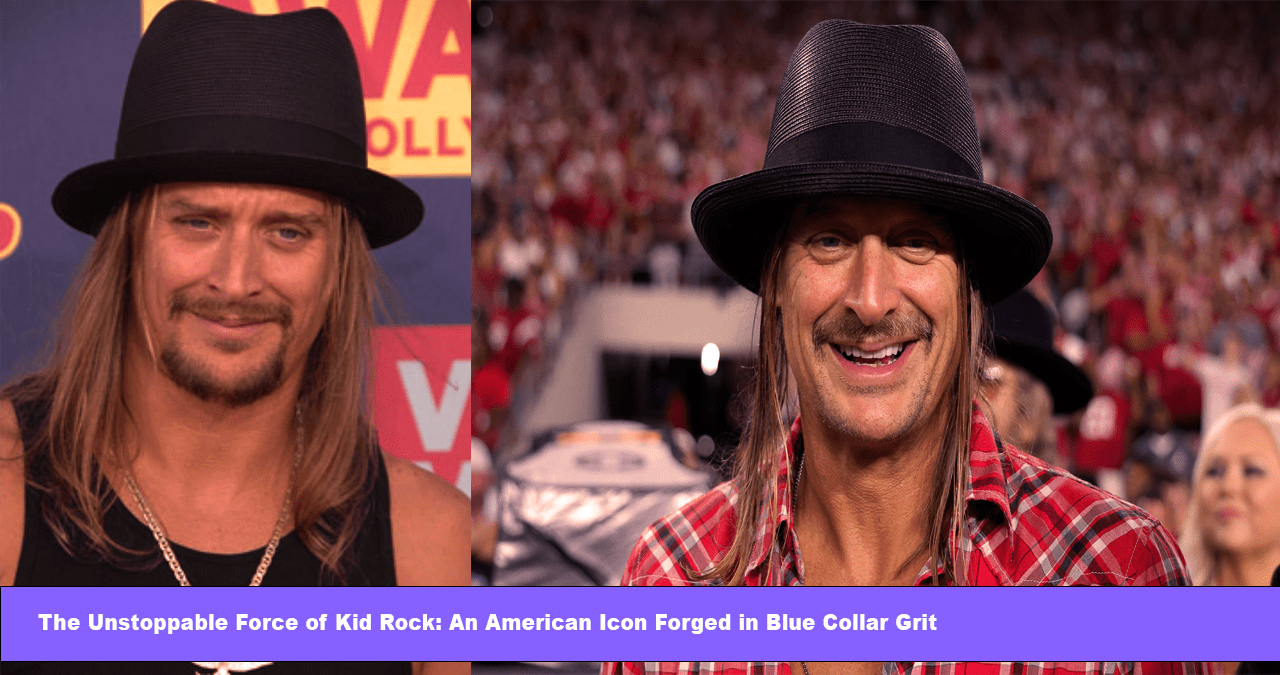

The name Kid Rock evokes an immediate, visceral reaction. For some, it’s the blistering opening riff of “Bawitdaba,” a call to arms for a generation of rebellious youth. For others, it’s the twangy, reflective strains of “Picture,” a duet that showcases surprising vulnerability. For many more, it’s a symbol of a specific, unapologetic brand of American culture—loud, proud, and fiercely independent. Robert James Ritchie, the man behind the persona, is one of the most paradoxical and enduring figures in modern music. His career is a fascinating tapestry woven with threads of rap, rock, country, and heavy metal, defying genre constraints and industry expectations at every turn. To understand Kid Rock is to understand a particular slice of America, a journey from the trailer park to the top of the charts, fueled by audacity, shrewd business acumen, and an unwavering connection to a dedicated fanbase.
His story is not one of overnight success but of relentless evolution. Emerging from the Detroit hip-hop scene, he spent years honing a rap-rock fusion that finally exploded into the mainstream with the diamond-selling album Devil Without a Cause. That album didn’t just make him a star; it created a blueprint for a lifestyle. Kid Rock became the party host, the rock n’ roll hillbilly, a character as larger-than-life as his music. But as the years progressed, the character deepened. He embraced Southern rock and country influences, not as a calculated crossover move, but as a genuine reflection of his Michigan roots and musical passions. This shift cemented his status as a versatile hitmaker but also began to draw clearer lines around his public persona. Today, Kid Rock is as much a political and cultural commentator as he is a musician, using his platform to voice strong opinions that galvanize his core audience and ignite fierce criticism from detractors. This article delves into every facet of this complex figure, exploring the music that made him, the controversies that followed him, and the indelible mark he has left on the American cultural landscape.
The Early Years and Detroit Upbringing
Long before the top hat and the fur coats, Robert Ritchie was a kid from Romeo, Michigan, a small town on the fringes of Detroit’s influence. His upbringing was comfortably middle-class, but he was drawn to the raw, gritty energy of the city’s music scenes. He wasn’t a street kid by necessity, but by choice and affinity, immersing himself in the burgeoning hip-hop culture of the 1980s. As a teenager, he was a breakdancer, a DJ, and an MC, soaking up the sounds of Run-D.M.C., the Beastie Boys, and the rock music his father enjoyed. This unique sonic stew brewing in his mind would become the foundational recipe for his future career. He began performing at local clubs and parties, a white kid from the suburbs holding his own in a predominantly Black art form, a experience that shaped his fearless approach to blending genres.
At the age of seventeen, he released his first independent album, a rap record that showcased his raw talent and entrepreneurial spirit. He sold it out of the trunk of his car, a testament to the DIY ethos that has never left him. The local success caught the attention of Jive Records, but his early major-label forays were commercially disappointing. The rap-rock fusion he was perfecting hadn’t yet found its moment. These were years of struggle and refinement, of playing to half-empty bars and figuring out his sound. He needed the right band, the right attitude, and the right cultural moment. That moment was brewing in the mid-1990s, as alternative metal and rap-rock began to seep into the mainstream through bands like Limp Bizkit and Rage Against the Machine. Kid Rock, however, would take that formula and inject it with a distinctly blue-collar, party-hearty spirit that set him apart from his angst-ridden peers. He was not complaining about the system; he was throwing a rager in its face.
The Breakthrough: Devil Without a Cause and Mainstream Domination
The year 1998 was a watershed. After being dropped by his label and clawing his way back with an independent release, Kid Rock signed with Atlantic Records and unleashed Devil Without a Cause. The album was a slow burn, initially selling modestly. But propelled by an explosive live show and the relentless, chaotic energy of the single “Bawitdaba,” it became a monster. The album is a masterpiece of controlled chaos, a seamless blend of hip-hop beats, crunchy metal guitars, turntable scratches courtesy of his iconic DJ Uncle Kracker, and a swaggering, charismatic vocal delivery. Songs like “Cowboy” leaned into a Southern rock vibe, while “Only God Knows Why” revealed a fleeting moment of introspection. It was the perfect storm, capturing the id of a generation that wanted its music loud, its parties wild, and its icons unapologetic.
Devil Without a Cause eventually sold over 14 million copies worldwide, achieving diamond certification. Kid Rock was suddenly everywhere: on MTV, headlining festivals, and defining a new kind of rock star aesthetic. He wasn’t a glamorous icon or a grunge martyr; he was the guy you wanted to drink a beer with, if that guy also had a private jet and a penchant for Jack Daniel’s. His Twisted Brown Trucker Band became a formidable live unit, and his concerts evolved into legendary, three-hour marathons of musical genre-hopping. This period solidified his persona as the “American Bad Ass,” a title he wore like a badge of honor. The success was a validation of his years of grind and a testament to his unique vision. He had not chased trends; he had stubbornly stuck to his hybrid sound until the world caught up. As he famously quipped in “Cowboy,” “I ain’t straight outta Compton, I’m straight out the trailer,” cleverly rewriting hip-hop’s geography to center his own experience and in the process, speaking directly to millions who felt unseen by coastal cultural elites.
Musical Evolution and Genre-Bending Artistry
To dismiss Kid Rock as a one-album novelty is to profoundly misunderstand his career. Following the stratospheric success of Devil Without a Cause, he embarked on a deliberate and artistically curious journey across the American musical landscape. His 2001 album Cocky doubled down on the rap-rock but also featured the stunning country-tinged duet “Picture” with Sheryl Crow, a song that became a massive crossover hit and hinted at his future direction. This was not a mere flirtation. By the time of 2007’s Rock n Roll Jesus, the transformation was in full effect. The album’s lead single, “All Summer Long,” was a stroke of nostalgic genius, sampling Lynyrd Skynyrd and Warren Zevon to create a ubiquitous summer anthem. It was pure heartland rock, and it topped charts across Europe and America, proving his appeal could transcend his earlier, more aggressive sound.
This shift towards Southern rock and country was organic. He had always cited artists like Hank Williams Jr. and Bob Seger as key influences, and he began to openly embrace his identity as a “country boy.” Albums like Born Free (2010), produced by Rick Rubin, and Rebel Soul (2012) were stripped-down, guitar-driven records focused on songcraft over sonic bombardment. He toured with country legends like Willie Nelson and found a new, perhaps older, audience on country radio and at summer shed tours. This evolution frustrated some early fans who craved the “Bawitdaba” energy but demonstrated his depth as a musician and student of American roots music. He wasn’t abandoning his past; he was expanding his palette. His live shows became a reflection of this journey, effortlessly moving from rap anthems to country ballads to covers of classic rock staples, all held together by his undeniable stage presence and the tight musicianship of his band.
Kid Rock’s Genre Progression Across Key Albums
| Album Title (Year) | Primary Genre Influences | Key Single(s) | Cultural Moment |
|---|---|---|---|
| Grits Sandwiches for Breakfast (1990) | Hip-Hop, Rap | “Yo-Da-Lin in the Valley” | Early indie rap, pre-mainstream |
| Devil Without a Cause (1998) | Rap-Rock, Heavy Metal, Hip-Hop | “Bawitdaba,” “Cowboy” | Peak of nu-metal and rap-rock explosion |
| Cocky (2001) | Rap-Rock, Country, Southern Rock | “Picture,” “Forever” | Post-9/11, crossover into mainstream pop/country |
| Rock n Roll Jesus (2007) | Southern Rock, Country, Classic Rock | “All Summer Long,” “Amen” | Digital download era, nostalgic heartland rock |
| Born Free (2010) | Country Rock, Americana | “Born Free,” “Care” | Rick Rubin collaboration, mature songwriting focus |
| First Kiss (2015) | Country, Southern Rock, Blues | “First Kiss,” “Good Times, Cheap Wine” | Return to personal storytelling, classic rock reverence |
The Persona: American Bad Ass and Political Firebrand
The character of Kid Rock has always been a carefully crafted performance, an amplification of certain aspects of Robert Ritchie’s personality. The “American Bad Ass” persona—complete with the star-spangled outfits, the patriotic bravado, and the libertarian-leaning sloganeering—resonated deeply with a large segment of America that felt culturally marginalized. He became a symbol of blue-collar pride, a celebrity who spoke their language, loved their music (from Skynyrd to Seger), and championed a “don’t tread on me” individualism. This connection is authentic and forms the bedrock of his fan loyalty. His concerts are less like musical performances and more like communal rallies, a space where his audience can celebrate a shared identity.
In the 2010s, this persona increasingly intersected with explicit political commentary. Kid Rock became a vocal supporter of Republican candidates and a fierce critic of what he perceives as political correctness and liberal elitism. His public feuds with journalists, his provocative social media presence, and even his teasing (and ultimately abandoned) flirtation with a U.S. Senate run in Michigan cemented his status as a conservative cultural icon. This transformation alienated some fans and critics who saw his music and early persona as inherently apolitical, or at least not aligned with partisan politics. However, for his core audience, it was a natural extension of the rebellious, anti-authority stance he had always projected. He views his political outspokenness as an exercise in free speech and a defense of the values he believes built America. As he stated in a 2021 interview, “I’m just a guy who speaks his mind. I love my country, I love music, and I don’t like being told what to think or what to say.” This stance, whether celebrated or reviled, has made him an unavoidable figure in the culture wars, ensuring his relevance extends far beyond the Billboard charts.
Business Savvy and Brand Building
Beyond the music and the persona, Robert Ritchie is a remarkably astute businessman. His career is a masterclass in brand management and vertical integration. He famously negotiated a groundbreaking $80 million deal with Atlantic Records in the early 2000s that gave him ownership of his master recordings, a rarity for artists at the time. He understood the long-term value of his art in an industry that often exploits creators. This financial independence has allowed him the freedom to make music on his own terms, without label pressure to chase radio trends. His ventures extend far beyond recording. He owns a successful clothing line, a sprawling Nashville bar and restaurant called Kid Rock’s Big Ass Honky Tonk & Rock ‘n’ Roll Steakhouse, and has lucrative endorsement deals.
Perhaps his most famous business innovation is his approach to touring and ticket sales. In an era of skyrocketing concert prices and frustrating fees, he has made a point of keeping tickets for his shows affordable. He famously launched the “$20 Best Night Ever” tour, capping all tickets at that price to ensure his working-class fans could attend. This move was both a brilliant marketing tactic and a genuine gesture that reinforced his brand identity as the people’s rock star. He makes his money on volume and merchandise, betting on the loyalty of his fanbase. This model has earned him immense goodwill and stands in stark contrast to the dynamics of the modern ticketing industry. His ability to connect his artistic output directly to commerce, while maintaining a sense of fairness and fan appreciation, is a key component of his sustained success and independence.
Chrissy Teigen Net Worth: The Story of a Multi-Faceted Mogul
Cultural Impact and Lasting Legacy
The cultural impact of Kid Rock is multifaceted and significant. Musically, he is a pivotal bridge figure. In the late 1990s, he helped bring rap-rock to its commercial zenith, influencing a wave of bands that followed. Later, his foray into country-rock demonstrated the genre’s fluidity and helped, along with artists like Jamey Johnson and Brantley Gilbert, pave a path for a rougher, more rock-oriented sound within the country mainstream. His sampling of classic rock anthems in songs like “All Summer Long” introduced those sounds to a younger generation, creating a new form of musical nostalgia. Furthermore, his live performances set a high bar for energy and entertainment, reminding audiences of the vaudevillian showmanship of rock’s earlier eras.
Culturally, he represents a specific, potent American archetype: the self-made maverick. His story from trailer park to titan is a modern-day, rock and roll incarnation of the American Dream, albeit a loudly amplified one. He gave voice and a soundtrack to a demographic often caricatured or ignored in popular culture—the rural and suburban working class. Whether one agrees with his politics or appreciates his genre-blending, his authenticity to that experience is undeniable. He has remained stubbornly, defiantly himself, refusing to be molded by industry or media expectations. This has earned him both fierce devotion and equally fierce criticism, making him one of the most polarizing yet consistently relevant figures in entertainment. His legacy is that of a survivor, an innovator, and a mirror reflecting a complex, contentious, and vital part of the American spirit.
Conclusion
The journey of Robert James Ritchie, the artist known as Kid Rock, is a uniquely American saga. It is a story of musical fusion, relentless ambition, shrewd entrepreneurship, and cultural resonance. From the hip-hop clubs of Detroit to the pinnacle of global rock stardom, and into the fiery arena of political discourse, he has navigated his path with a singular, often confounding, conviction. He is a musician who cannot be confined to a single genre, a businessman who owns his worth, and a public figure who willingly embraces controversy. To analyze Kid Rock is to analyze a set of contradictions: the rap rocker who became a country star, the millionaire who champions the everyman, the provocative pundit who preaches family values. Yet, within these contradictions lies his enduring appeal. He embodies a spirit of individualism and defiance that continues to connect with millions. Whether hosting a massive concert or sounding off on social media, Kid Rock remains an unstoppable force, a self-crafted icon whose beat, for better or worse, goes on.
Frequently Asked Questions
What is Kid Rock’s real name and where is he from?
Kid Rock was born Robert James Ritchie on January 17, 1971, in Romeo, Michigan, a small town about 30 miles north of Detroit. His upbringing in the Romeo area, balanced with his deep immersion in the Detroit music scene as a teenager, fundamentally shaped his musical identity. The contrast between his rural, small-town surroundings and the urban grit of Detroit is a key ingredient in his genre-blending sound, allowing him to authentically reference both country and hip-hop influences throughout his career.
How did Kid Rock get his start in music?
His start was deeply rooted in the 1980s Detroit hip-hop scene. As a teenager, he was a breakdancer, a DJ, and an MC, performing at local parties and clubs. He began recording his own rap music and, showing early entrepreneurial flair, pressed and sold his first independent album, Grits Sandwiches for Breakfast, out of the trunk of his car in 1990. This led to a deal with Jive Records, but early mainstream success eluded him. He spent nearly a decade grinding on the independent circuit, refining his rap-rock sound with his Twisted Brown Trucker Band before finally achieving a monumental breakthrough with his fourth album, Devil Without a Cause, in 1998.
What are Kid Rock’s most famous songs?
Kid Rock has several signature hits that span different phases of his career. His explosive rap-rock anthem “Bawitdaba” from Devil Without a Cause is his definitive early track. The Southern rock-flavored “Cowboy” from the same album also remains a staple. His massive crossover ballad duet with Sheryl Crow, “Picture,” showcased his country leanings. Later, “All Summer Long,” which sampled Lynyrd Skynyrd and Warren Zevon, became a global nostalgia anthem and one of his biggest commercial hits. Other notable songs include “Only God Knows Why,” “American Bad Ass,” and “Born Free.”
Why is Kid Rock considered controversial?
Kid Rock’s controversies stem primarily from his outspoken political and social views. He is a vocal conservative and libertarian who frequently engages in public feuds with media figures and politicians on the left. His use of provocative language, strong support for gun rights, and blunt criticism of political correctness have made him a polarizing figure. Additionally, some of his earlier lyrical content and stage antics were criticized as misogynistic or crude. His transition from a primarily musical figure to a political commentator is at the heart of much of the contemporary debate surrounding him.
Does Kid Rock own a bar and how does he sell concert tickets?
Yes, Kid Rock is the owner of Kid Rock’s Big Ass Honky Tonk & Rock ‘n’ Roll Steakhouse, a multi-story entertainment venue on Nashville’s famous Broadway strip. Regarding tickets, he has gained significant attention for his fan-friendly approach to ticket pricing. He has famously capped ticket prices for entire tours at $20, including all fees, through initiatives like his “$20 Best Night Ever” tour. This strategy is a deliberate move to keep his concerts accessible to his core, working-class fanbase, with the understanding that revenue will be made up through high-volume sales and merchandise purchases at the shows.