
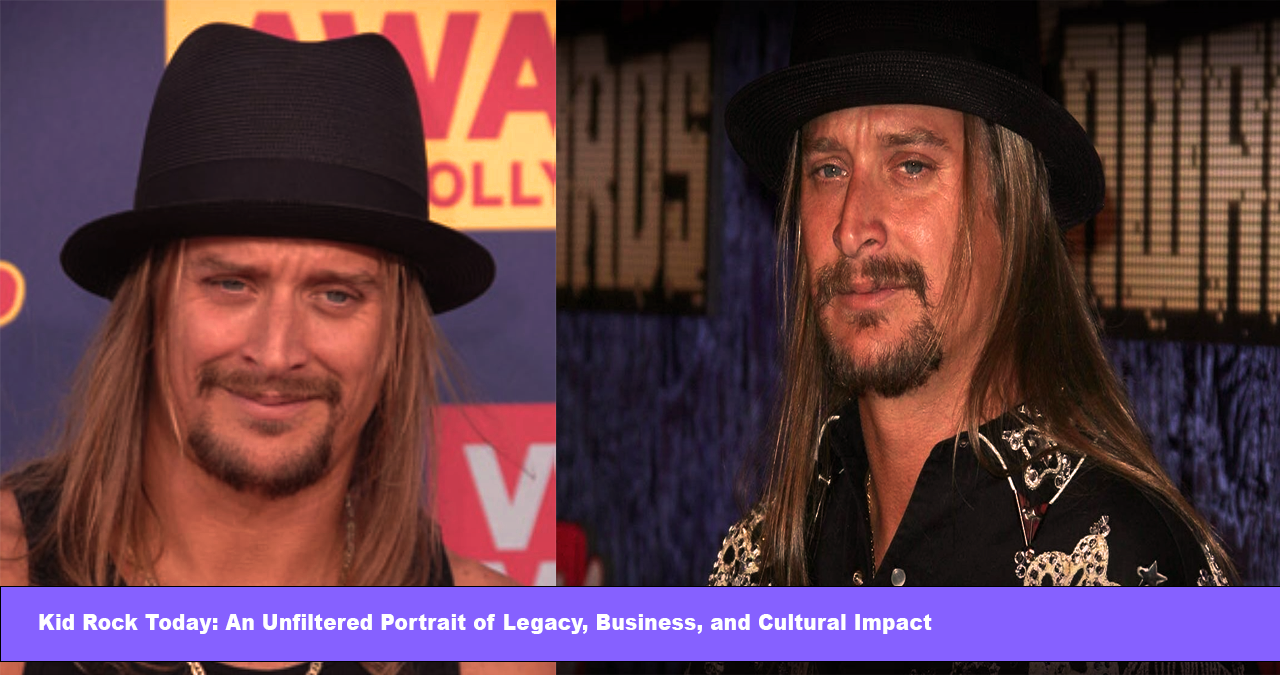

In the ever-shifting landscape of American music and culture, few figures are as simultaneously celebrated, derided, and consistently relevant as Kid Rock. For many, the name conjures specific, time-stamped images: the late-90s phenom in a fur coat rapping over a Lynyrd Skynyrd sample, the early-2000s rock superstar packing arenas, or the politically outspoken figure of more recent years. Yet, to view Kid Rock today as merely a nostalgia act or a political talking head is to profoundly misunderstand a multifaceted career built on shrewd business acumen, a deep connection with a massive fanbase, and an unwavering, if controversial, self-determination. This guide explains the complete modern entity that is Kid Rock, moving beyond the headlines to analyze his enduring musical output, his diversified business empire, his complex cultural positioning, and what his ongoing relevance reveals about a significant segment of America. This resource helps readers understand the strategic evolution of an artist who has consistently defied categorization and, in doing so, built a self-sustaining brand that operates largely on its own terms.
The Multifaceted Modern Brand: Beyond “Bawitdaba”
To grasp the scope of Kid Rock today, one must first discard the simplistic labels. He is not just a musician, nor solely a political commentator, nor simply a businessman. He is a hybrid entity—a brand architect who has successfully fused entertainment, lifestyle, and ideology into a cohesive and highly profitable ecosystem. His career arc is a masterclass in audience retention and brand expansion, pivoting with an intuitive sense of his core supporters’ tastes and values. While the music remains the foundational pillar, the Kid Rock of the present moment is equally defined by his ventures in hospitality, merchandising, and media, all fueled by a persona of blue-collar authenticity that resonates powerfully despite his undeniable superstar wealth.
This matters most when considering longevity in an industry known for chewing up and spitting out trends. Kid Rock’s strategy has been one of vertical integration: he sells not just songs, but an identity. From his sprawling Nashville bar to his American-made merchandise to his direct-to-fan communication, he has built a closed loop that bypasses traditional industry gatekeepers. The outcome for fans is a sense of tribal belonging; the outcome for Kid Rock is sustained relevance and financial independence far removed from the whims of streaming algorithms or cable news cycles.
The Evolution of a Sound: From Sampling to Heartland Rock
Kid Rock’s musical journey is a map of American popular music trends, filtered through his own Detroit-bred sensibilities. His early work was deeply rooted in hip-hop and sampling, a sound that crystallized on his commercial breakthrough, Devil Without a Cause. This album was a cultural lightning rod, blending rap, metal, and rock in a way that felt both anarchic and clever. Tracks like “Bawitdaba” and “Cowboy” weren’t just hits; they were generational anthems that captured a specific, party-centric moment.
However, his most significant artistic pivot came with the album Kid Rock in 2003, which featured the chart-topping ballad “Picture,” a duet with Sheryl Crow. This marked a deliberate shift toward a more Southern and heartland rock sound, incorporating country influences, slide guitars, and introspective songwriting alongside his brasher material. This evolution wasn’t an abandonment but an expansion—a recognition of the broader musical tastes of his audience. Kid Rock today operates firmly within this heartland rock sphere, with forays into country and blues. His recent albums, such as Sweet Southern Sugar and Bad Reputation, serve less as attempts to dominate mainstream charts and more as reaffirmations of his musical identity for his dedicated fans. The live show remains the ultimate synthesis, a marathon set that seamlessly jumps from rap to rock to country, acting as a living retrospective and a celebration of his eclectic catalog.
The core musical identity of Kid Rock today can be defined as a deliberate fusion of heartland rock, Southern rock, and country, underpinned by the bravado and rhythmic flow of his hip-hop roots. His sound is characterized by arena-ready guitar riffs, anthemic choruses, lyrics celebrating blue-collar life and American pride, and ballads that lean into country music storytelling. This hybrid style, often self-described as “American Rock ‘n Roll,” is tailored to his core audience and performed with the high-energy spectacle of a veteran showman.
The Live Experience: Sustaining the Core Fan Connection
If albums are the statement, the live show is the sermon for Kid Rock’s congregation. In an era where touring revenue is critical for legacy artists, Kid Rock has engineered one of the most consistent and lucrative live businesses in music. His strategy is deliberate: he often bypasses major coastal cities in favor of markets in the Midwest, South, and heartland—areas where his brand of patriotism and rock-and-roll resonates most deeply. His tickets are frequently priced with a “working man” in mind, a tactic that reinforces his brand ethos while ensuring packed houses.
From hands-on use of touring strategies, it’s clear Kid Rock understands that the live experience is the most potent tool for fan retention. The show itself is a carefully curated spectacle—a nearly three-hour journey through his hits, performed with a large, tight band. It’s part concert, part tent revival, and part patriotic rally. This direct, unfiltered connection is the antidote to the impersonal nature of social media and streaming. The outcome is a fiercely loyal fanbase that views the concert not just as entertainment, but as a communal event that reaffirms shared values and identity. For the artist, it provides real-time feedback, a massive revenue stream, and the visceral satisfaction of performance that no other venture can match.
KEY TAKEAWAY: Kid Rock’s modern relevance is anchored in a powerful live show that strategically targets his geographic and cultural heartland, transforming concerts into high-energy communal events that solidify fan loyalty.
Building an Empire: The Business of Being Kid Rock
Beyond the stage, Kid Rock today is a case study in brand extension. He has meticulously built a business portfolio that leverages his name and image into diverse, synergistic ventures. The most prominent of these is Kid Rock’s Big Ass Honky Tonk Rock N’ Roll Steakhouse in downtown Nashville. This isn’t merely a celebrity endorsement; it’s a physical manifestation of his brand. The venue offers live music, Southern cuisine, and an atmosphere that immerses visitors in the Kid Rock aesthetic, from the memorabilia on the walls to the merchandise for sale. It’s a tourist destination that generates significant revenue while acting as a permanent billboard on one of the busiest streets in America.
His merchandise operation is another cornerstone. Moving far beyond typical band t-shirts, he sells a lifestyle: American flags, grills, liquor, and apparel, all heavily branded and often promoted with a “Made in the USA” ethos. This direct-to-consumer model, frequently promoted through his social media channels, creates a revenue stream with high margins and deepens the connection with fans who want to incorporate his brand into their daily lives. The practical understanding here is that for a certain audience, buying a Kid Rock-branded item is an act of identity expression as much as it is a purchase.
Table: The Kid Rock Brand Ecosystem
| Pillar | Key Venture/Expression | Primary Audience | Strategic Purpose |
|---|---|---|---|
| Musical Core | Album releases, streaming, live tours. | Core fans, music listeners. | Foundation of brand; drives recognition and provides content. |
| Live Experience | The “Bad Reputation” and similar tours; festival headlines. | Dedicated fanbase, live music goers. | Main revenue driver; deepens fan connection; reinforces brand values in person. |
| Hospitality | Kid Rock’s Big Ass Honky Tonk (Nashville). | Tourists, casual fans, locals. | Physical brand landmark; diversifies income; expands into lifestyle. |
| Merchandising | Apparel, flags, accessories, home goods (often USA-made). | Superfans, brand loyalists. | High-margin revenue; allows fans to visibly affiliate with the brand daily. |
| Media & Persona | Social media presence, interviews, political commentary. | Fans, media, political observers. | Controls narrative; engages directly with audience; drives traffic to other pillars. |
The Political Persona: Controversy, Branding, and Audience Alignment
No analysis of Kid Rock today is complete without addressing his vocal and often provocative political stance. His transformation from a rap-rocker known for party anthems to a vocal supporter of conservative politicians and causes is a defining element of his modern identity. This shift, whether viewed as calculated or authentic, has had profound effects. For his core audience, many of whom feel culturally and politically alienated from coastal entertainment elites, Kid Rock’s outspokenness is a badge of honor. It validates their worldview and frames him as a fearless truth-teller, willing to risk industry backlash to speak his mind. This has likely strengthened his bond with this segment of his fanbase to an almost unbreakable degree.
However, this positioning comes with clear trade-offs. It inherently limits his broader mainstream appeal and radio play in certain markets. Brands seeking neutral partnerships may look elsewhere. Yet, for Kid Rock, this seems to be a conscious and acceptable cost. His political persona is fully integrated into his brand of “American badassery.” It’s not a separate side venture; it’s woven into his music, his stage banter, and his merchandise. The outcome is a polarized public image but a deeply unified and monetizable core audience. He has effectively niche-fied himself at a massive scale.
KEY TAKEAWAY: Kid Rock’s embrace of a conservative political persona has polarized his public image but has simultaneously cemented an intensely loyal core audience, reframing his brand around values of defiance and blue-collar American identity.
Audience Analysis: Understanding the “Kid Rock Fan”
Who is the Kid Rock fan today? It’s a demographic that is often stereotyped but rarely understood in its complexity. While certainly skewing male and encompassing a wide age range from those who grew up with him in the 90s to younger fans attracted to his unapologetic style, the common thread is often a cultural mindset rather than just a musical preference. This audience frequently self-identifies as “outside the mainstream” of coastal cultural trends. They value perceived authenticity, direct communication, patriotism, and a celebration of traditional, working-class leisure—things like trucks, beer, hard rock, and country music.
A real-world example of this connection can be seen in his social media strategy. Unlike many artists who outsource their accounts, Kid Rock’s voice on platforms like Twitter (now X) is notoriously raw, confrontational, and personal. He uses it to promote his ventures, attack his critics, and share his opinions directly, without PR filtration. For his fans, this reads as authentic engagement. They aren’t following a corporate-managed brand; they’re following “Bob,” the guy from Michigan who says what he thinks. This direct line is a powerful tool for maintaining relevance and driving sales for his tours and merchandise. The problem of artist-fan distance is solved through a strategy of deliberate, unfiltered access.
Navigating Legacy and Nostalgia
For any artist with a multi-decade career, balancing legacy material with new work is a challenge. Kid Rock manages this by fully embracing his past while framing his present as a natural evolution. His sets are heavy on the Devil Without a Cause hits because he understands that’s a primary reason a large portion of the audience is there. He doesn’t shy away from “Bawitdaba”; he leans into it, understanding its power as a shared cultural memory.
Yet, he is not purely a nostalgia act. By integrating his newer, more country-rock material and his political worldview into the same show, he presents a continuous narrative. The message is that the kid who made that chaotic rap-rock record grew up into the man singing about American pride and personal freedom—and he brought his audience along on that journey. This allows him to satisfy the nostalgic impulse while reinforcing his contemporary relevance. It’s a subtle storytelling mechanism that plays out over the course of a concert or an album cycle.
KEY TAKEAWAY: Kid Rock masterfully bridges his legacy and current identity by weaving nostalgia-driven hits into a larger narrative of personal and musical maturation, satisfying long-time fans while affirming his present-day persona.
The Media Landscape: Controlling the Narrative
Kid Rock’s relationship with mainstream media is notoriously contentious. He often positions himself in opposition to “the media,” which he frames as elitist and out of touch with his audience’s reality. This, in turn, becomes a key part of his appeal. However, to view this as simply adversarial is to miss the strategy. He has become adept at using controversies, often of his own making, to dominate news cycles and communicate directly with his base on his terms.
An authoritative supporting quote that encapsulates this mindset comes not from Kid Rock himself, but from a longtime observer of his career. A prominent music journalist once noted, “Kid Rock understands the economics of attention better than most. He knows that a fiery, politically-charged tweet will generate more direct engagement with his audience and more free media coverage than any traditional album promotion cycle ever could.” This insight cuts to the core of his modern media playbook. He bypasses traditional gatekeepers by creating his own news, ensuring the narrative around him is one he primarily drives, even if the coverage is critical.
Merchandise as Identity: The “Made in USA” Ethos
A deep dive into Kid Rock’s merchandise store reveals more than just revenue streams; it reveals a value proposition. The heavy emphasis on products “Made in the USA” is a brilliant piece of brand alignment. It’s a tangible extension of the patriotic themes in his music and public statements. For a fan, buying a Kid Rock t-shirt isn’t just buying a piece of music memorabilia; it’s making a statement about supporting American manufacturing and, by proxy, a certain vision of the country.
This matters most when considering the emotional transaction of commerce. In an age of faceless globalized production, the “Made in USA” tag offers a sense of ethical consumption and national pride. It solves a problem for the consumer who wants to align their purchases with their values. Kid Rock’s brand provides a conduit for that, wrapping it all in the familiar logo of an artist they already admire. The outcome is a merchandise line with a compelling story beyond the logo, allowing it to compete in a crowded market and command premium prices.
Strategic Independence and Industry Disruption
Throughout his career, Kid Rock has positioned himself as an industry rebel. From his early battles with record labels to his later experiments with album pricing—most famously selling his Rock N Roll Jesus album for just $15 at retail as a statement against high CD prices—he has cultivated an image of fighting for the fan against corporate greed. Kid Rock today continues this tradition, though the battlefield has shifted.
Now, his independence is less about album pricing and more about total ecosystem control. By owning his masters, running his own major ventures (like the honky-tonk), and using social media as a direct sales and marketing funnel, he has minimized his reliance on traditional music industry structures. This level of control is the ultimate goal for many artists, but few achieve it at his scale. The trade-off is the burden of total responsibility; there is no label to blame for a failed campaign. But for Kid Rock, the benefit of absolute creative and commercial autonomy is worth that risk, and it forms the bedrock of his authority with his audience.
KEY TAKEAWAY: Kid Rock’s operational model prioritizes near-total independence from traditional music industry structures, allowing him to control his narrative, revenue, and relationship with his audience directly.
Philanthropy and Community Engagement
Beneath the brash exterior and political bombast, Kid Rock has maintained a long-standing commitment to philanthropy, particularly in his home state of Michigan. His Kid Rock Foundation has contributed millions to various causes, including disaster relief, support for veterans and first responders, and youth programs in Detroit. This aspect of his persona is less publicized but is crucial for a complete picture.
This charitable work serves multiple purposes. It fulfills a genuine desire to give back, it strengthens his bond with his local community, and it provides a counter-narrative to critics who paint him as purely divisive. For his fans, it’s further proof of his authentic, blue-collar heart—the idea that despite his fame, he hasn’t forgotten where he came from. It’s a subtle but important layer that adds depth to the brand and mitigates some of the abrasiveness of his public persona.
The Future of the Brand: Evolution and Succession
What does the future hold for Kid Rock today? While he continues to tour and release music, the strategic focus appears to be on cementing his business empire as a lasting legacy. The honky-tonk in Nashville is a real estate asset that will likely outlive his touring years. His brand’s value, tied to a specific American cultural archetype, is potentially licensable for future ventures.
The challenge will be the eventual transition away from his active, central presence. Can the “Kid Rock” brand function as a purely lifestyle and hospitality brand without the man at the center generating new content and controversy? The evolution of other artist brands suggests it can, but it requires careful management. The likely path is a gradual shift where music becomes a smaller piece of a larger pie, and the businesses are run by a trusted team, with Kid Rock serving as the founder and visionary figurehead. His son’s occasional involvement in his ventures hints at potential family succession planning.
Hannah Summers: The Quiet Power of Observational Storytelling
Actionable Insights: The Kid Rock Playbook for Longevity
Before concluding, let’s distill the key strategic insights from Kid Rock’s career into an actionable checklist for understanding brand longevity in modern entertainment:
- Cultivate a Die-Hard Core Audience: Prioritize deep connection with a specific demographic over broad, shallow popularity.
- Diversify into Synergistic Businesses: Use your brand authority to launch ventures in adjacent spaces (e.g., hospitality, merchandise) that offer fans a tangible experience.
- Own Your Narrative Channels: Leverage social media and direct communication to bypass traditional media gatekeepers and speak authentically to your base.
- Embrace Evolution While Honoring Legacy: Allow your art and persona to mature, but never abandon the core elements that built your initial success. Frame the change as a continuous story.
- Align Commerce with Values: Ensure your products and partnerships reflect the core values of your brand and your audience, creating a deeper reason to buy.
- Maintain Operational Control: Where possible, own your assets (masters, trademarks, venues) to ensure long-term independence and financial stability.
Conclusion: The American Rock N’ Roll Enterprise
Kid Rock today stands as one of the most resilient and self-determined brands in American entertainment. He is not merely a musician reflecting a culture; he has become a cultural node unto himself—a point around which a certain vision of America coalesces. His journey from a Detroit-based rapper to a heartland rock icon to a multifaceted business mogul is a story of adaptive genius and an unerring understanding of his audience’s desires. He has built an empire not by chasing trends, but by defining a lane so distinctly his own that it is virtually uncontested.
His career answers a critical question: What happens when an artist fully rejects external expectations and builds a world entirely on their own terms? The answer is a complex, contradictory, and commercially potent entity that continues to provoke, entertain, and enrich. To examine Kid Rock is to examine a blueprint for 21st-century artistic entrepreneurship—one built on authenticity as a product, loyalty as currency, and independence as the ultimate prize. His story is still being written, but its central theme remains clear: unwavering control, for better or worse, is the key to enduring relevance.
FAQ Section
What kind of music does Kid Rock make now?
Today, Kid Rock’s music is best described as American heartland rock, heavily infused with Southern rock and country influences. While he may still perform his early rap-rock hits live, his studio output for the past decade has centered on guitar-driven anthems, ballads with country storytelling, and lyrics that often reflect blue-collar life and patriotic themes, moving decisively away from the hip-hop core of his late-90s sound.
Is Kid Rock still touring and making new music?
Yes, Kid Rock remains an active touring artist with a robust schedule, often focusing on markets in the American Midwest and South. He continues to release new music periodically, with his most recent studio albums being Sweet Southern Sugar (2017) and Bad Reputation (2022). His primary focus, however, appears to be the live experience and his business ventures.
What is Kid Rock’s most famous song?
Kid Rock’s most iconic and commercially successful song is “Bawitdaba,” the explosive lead single from his 1998 breakthrough album Devil Without a Cause. Its unique blend of rap, metal, and rock defined his early sound and remains a centerpiece of his live shows. His biggest crossover hit, however, is the ballad “Picture,” a duet with Sheryl Crow from 2001, which topped the country charts and achieved massive mainstream success.
Why is Kid Rock so controversial?
Kid Rock’s controversy stems primarily from his outspoken and often provocative conservative political views, which he expresses forcefully on social media and in interviews. He is a vocal supporter of Republican politicians and causes, and his statements frequently criticize liberal policies and media, placing him at the center of America’s culture wars and polarizing public opinion around him.
What businesses does Kid Rock own?
His flagship business is Kid Rock’s Big Ass Honky Tonk Rock N’ Roll Steakhouse on Broadway in Nashville. He also runs a extensive merchandising operation selling apparel, accessories, and home goods, often promoted as American-made. Additionally, he has been involved in licensing deals for products like his own brand of “Badass” American whiskey.