
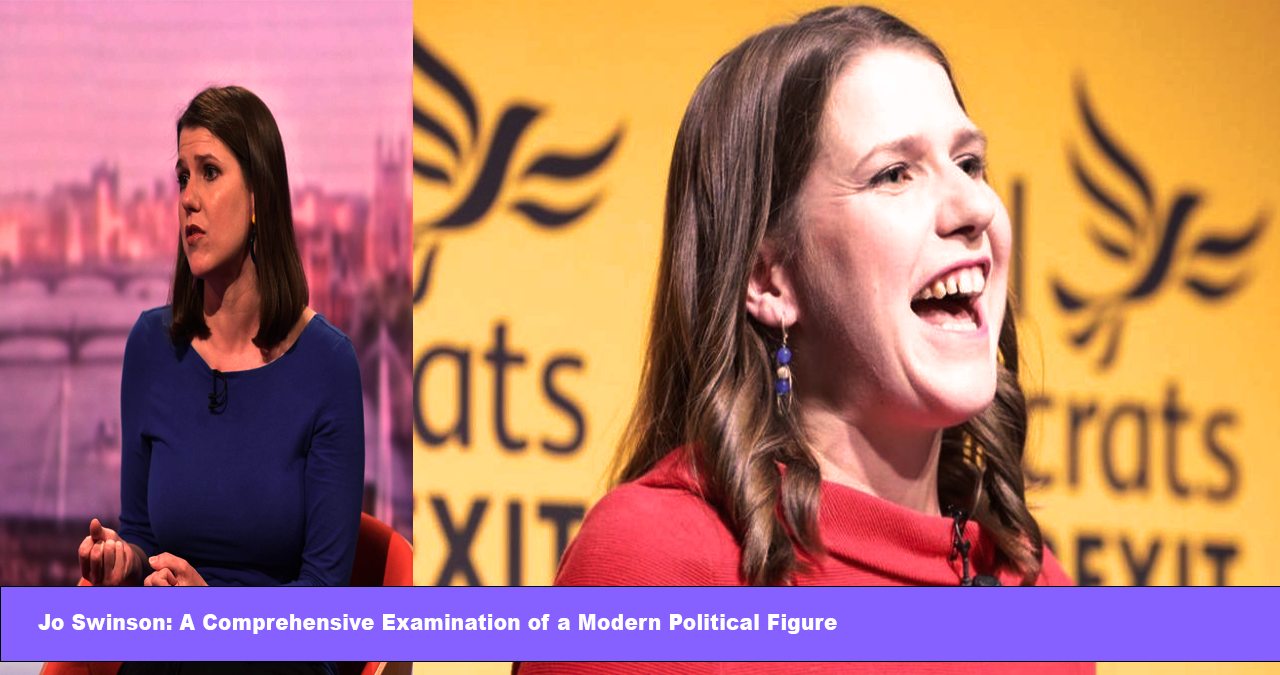

Jo Swinson: Leadership, Liberalism, and the Quest for Political Relevance in Contemporary Britain
Executive Summary
This definitive resource offers a multi-faceted, in-depth exploration of Jo Swinson, the former leader of the Liberal Democrats. It moves beyond simplistic headlines to examine her political journey, ideological foundations, leadership during a period of profound national crisis, and her complex legacy. The analysis spans her early career, her defining policy positions on issues from Brexit to gender equality, the strategic challenges she faced, and her impact on British liberalism. Designed for readers seeking a nuanced understanding, this guide explains the forces that shaped her career and the lessons her tenure offers for political strategy and liberal thought.
Introduction
The landscape of modern British politics is populated by figures whose influence extends beyond their time in office, shaping debates and party identities for years to come. Among them is Jo Swinson, a politician whose rapid ascent and abrupt electoral setback tell a deeper story about the state of liberalism, leadership under pressure, and the volatile nature of public opinion. This resource helps readers understand not just the biographical timeline of Jo Swinson, but the substantive political philosophy she championed, the formidable obstacles she encountered, and the substantive mark she left on her party and national discourse. Whether examining her advocacy for progressive social policies, her unequivocal opposition to Brexit, or the dynamics of her leadership, this article provides a comprehensive, expert-level analysis free from partisan caricature, focusing instead on the interplay of personality, principle, and political reality.
The Formative Path: From Activist to Parliamentarian
The political identity of Jo Swinson did not emerge in a vacuum. Her trajectory offers a classic study of a modern liberal politician, shaped by formative experiences that fused grassroots activism with a belief in pragmatic, institutional change. Growing up in Glasgow and later attending the London School of Economics, Swinson’s early political consciousness was galvanized by issues of social justice and internationalism—core tenets of the Liberal Democrat worldview.
Her pre-parliamentary career was a deliberate apprenticeship in the mechanics of political change. Working in public relations and as a party staffer, she developed a sharp understanding of communication and campaign strategy. This practical background is often overlooked but was crucial; it equipped her with a professional toolkit distinct from the traditional pathways of law or political research commonly trodden by her contemporaries. In practice, this manifested in a political style that was highly media-aware and strategically disciplined, focused on clear messaging and targeted policy pitches.
Elected as the MP for East Dunbartonshire in 2005, at just 25 years old, Swinson immediately stood out. She embodied a new generation of Liberal Democrat MPs: young, digitally savvy, and articulating a liberalism that was both economically literate and socially progressive. Her early work in Parliament cemented her reputation as a diligent constituency MP and a formidable campaigner on specific issues. She became known for her advocacy on body image and commercial sexualisation, challenging industries on self-regulation and spearheading the Campaign for Body Confidence. This focus demonstrated a key aspect of her political approach: identifying modern, relatable societal pressures and proposing legislative or cultural interventions rooted in liberal principles of individual autonomy and well-being.
This matters most when considering her later leadership bid. Her base of support within the party was built not on long-standing factional loyalty, but on a record of effective, media-competent campaigning on contemporary issues. She was seen as a communicator who could connect liberal values to the daily concerns of voters, a quality the party desperately sought after its bruising experience in coalition government. Her rise was a direct response to the perceived need for renewal and clearer public articulation of what the Liberal Democrats stood for in a post-coalition era.
Key Takeaway: Jo Swinson’s early career was a calculated fusion of grassroots liberal activism and professional strategic communication, crafting a political identity focused on modern societal issues and setting the stage for her eventual leadership.
The Liberal Democrat Crucible: Coalition, Crisis, and Comeback
To understand the context of Jo Swinson’s leadership, one must first grasp the profound crisis the Liberal Democrats navigated following the 2010-2015 coalition government with the Conservatives. The party’s experience in government was politically catastrophic, seen by many former supporters as a betrayal of core principles, particularly on tuition fees. The result was a decimation at the 2015 general election, reducing the parliamentary party from 57 to just 8 MPs. Swinson was among those who lost her seat, a personal and political setback that deeply informed her subsequent perspective.
This period was the crucible in which her later leadership platform was forged. From hands-on use of the levers of government as a junior minister to the shock of electoral rejection, she gained a unique, if painful, dual perspective. During her time out of Parliament, she engaged in business and continued political commentary, an experience that arguably broadened her outlook beyond the Westminster bubble. Her successful recapture of East Dunbartonshire in 2017 was not just a personal comeback; it was symbolic of the party’s fragile rebuilding process.
The internal party dynamics post-2015 were complex. A tension existed between those who believed the coalition was a necessary exercise in responsible government and those who viewed it as a historic error that diluted the party’s identity. Swinson’s positioning was nuanced. She did not disavow the coalition wholesale—a pragmatic acknowledgment of its realities—but she increasingly framed the future around a clear, uncompromising revival of distinctive liberal policies. This was a strategic calculation: the party needed to move on from the perpetual defence of its past while rediscovering a bold, confident voice.
Her ascent to the deputy leadership and then the leadership in 2019 was a product of this specific moment. The party sought a clean break from the past, a figure untainted by the highest-level coalition decisions (though she served as a minister) and one who represented a new generation. Her campaign emphasized positivity, a strong remain stance on Europe, and an ambitious policy platform. She presented liberalism as a dynamic, future-oriented force, capable of addressing climate change, technological disruption, and social inequality with equal vigour.
Key Takeaway: Swinson’s political identity was fundamentally shaped by the Liberal Democrats’ traumatic coalition aftermath, positioning her as a figure of renewal who aimed to reconcile pragmatic government experience with a bold, distinctive liberal vision.
The Leadership Platform: Core Ideology and Policy Architecture
Upon becoming leader in July 2019, Jo Swinson moved quickly to define her political project. Her platform was arguably the most unequivocally socially liberal and internationallyist offering from a major British party leader in recent history. It was built on several interconnected pillars, each designed to mark a clear dividing line from both the Conservatives and Labour.
A Definition of Swinson-Era Liberalism:
Jo Swinson’s leadership ideology can be defined as a confident, interventionist form of social liberalism. It combined a staunch defence of individual rights and international cooperation with a proactive role for the state in correcting market failures and guaranteeing opportunity. This was distinct from laissez-faire classical liberalism, emphasizing instead a state that enables individual flourishing through investment in public services, green technology, and strict regulation to protect citizens from corporate overreach and discrimination. Its core aim was to reconcile economic efficiency with social justice and environmental sustainability.
The central, overriding pillar was her uncompromising opposition to Brexit. She championed a policy of outright revocation of Article 50 if the Liberals won a majority, a stance that thrilled the party’s activist base and many Remain voters but would later be scrutinized for its electoral realism. This was not merely a policy position; it was framed as a fundamental issue of economic security, international solidarity, and liberal values versus nationalist insularity. For Swinson, stopping Brexit was the essential first step to addressing the country’s deeper challenges.
Alongside this, she promoted a robust agenda on gender equality and workers’ rights. Policies included making flexible working a default right, extending parental leave, and requiring large companies to publish gender and ethnicity pay gaps. This agenda linked traditional liberal concerns about opportunity with modern workplace dynamics. Furthermore, her environmental policy was aggressive, committing to net-zero carbon emissions by 2045—earlier than other major parties—through massive investment in renewable energy and public transport.
A subtle but important aspect of her platform was its techno-optimism coupled with regulatory caution. She spoke frequently of the opportunities of the digital economy while advocating for stronger data rights and measures to combat online harm. This reflected a liberal desire to harness innovation while protecting individual autonomy from powerful new corporate entities.
Key Takeaway: Swinson’s leadership platform was a cohesive, ambitious blueprint for social liberalism, defined by staunch internationalism, proactive equality measures, aggressive climate action, and a belief in a state that actively enables individual freedom and opportunity.
The 2019 Election Campaign: Strategy, Messaging, and Real-World Confrontation
The December 2019 general election was the ultimate real-world test for Jo Swinson’s project. Called in the aftermath of prolonged Brexit deadlock, the election presented a stark opportunity: to position the Liberal Democrats as the clear, united voice for Remain in a polarized political environment. The campaign strategy, however, encountered severe practical and structural headwinds.
From the outset, the core strategic gamble was to pursue a “Stop Brexit” message that aimed to consolidate the Remain vote across the country. The campaign launched with high-energy rallies and bold claims about winning a majority. Swinson’s personal branding was front and centre, with the slogan “Jo Swinson: Britain’s Next Prime Minister” featuring prominently. In practice, this top-down, leader-centric approach faced immediate difficulties.
First, the electoral system was a formidable obstacle. The First-Past-the-Post system brutally punishes nationally dispersed support. While the Lib Dems were polling in the teens and twenties nationally, this support was spread thinly, with concentrations only in specific seats. The campaign’s need to appear nationally credible clashed with the ground-game reality of targeting a limited number of winnable constituencies. This tension was never fully resolved.
Second, the “Stop Brexit” vote fragmented. The emergence of a resurgent Labour party under Jeremy Corbyn, offering a second referendum, split the anti-Conservative, anti-Brexit vote in countless constituencies. Many tactical voters, whose primary goal was to prevent a Conservative majority, concluded that Labour was the stronger vehicle in their area. The Lib Dem message of outright revocation began to be seen by some as electorally unrealistic, allowing opponents to frame it as undemocratic.
Third, the leader-centric messaging became a vulnerability. Swinson faced a relentless and highly personal attack campaign, particularly on social media and from partisan outlets. Her political record, including her ministerial votes on welfare changes during the coalition, was used to paint her as hypocritical or untrustworthy. The narrative of her being a potential Prime Minister, intended to convey strength, began to be turned against her, framed as arrogant in the face of the party’s limited seat count.
A case-style insight from the campaign trail illustrates this: in traditionally Conservative-Lib Dem marginals, lifelong Liberal voters reported hesitating because they feared a Lib Dem vote might indirectly help a Corbyn-led Labour government, which they feared more than a Brexit-centric Conservative one. This demonstrates the complex, multi-dimensional calculus voters employed, where Brexit was one issue among several, including economic management and national security.
Key Takeaway: The 2019 election exposed the harsh constraints of the British electoral system on a nationally dispersed liberal vote, the perils of leader-centric messaging in a hostile media environment, and the difficulty of consolidating a single-issue vote when competing with a larger party offering a similar, if less absolute, position.
Key Challenges and Strategic Dilemmas
Analyzing the Swinson leadership requires a sober examination of the inherent challenges and strategic dilemmas she faced, many of which were structural rather than personal. These issues provide critical lessons for political strategy and liberal party positioning.
The Identity Crisis of British Liberalism: The Liberal Democrats perpetually navigate a contested space between the two main parties. Under Swinson, the strategy was to differentiate sharply on core issues like Brexit and climate. However, this created a tension. To grow, the party needed to appeal to disaffected moderate voters from both Labour and the Conservatives. A platform perceived as intensely socially liberal and pro-Remain appealed strongly to one segment of this group (former Conservatives in the ‘Blue Wall’ and metropolitan Labour remainers) but risked alienating more economically liberal or socially conservative switchers. Striking this balance is the central, enduring dilemma of the party.
Media Asymmetry and Personal Scrutiny: As a young, female leader, Swinson faced a degree and type of scrutiny with distinct gendered dimensions. Coverage frequently focused on her appearance, tone of voice, and perceived “likeability” in ways less commonly applied to male counterparts. Furthermore, the Liberal Democrats lack the supportive partisan media ecosystem enjoyed by the two larger parties. This created a profound asymmetry: her messages and record were often filtered through hostile or sceptical lenses, making it extraordinarily difficult to control the narrative during a fast-moving campaign.
The Legacy of Coalition: Despite attempts to move forward, the shadow of the 2010-2015 government, particularly the tuition fees pledge, remained a potent weapon for opponents. It fed a meta-narrative about Lib Dem trustworthiness that Swinson’s fresh-face persona could not entirely dispel. Every policy announcement was vulnerable to the retort: “But what will you really do in power?” This trust deficit is a deep-seated problem that pre-dated and outlasted her leadership.
Table: Strategic Dilemmas of the Swinson Leadership
| Dilemma | Short-Term Tactical Approach | Long-Term Strategic Trade-Off |
|---|---|---|
| Brexit Positioning | Uncompromising Revocation to mobilise base & define brand. | Risked appearing undemocratic & alienating soft-Leave/Reform voters. |
| Electoral System | Target “Blue Wall” seats & select national messaging for broad appeal. | National leader-centric campaign undermined local constituency-focused ground game. |
| Party Identity | Emphasise distinct, bold social liberalism & green policies. | Narrowed appeal in the political “centre,” defined primarily by social views rather than economic management. |
| Media Environment | Rely on broadcast media interviews & social media direct communication. | Lack of supportive print media amplified hostile attacks and made rebuttals less effective. |
Key Takeaway: Swinson’s leadership was constrained by deep-rooted strategic dilemmas inherent to British liberalism, including a polarized electoral landscape, a hostile media environment, and the persistent legacy of past political compromises.
Legacy and Lasting Impact on the Liberal Democrats
Electoral defeat, especially of the scale experienced in 2019 where Swinson lost her own seat, often prompts a swift and total reassessment of a leader’s legacy. However, a more nuanced view suggests that Jo Swinson’s impact on the Liberal Democrats is substantive and enduring, shaping the party’s direction in several key areas.
Poppy Coburn: A Comprehensive Exploration of Form, Function, and Modern Resonance
A Definition of the Swinson Legacy:
The legacy of Jo Swinson’s leadership is a party recalibrated around a more confident, socially interventionist, and unequivocally internationalist liberalism. She accelerated the shift away from the cautious, post-coalition defensiveness and re-centred the party on clear stances regarding Europe, climate change, and equality. While the electoral strategy failed, the ideological clarity she imposed—particularly the integration of hard-edged environmental targets and progressive social policies into the party’s core identity—has persisted under subsequent leadership, influencing policy development and activist energy.
First, she re-mobilized and expanded the party’s membership and activist base. Her leadership campaign and initial months generated significant enthusiasm, attracting new members, particularly younger voters and those passionately opposed to Brexit. This influx changed the party’s internal dynamics, making it more assertive and less inclined towards the caution that characterized some post-coalition thinking. The energy she channeled did not disappear with her defeat; it remained a force within the party.
Second, she firmly established the Liberal Democrats as the most pro-European party in British politics. While this positioning carried electoral costs in 2019, it has subsequently provided a clear and consistent platform. In the post-Brexit environment, it allows the party to critique the practical outcomes of withdrawal and appeal to those who feel their internationalist identity has been marginalised.
Third, she normalized a style of leadership that was unapologetically assertive. As one senior party figure noted in reflection, “She took the helm at a time when the party was still whispering. She made us shout. The volume might have been wrong for that particular moment, but she proved we had a voice that could cut through.” This demonstration that the Liberal Democrats could, and should, project confidence has had a lasting psychological impact on the party.
Finally, her policy work, particularly on flexible working, parental leave, and wellbeing economics, has become embedded in the party’s offering. These issues, once seen as niche, are now central to its appeal to modern, professional voters. She successfully linked liberal values to the concrete daily challenges of work-life balance, mental health, and caring responsibilities.
Key Takeaway: Despite electoral defeat, Jo Swinson’s lasting impact is a Liberal Democrat party that is more ideologically confident, socially progressive, and assertive in its internationalism, with a policy agenda firmly oriented around modern wellbeing and opportunity.
Gender, Media, and the Experience of Women in Leadership
Any examination of Jo Swinson’s career would be incomplete without considering the dimension of gender. Her experience as the first female leader of the Liberal Democrats, and the youngest leader of any major UK party at the time, illuminates the persistent challenges faced by women in high-profile political roles.
From the outset, Swinson’s gender and age were framed as both an asset and a liability. Her communications team initially leveraged her identity as a modern, working mother to connect with voters on issues like childcare and flexible work. However, this also opened specific lines of attack. Criticism that might be framed as “tough” or “decisive” for a male leader was often recast as “strident” or “shrill” for her. The scrutiny of her presentation—clothing, smile, tone—was incessant and frequently detached from substantive policy discussion.
This matters most when analyzing media interactions. Commonly seen in real political media management is the tightrope women leaders must walk between appearing sufficiently authoritative and avoiding the “anger” trap, where strong disagreement is perceived negatively. Swinson’s performances in high-stakes interviews, such as during the election debates, were dissected for perceived “niceness” or its absence. This created a double bind: to be taken seriously as a potential Prime Minister, she needed to project command, but doing so risked triggering unconscious bias about appropriate feminine behaviour.
Furthermore, the online abuse directed at her was profoundly gendered and often vile, ranging from sexist insults to violent threats. This ecosystem of harassment, while not unique to her, forms a hostile background noise that male leaders typically experience less intensely. It represents a real cost of political participation for women, affecting not just the individual but potentially deterring others from stepping forward.
Swinson herself was a longstanding advocate for gender equality, campaigning for better representation in business and politics. Her own trajectory, therefore, became a meta-commentary on the issues she championed. Her defeat was analyzed by some through a gendered lens, questioning whether the political arena was yet ready for a leader who was young, female, and a mother. This reflection has spurred continued debate within political circles about how parties support women leaders and combat systemic bias in public perception.
Key Takeaway: Swinson’s leadership highlighted the persistent gendered challenges in politics, from biased media framing to intense personal abuse, underscoring how the path for women in high office remains fraught with unique and often unfair obstacles.
The Post-Leadership Chapter: Influence Beyond Westminster
Since standing down as leader and leaving Parliament, Jo Swinson’s influence has evolved rather than ended. Her activities provide a window into how modern political figures recalibrate their work after frontline politics, continuing to advocate for their core beliefs through different channels.
She has remained an active and articulate voice on liberal politics, frequently contributing to broadcast and written media. Her commentary often focuses on the future of the centre-ground, the challenges of political polarization, and specifically, the advancement of women in leadership across all sectors. This maintains her presence in the national conversation as a thinker and critic, albeit without the platform of the Commons.
Significantly, she has deepened her work in the corporate and organisational sphere, focusing on the practical implementation of policies she championed in Parliament. This includes advising companies on flexible working cultures, gender-balanced leadership, and employee wellbeing initiatives. This shift is telling; it represents a direct translation of her political agenda into the private sector, arguing that progressive social policy is not just a government responsibility but a corporate imperative for attracting and retaining talent. In this role, she acts as a bridge between political ideology and business practice.
Furthermore, she engages with think tanks and advocacy groups dedicated to constitutional reform, particularly the campaign for proportional representation. Having experienced the brutal constraints of First-Past-the-Post firsthand, she is a powerful advocate for electoral system change, arguing it is essential for a healthier, more representative democracy where liberal voices can be fairly heard.
Readers often benefit from exploring the trajectories of former leaders to understand the ongoing evolution of political thought. Swinson’s post-Westminster career demonstrates that political influence can be exercised through cultural and corporate channels, shaping norms and practices from the outside. It also reflects a pragmatic understanding that in an era of volatile elections, lasting change sometimes requires building consensus beyond the walls of Parliament.
Key Takeaway: Beyond Parliament, Jo Swinson has channeled her liberal advocacy into corporate consultancy and public commentary, focusing on implementing her core policies on workplace equality and wellbeing in the private sector while continuing to campaign for systemic democratic reform.
Critical Analysis: Strengths, Missteps, and Lessons for Political Strategy
A balanced, expert assessment of Jo Swinson’s leadership requires acknowledging both its strategic strengths and its consequential missteps. This analysis is not about personal blame but about extracting actionable lessons for political communication, party management, and campaign strategy in a complex media age.
Notable Strengths:
- Clarity of Message: She succeeded in providing the Liberal Democrats with a period of remarkable message discipline, particularly on Brexit and climate. The party’s offering was easy to understand and differentiated.
- Energy and Mobilization: She reinvigorated the party base, fundraising, and membership, proving that liberalism could inspire activist passion.
- Modern Policy Development: Her focus on wellbeing economics, digital rights, and modern workplace challenges was forward-thinking and aligned liberal values with contemporary problems.
- Media Skill: In controlled settings and one-on-one interviews, she was a fluent, confident communicator who could articulate complex policy positions with clarity.
Strategic Missteps:
- Overestimating National Appeal: The “Next Prime Minister” framing, while intended to convey ambition, was a significant strategic error. It created an easy target for ridicule and made every opinion poll a test of credibility, rather than allowing the campaign to focus on a more credible message of being a powerful bloc in a hung parliament.
- Tactical Inflexibility on Revocation: While principled, the revocation policy became a strategic anchor. It prevented nuanced messaging towards softer Leave voters and allowed opponents to frame the entire party as dismissive of the 2016 referendum result.
- Defensive Positioning on Coalition Record: The campaign seemed unprepared for the ferocity of attacks on her coalition voting record. The response often appeared legalistic (“I voted for the omnibus bill, not specifically for that measure”) rather than comprising a compelling narrative about making difficult decisions in government.
Enduring Lessons:
- Ambition must be credible. Political messaging must navigate the fine line between inspiring support and maintaining a credible connection to current reality.
- In a First-Past-the-Post system, a national narrative must serve the ground game. The national campaign’s messaging must empower, not undermine, efforts in target constituencies.
- Pre-empting attacks is as important as promoting policy. For a party with a controversial recent history, a proactive strategy to define that history is essential before opponents do.
- The “character” of a leader is a contested space that must be actively managed. Allowing opponents to solely define a leader’s persona is a critical failure of political strategy.
Key Takeaway: A critical analysis reveals that Swinson’s leadership combined clear ideological vision and base mobilization with significant strategic miscalculations regarding national credibility and defensive messaging, offering crucial lessons on aligning principle with political realism.
The Future of Swinson’s Brand of Liberalism
The political ideas championed by Jo Swinson did not vanish with her departure from the leadership. They represent a significant strand of thought within British liberalism whose relevance continues to evolve. Assessing their future involves looking at societal trends, the party’s internal direction, and the broader political climate.
The core pillars of her ideology—internationalism, environmental urgency, a focus on wellbeing and equality, and techno-optimism with guardrails—align with several long-term demographic and cultural shifts. Younger voters, in particular, are increasingly motivated by climate action, digital privacy, and a definition of progress that includes mental health and work-life balance. In this sense, Swinson was articulating a liberalism for an emerging value set, even if the electoral coalition to support it was not fully assembled in 2019.
Within the Liberal Democrats, her influence is palpable. Subsequent leaders have not repudiated her policy platform but have instead sought to repackage it with different tonal and strategic emphases. There is a continued commitment to being the “party of business” while also championing green investment and social justice—a delicate balance she tried to strike. The internal party debate now often centres not on whether to pursue these policies, but on how to communicate them effectively to a wider electorate without triggering the “anti-democratic” or “too woke” labels that hampered her campaign.
The evolving challenge is one of coalition-building. Swinson’s approach was to build from a clear, purist base outward. The future of her brand of liberalism may depend on its ability to form pragmatic alliances with other political forces, including moderate Conservatives disaffected by their party’s direction and Labour voters seeking a more unequivocally pro-European and reformist option. This requires a messaging shift from purity to persuasion, from defining differences to highlighting shared goals on local issues, community politics, and institutional reform.
Consider exploring how other liberal parties internationally navigate similar tensions between principle and power. The future of Swinson’s liberalism in Britain likely hinges on its ability to retain its core assertive identity while mastering the art of strategic nuance and localised persuasion, learning from both the energy she generated and the electoral barriers she confronted.
Key Takeaway: The ideological framework advanced by Jo Swinson remains a potent force within British liberalism, aligned with long-term societal trends, but its future electoral success depends on evolving its communication and coalition-building strategies beyond the polarizing context of the late 2010s.
Actionable Insights: A Checklist for Understanding Political Leadership and Strategy
Based on the comprehensive analysis of Jo Swinson’s career and leadership, the following checklist distills key insights for understanding modern political figures, party strategy, and the interplay of ideology and electoral reality:
- [ ] Assess the Formative Context: Examine a leader’s pre-leadership career for the skills and worldview that shape their approach, such as activism, business, or local government.
- [ ] Decode the Core Ideology: Move beyond slogans to identify the consistent philosophical pillars—e.g., social vs. economic liberalism, internationalism vs. sovereignty—that guide their policy platform.
- [ ] Analyze the Strategic Dilemmas: Identify the inherent tensions they face (e.g., mobilizing base vs. appealing to swing voters, principle vs. compromise) and evaluate how their strategy navigates them.
- [ ] Scrutinize Communication & Media Dynamics: Consider how their personal identity (gender, age, background) interacts with media framing and public perception, and assess the effectiveness of their narrative control.
- [ ] Evaluate Policy-Political Alignment: Judge whether their flagship policies are electorally viable within the existing system (e.g., First-Past-the-Post) or if their success presupposes systemic change.
- [ ] Consider the Structural Constraints: Factor in the impact of party history, financial resources, media ecosystem, and the electoral system, which often outweigh leadership personality.
- [ ] Look for Legacy Beyond Election Results: Assess impact on party membership, internal policy direction, and the broader political discourse, which can be significant even after electoral defeat.
- [ ] Apply the Lessons Forward: Use the case study to inform understanding of future political campaigns, leadership challenges, and the ongoing evolution of political thought.
Conclusion
The story of Jo Swinson is far more than a footnote about a party leader who briefly dominated headlines before an electoral defeat. It is a rich, multi-layered case study in the practice of modern British politics. It encompasses the struggle to redefine a party after trauma, the articulation of a confident social liberalism for the 21st century, the formidable structural barriers of the media and electoral system, and the specific challenges faced by women in the highest echelons of public life.
Her tenure demonstrated that political energy and clear ideological vision are necessary but insufficient conditions for success. They must be married to a granular understanding of electoral geography, a resilient strategy for managing hostile narratives, and a credible pathway to power that voters can envision. While her particular political project did not achieve its ultimate aim in 2019, the ideas she championed—on Europe, climate, wellbeing, and equality—continue to shape the agenda of her party and the wider political conversation.
Ultimately, examining the arc of Jo Swinson’s career provides invaluable insights not just into one politician, but into the very mechanics of political leadership, the enduring quest for liberal relevance, and the complex, often unforgiving, arena in which ideas compete for the consent of the governed. Her legacy is a reminder that in politics, the battle of ideas is perpetual, and the lessons from one campaign become the essential groundwork for the next.
Frequently Asked Questions (FAQs)
What were Jo Swinson’s main policies as Liberal Democrat leader?
As leader, Jo Swinson’s key policies included the outright revocation of Article 50 to stop Brexit, achieving net-zero carbon emissions by 2045, making flexible working a default right for all employees, and significant investment in mental health services. Her platform combined staunch internationalism with proactive social and environmental interventions, aiming to position the Lib Dems as the most unequivocally pro-European and progressive major party.
Why did Jo Swinson lose her seat in the 2019 general election?
Jo Swinson lost her East Dunbartonshire seat due to a potent combination of factors. A strong challenge from the Scottish National Party (SNP), who gained momentum in Scotland, was primary. Additionally, some tactical voters who previously supported her to oppose the SNP may have switched allegiances in a Brexit-dominated election where stopping a Conservative majority was their overarching goal, leading to a split in the anti-SNP vote.
What is Jo Swinson doing now after politics?
Since leaving Parliament, Jo Swinson has focused on advocating for her key issues outside of frontline politics. She works as a consultant advising businesses on implementing flexible working, gender equality, and wellbeing strategies. She also remains a media commentator on political issues and is active in campaigns for electoral reform, notably proportional representation.
How did Jo Swinson’s gender affect her leadership and media coverage?
Jo Swinson’s gender and age significantly shaped her media coverage, which often focused disproportionately on her appearance, tone, and likeability compared to male counterparts. She faced intense gendered online abuse and navigated a double bind: the need to project authority risked being framed as “strident.” This experience highlighted the persistent biased scrutiny faced by women in leadership roles.
What was the “Revoke Article 50” policy and why was it controversial?
The “Revoke Article 50” policy was the Liberal Democrat pledge under Jo Swinson to cancel Brexit outright if they won a parliamentary majority. It was controversial because opponents framed it as undemocratic, arguing it disregarded the 2016 referendum result without a second public vote. While popular with ardent Remainers, it was seen by critics as politically unrealistic and alienating to voters who respected the first referendum outcome, even if they regretted it.