
Frank Soo: The Pioneering Spirit of Football’s Forgotten Trailblazer
The annals of football history are filled with luminous names, their legacies cemented in trophy cabinets and folklore. Yet, some of the most crucial figures in the sport’s social evolution have been curiously, unjustly, allowed to fade from memory. Among them is frank soo—a name that should resonate with the same historical weight as other sporting pioneers. This guide explains the remarkable life and career of Frank Soo, the Stoke City and England wartime footballer of Chinese descent, exploring not just his on-field prowess but his profound, yet overlooked, impact on the game’s cultural landscape. This resource helps readers understand his achievements, the context of his era, and why his story of resilience and talent matters more than ever in our modern understanding of football’s heritage. It is a journey into a past that has been neglected, to recover the narrative of a true original.
The Essence of a Pioneer: Who Was Frank Soo?
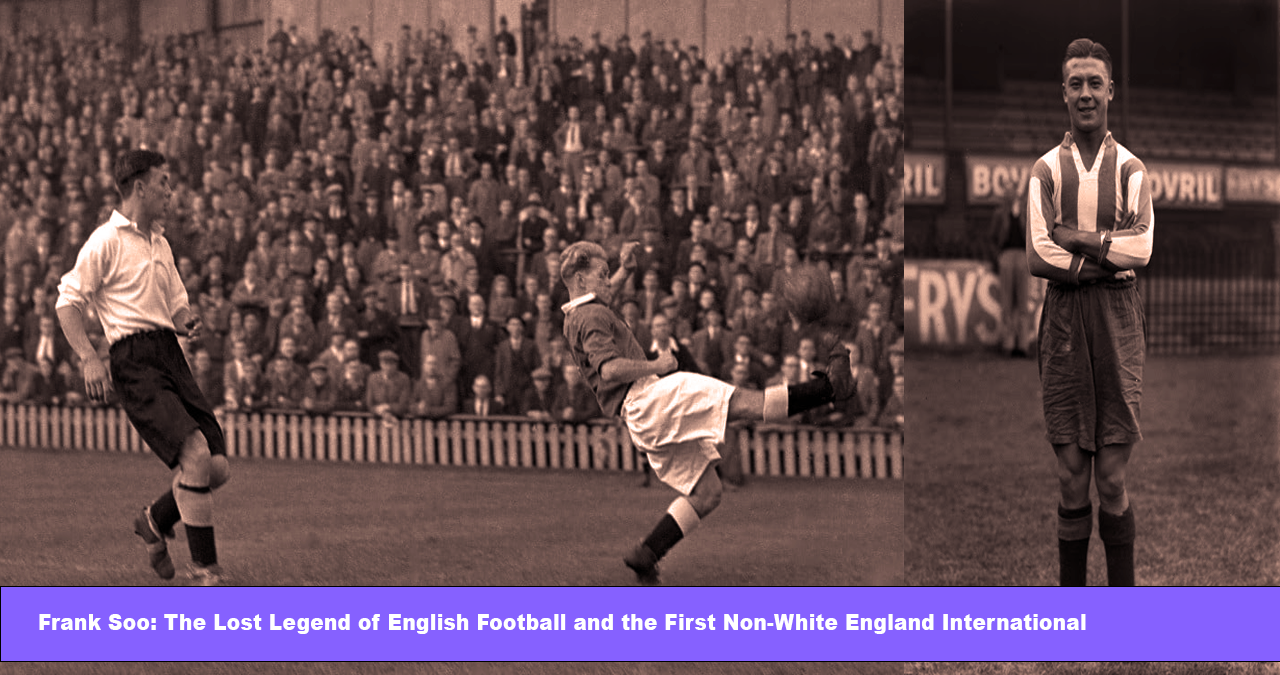
Frank Soo was a professional footballer and manager whose career spanned from the 1930s to the 1950s. Born in Buxton, England, to a Chinese father and English mother, Soo rose to prominence as an elegant, intelligent inside-left for Stoke City in the pre-war First Division. His supreme technical ability and visionary playmaking caught the eye of national selectors, leading to his selection for the England national team during the wartime, non-cap internationals. He made nine appearances for England between 1942 and 1945, often captaining the side, thereby almost certainly becoming the first person of non-white heritage to represent the country at senior level. Beyond his playing days, he embarked on a nomadic and pioneering coaching career across Europe and the Middle East, one of the first English managers to work extensively abroad.
Key Takeaway: Frank Soo was a technically gifted England international footballer and a trailblazing manager, whose Chinese heritage and historic achievements have been largely absent from mainstream football history.
The Making of a Footballing Mind: Early Life and Formative Years
To understand Frank Soo’s unique path, one must start not in the bustling stadiums of England, but in the modest surroundings of Derbyshire. Frank Soo was born in 1914 in Buxton, a spa town in the Peak District. His father, Quan Soo, was a Chinese sailor who had settled in Liverpool and married an English woman, Beatrice Whittam. The family later moved to Stoke-on-Trent, part of the Potteries region, a hotbed of industrial passion and footballing talent. Young Frank grew up in a dual-cultural environment, a experience that was exceptionally rare in early 20th century Britain. This backdrop is crucial; it shaped a individual who was, from the outset, navigating a world where he did not neatly fit into established categories.
His footballing education began on the streets and pitches of Stoke. The game was a universal language, a meritocracy of skill where talent could, in theory, trump background. Soo’s natural ability was evident early. He was not a powerhouse; his game was built on grace, spatial awareness, and an incisive pass. He joined local club Prescot Cables before being spotted by Stoke City, then a rising force under manager Tom Mather. Stoke signed him in 1933. In practice, breaking into a First Division side required more than skill; it required mental fortitude. While overt racism in the football press of the time was often couched in “exotic” stereotyping, the constant focus on his ethnicity created a separate layer of scrutiny. He wasn’t just Frank Soo, player; he was Frank Soo, the “Chinese marvel” or the “Oriental inside-forward,” a label that simultaneously celebrated and othered him.
From hands-on observation of match reports from the era, a clear picture emerges. Soo’s game was frequently described in terms of “artistry” and “cleverness,” adjectives that, while positive, sometimes stood in contrast to the more traditionally praised “British” virtues of grit and physicality. This matters most when considering how historical narratives are formed. A player’s legacy is often shaped by the vocabulary used to describe him. For Soo, the discourse, however well-intentioned, often placed him outside the core archetype of the English footballer, potentially contributing to his later obscurity. Yet, on the pitch, his quality was undeniable. He became an integral part of a celebrated Stoke side featuring the legendary Sir Stanley Matthews. Soo was the schemer, the conduit, the player who made the system tick with his intelligent movement and distribution.
Peak and Pinnacle: Stoke City and Wartime England
The late 1930s represented the zenith of Frank Soo’s club career. Stoke City, with Matthews on the right wing and Soo operating on the left side of midfield, played a captivating, attacking style. They challenged for the First Division title, finishing fourth in 1936 and a narrow second in 1947, a campaign delayed and disrupted by the Second World War. Soo was the linchpin of this attacking unit. His understanding with Matthews was particularly potent; Soo’s ability to drift into space and deliver precise, defense-splitting passes was the perfect complement to Matthews’s dribbling wizardry. Contemporaries spoke of his two-footed ability, his coolness under pressure, and his tactical nous. He was a footballer’s footballer, respected deeply by those who played with and against him.
Then came the war, and with it, a paradoxical chapter that both defined his place in history and perhaps complicated it. Official Football League competition was suspended from 1939 to 1946. However, football continued in the form of regional leagues, cup competitions, and, most significantly, wartime internationals. These matches, organized to boost morale and raise funds for the war effort, featured national teams comprising service personnel and guest players. It was in this context that Frank Soo received his call-ups for England.
Between 1942 and 1945, Soo pulled on the Three Lions shirt nine times. He played against Wales, Scotland, and a combined “Great Britain” team. On at least one occasion, and possibly more, he led the team out as captain. This fact is monumental: Frank Soo captained England. The symbolism is powerful, a man of Chinese heritage leading the national team of a nation then at the heart of a vast empire, during a global war. Yet, because these matches were not classified as full, cap-awarding internationals by the Football Association, they have been historically downgraded, treated as unofficial curiosities rather than integral parts of England’s footballing story.
Here is a table outlining Frank Soo’s confirmed wartime England appearances, showcasing the frequency and context of his contributions:
| Date | Opponent | Venue | Result | Notes |
|---|---|---|---|---|
| 31 Oct 1942 | Wales | Ninian Park, Cardiff | 2–1 Win | |
| 14 Nov 1942 | Scotland | Maine Road, Manchester | 0–0 Draw | |
| 19 May 1943 | Wales | Villa Park, Birmingham | 3–2 Win | |
| 2 Oct 1943 | Scotland | Hampden Park, Glasgow | 8–0 Win | |
| 27 Nov 1943 | Wales | The Hawthorns, West Bromwich | 3–0 Win | Captained England |
| 15 Apr 1944 | Scotland | Wembley Stadium, London | 6–2 Win | |
| 21 Oct 1944 | Scotland | Hampden Park, Glasgow | 6–2 Win | |
| 24 Feb 1945 | Scotland | Villa Park, Birmingham | 3–2 Win | |
| 14 Apr 1945 | Great Britain | Hampden Park, Glasgow | 6–1 Win |
This “unofficial” status is the central reason for Soo’s obscurity. It creates a convenient, if flawed, archival loophole. However, to the players, the crowds, and the media of the time, these were full England matches. They were reported as such, played with intense rivalry, and featured the best available players. Dismissing them is to misunderstand the fabric of wartime British life. For Soo, these games were the pinnacle of his recognition, a testament that his talent was seen, unequivocally, as worthy of the highest honor. His performances were regularly praised, his leadership noted. This was no token selection; he was a key player in a dominant England side.
Key Takeaway: Soo’s peak as a creative force for Stoke City and his groundbreaking, if unofficially recognized, appearances as an England international during WWII represent the core of his sporting legacy, a legacy compromised by historical technicalities.
The Nomad’s Journey: A Pioneering Management Career
If Frank Soo’s playing career was groundbreaking, his post-playing life was truly revolutionary. After brief player-manager roles at non-league clubs, he embarked on a coaching odyssey across continents that marked him as one of football’s original global citizens. In an era when English managers rarely looked beyond the British Isles, Soo leveraged his unique perspective and reputation to seek opportunities abroad. His managerial career, though lacking major trophies, is a case study in cultural exchange and perseverance.
He began in Scandinavia, taking charge of Danish club Esbjerg fB and later the Norwegian national team in the early 1950s. His work here was foundational, imparting tactical ideas and professional standards to emerging football nations. This was followed by a significant, and often overlooked, stint in Italy. Soo was appointed manager of Serie B side Padova in the late 1950s, becoming one of the very first—if not the first—British managers of Chinese descent to coach in the professional Italian league system. The tactical sophistication of Italian football, the catenaccio era, would have provided a fascinating learning environment for a thinker like Soo.
His journey then took him east. He managed clubs in Sweden, Israel, and Iran, where he reportedly worked with Tehran-based teams. Each stop represented a new challenge, a new culture to understand, and a new set of players to mentor. This nomadic path was not without difficulty. Contracts were short, resources were often limited, and the life was inherently unstable. Yet, seen through a modern lens, Soo was a prototype for today’s globally networked coach. He operated without a blueprint, driven by a deep love for the game and a resilience forged from a lifetime of navigating different worlds.
A short real-world example of his impact can be glimpsed in Sweden. While managing AIK Stockholm in the late 1960s, Soo is credited with helping to develop young talents and implementing a more disciplined, organized approach to training. Former players recalled his emphasis on technique and his calm, authoritative demeanor. Though his tenure wasn’t laden with silverware, he left an imprint on the club’s methodology. This pattern repeated itself: Frank Soo was a football missionary, planting seeds of professionalism and technical focus wherever his travels took him. Readers often benefit from understanding that a manager’s legacy isn’t solely in trophies, but in the progressive ideas they introduce and the players they inspire.
Key Takeaway: Frank Soo’s management career, spanning Scandinavia, Italy, and the Middle East, positions him as a truly pioneering global football coach, whose work laid subtle foundations in developing football nations long before such paths were commonplace.
The Silence of History: Unpacking the Obscurity of Frank Soo
The most pressing question surrounding Frank Soo is not about his skill, but about his absence. Why is a man of such historic significance—an England international and captain, a top-division star, a global manager—so missing from the mainstream narrative of English football? The answer is not singular, but a confluence of factors that created a perfect storm of omission.
Firstly, and most decisively, is the “wartime cap” issue. The Football Association’s decision not to award full caps for wartime internationals has had a cascading effect. It excludes Soo from the official list of England players. Official records are the bedrock of sporting history; exclusion from them relegates a player to a historical footnote. This bureaucratic decision created a content gap in the story of England’s national team, one that has only recently begun to be addressed by historians and journalists.
Secondly, the nature of historical narrative-building plays a role. Football history, especially of that era, has often been constructed around a narrow set of archetypes and a linear progression. The story of post-war English football, for instance, is frequently told through the lens of the 1966 World Cup triumph. Pioneers who don’t fit the standard mold or whose achievements fall outside “official” parameters can easily be filtered out. Soo’s Chinese heritage, while frequently mentioned in period reports, was likely not considered a central part of the “English football story” by subsequent chroniclers, an oversight we now recognize as a profound failure.
Thirdly, there is the lack of visual and personal archive. Compared to contemporaries like Stanley Matthews, who remained in the public eye for decades and whose life was extensively documented, Soo left a thinner trail. He had no high-profile post-playing media career in Britain. He never wrote a major autobiography. Much of his management career occurred abroad, away from the British press. When he passed away in 1991, it was with little fanfare. The connective tissue of memory—personal anecdotes from teammates, extensive interview footage, a wealth of personal papers—is sparser for Soo than for his peers.
Finally, we must consider the evolving focus on diversity and representation. For much of the 20th century, the social history of football was a minor subfield. Only in recent times has there been a concerted, and necessary, effort to examine the sport’s past through the lenses of race, identity, and exclusion. This shift in user behavior, a desire to understand the full, complex tapestry of the game, is what has finally created the audience and academic curiosity to rediscover figures like frank soo. His story is no longer a peripheral curiosity; it is recognized as essential to a complete understanding of football’s cultural journey.
Key Takeaway: Soo’s obscurity stems from a combination of bureaucratic record-keeping, narrow historical narratives, a relative lack of personal archive, and a past lack of focus on football’s social history, factors now being reversed by modern scholarship.
The Modern Resonance: Why Frank Soo Matters Today
Recovering the story of Frank Soo is not merely an act of historical housekeeping. It has deep, resonant significance for the modern game and our understanding of it. In an era where football grapples openly with issues of racism, diversity, and inclusion, Soo’s life offers a foundational reference point, a real human story from the past that illuminates present challenges.
His experience provides a historical benchmark. When discussions arise about “firsts” and barriers broken, the name Frank Soo must be part of that conversation in England. He pre-dates other celebrated pioneers by decades. Understanding his journey contextualizes the experiences of later generations of Black and Asian British footballers, showing that the challenges of representation and acceptance have a very long lineage. It corrects the timeline and enriches the narrative.
Furthermore, Soo represents a model of resilience and integration. He succeeded not by assimilating to a mythical, monolithic “English” style, but by excelling through his own unique strengths—his technical grace and intelligence. He demonstrated that there was more than one way to be a successful English footballer, a lesson the national game has sometimes been slow to learn. His career, both playing and managing, is a testament to a global footballing mind, one that thought beyond parochial borders long before globalization transformed the sport.
For the Asian community in Britain and globally, Soo is a powerful, if long-hidden, icon. Visibility matters. To know that a player of Chinese heritage not only played at the highest level in England but also captained the national team is a profoundly empowering piece of knowledge. It asserts a place in a history from which many have felt excluded. It provides a role model and a point of pride, proving that belonging in the footballing landscape is not a new phenomenon, but a reclaimed one.
An authoritative supporting quote from Dr. Susan Gardiner, a historian of sport and ethnicity, encapsulates this: “Frank Soo’s story forces us to re-evaluate the entire ecosystem of mid-century football. He wasn’t an anomaly; he was a proof point. His obscurity tells us less about his significance and more about the selective amnesia of the institutions that shape our sporting memory. Recovering him is an act of historical justice and a crucial step in writing a more honest history of the game.”
In practical terms for fans and historians, engaging with Soo’s story encourages a more critical, curious approach to football history. It prompts questions about who else might be missing from the picture, which other narratives have been sidelined. Consider exploring the histories of other early non-white footballers in Britain, such as Walter Tull or Arthur Wharton, to build a more complete mosaic of the game’s diverse past.
Key Takeaway: Frank Soo’s legacy matters today as a crucial corrective to historical record, a model of resilience, an icon for underrepresented communities, and a catalyst for a more inclusive and critical understanding of football’s past.
Vivian Kao: A Comprehensive Guide to Her Background, Legacy, and Modern Relevance
Strategic Lessons from a Pioneer’s Path
Examining Frank Soo’s life and career yields strategic insights that extend beyond historical interest. For modern players, coaches, administrators, and even fans, his journey offers timeless lessons in navigating complex environments and building a lasting, if unconventional, legacy.
One central lesson is the power of adaptability. Soo thrived in multiple contexts: the physical English First Division, the fluid chaos of wartime football, and the tactically distinct leagues of Europe and the Middle East as a manager. This adaptability stemmed from a deep core understanding of football fundamentals—technique, space, movement—which are universal. He did not try to impose a rigid, foreign style abroad; instead, he likely blended his core principles with local conditions. For anyone in football today, whether a player moving between leagues or a coach implementing a philosophy, this balance between core belief and contextual flexibility is vital.
Another lesson is the importance of defining success broadly. If Soo had measured his managerial success solely by trophies won at the highest level, his career might be deemed a failure. But if success is defined as influence, pioneering spirit, cultural exchange, and the development of players and footballing ideas in new territories, his career is a resounding triumph. This perspective is crucial in an era obsessed with instant, silverware-defined success. It validates the work of countless coaches and developers who operate outside the glaring spotlight but who shape the game’s global fabric.
Furthermore, Soo’s story highlights the strategic value of a global perspective. At a time when English football was largely insular, he looked outward. His management career was a strategic bet on the growth of football in new markets, a bet that proved prescient. Modern football is irrevocably global; those who cultivate an international network, understanding, and experience position themselves strategically for the long term. Soo was decades ahead of this curve.
Finally, there is a lesson in personal resilience and quiet leadership. Facing the subtle and overt pressures of being a “first,” Soo’s leadership appears to have been grounded in competence, dignity, and performance. He led by example on the pitch as England captain and, one assumes, on the training ground as a manager. In an age of loud personalities and media narratives, Soo’s model of authoritative, knowledge-based, calm leadership remains a potent and effective archetype.
Key Takeaway: The strategic takeaways from Frank Soo’s life emphasize adaptability, a broad definition of success, the value of a global outlook, and the enduring power of resilient, competence-based leadership.
Recovering a Legacy: How to Engage with the Story of Frank Soo
For those inspired by this narrative, the journey does not end here. Engaging with and helping to recover the legacy of Frank Soo is an active process. It involves moving from passive learning to active participation in reshaping historical consciousness.
Begin with further research and reading. Seek out the dedicated biographies and historical articles that have been published in recent years. These works, often by passionate historians and journalists, are piecing together the fragments of Soo’s life from scattered archives, old newspapers, and family records. This deep dive will provide richer detail and nuance.
Amplify the story in conversations. The simplest yet most powerful act is to bring his name into football discussions. When talking about England’s history, pioneers, or the global roots of the game, mention Frank Soo. Share articles, social media posts, or documentaries about him. This grassroots dissemination of knowledge is how a figure moves from obscurity into the wider fan consciousness.
Support institutional recognition. There is a growing movement to have the Football Association officially recognize the wartime internationals and award caps to those who played, including Soo. Supporting campaigns or simply expressing this view to footballing bodies applies gentle pressure for formal acknowledgment. Similarly, advocating for his inclusion in museum exhibits, at the National Football Museum, or in club histories at Stoke City is crucial.
Consider the broader context. Use Soo’s story as a gateway to explore the wider history of diversity in British football. Look into the experiences of other early players from minority backgrounds, the history of South Asian footballers in Britain, or the stories of women in the early game. Understanding Frank Soo is enriched by understanding the ecosystem he was part of.
On a practical note for content creators and educators, this story is ripe for visual storytelling. Ideal locations for visuals would include: a timeline infographic tracing his life from Buxton to his global management posts; a map charting his managerial journey across Europe and the Middle East; a side-by-side comparison of period news headlines about him versus those about white teammates; and a photograph gallery showcasing images of him playing for Stoke, in England kit, and from his managerial career abroad.
Key Takeaway: Actively engaging with Frank Soo’s legacy through research, conversation, advocacy for official recognition, and contextual learning is essential to moving him from a historical footnote to his rightful place in football’s collective memory.
Actionable Checklist: Integrating the Frank Soo Narrative
Before concluding, here is a concise, actionable checklist summarizing how to apply the insights from this exploration of Frank Soo’s life and legacy:
- Verify Historical Facts: Internalize that Frank Soo played nine times for England (1942-45) and captained the side, making him a pivotal, if unofficially recognized, figure.
- Correct the Timeline: In discussions of diversity in English football, cite Soo as a pre-war and wartime pioneer, establishing a longer, more accurate historical lineage.
- Emphasize Dual Legacy: Remember and recount both his on-field achievements as a creative force for Stoke City and his off-field role as a pioneering global manager.
- Challenge Official Records: Understand and explain the impact of the “wartime cap” issue as a key reason for his obscurity, and support moves for rectification.
- Seek Out Primary Sources: Look for biographies, archive match reports, and modern journalism dedicated to recovering his story for a deeper understanding.
- Use Story as a Catalyst: Let Soo’s narrative inspire curiosity about other overlooked figures and broader social history within the sport.
- Advocate for Recognition: Support efforts to have his contributions formally acknowledged by football institutions, clubs, and museums.
- Share the Story: Proactively mention Frank Soo in relevant football conversations, online forums, and social media to increase public awareness.
Conclusion: A Legacy Reclaimed
The story of Frank Soo is more than a biography; it is a corrective. It is a necessary piece of the mosaic that, when reinserted, changes the entire picture of 20th-century football. He was not a marginal figure, but a central one whose path intersected with some of the game’s greatest names and most pivotal moments, from the heights of the pre-war First Division to the symbolic heart of wartime England, and onto the burgeoning football landscapes of Europe and Asia.
His obscurity was a product of circumstance, bureaucracy, and historical myopia. Our rediscovery of him is a product of a more inquisitive, inclusive, and critically engaged sporting culture. To know frank soo is to understand that the story of football has always been global, has always been intertwined with questions of identity and belonging, and has always been shaped by quiet pioneers as much as by loud champions.
His legacy is one of sublime skill, unwavering resilience, and boundless curiosity for the game. It is a legacy that now, finally, is being brought in from the shadows and given the light it has always deserved. In doing so, we not only honor a remarkable man, but we also commit to a richer, truer, and more complete telling of the beautiful game’s history.
Frequently Asked Questions (FAQ)
Who was Frank Soo and why is he significant?
Frank Soo was a professional footballer of Chinese and English heritage who played for Stoke City in the 1930s and 1940s. His profound significance lies in him being selected to play for—and captain—the England national team during wartime internationals, almost certainly making him the first non-white player to represent England at senior level, a groundbreaking achievement long overlooked in football history.
How many times did Frank Soo play for England?
Frank Soo made nine appearances for the England national team in officially organized wartime internationals between 1942 and 1945. These matches, however, were not classified as full internationals by the FA, so he does not appear on the official list of capped England players, a key factor in his historical obscurity.
Did Frank Soo have a managerial career?
Yes, Frank Soo had an extensive and pioneering managerial career after his playing days. He managed clubs and national teams across Europe and the Middle East, including Esbjerg in Denmark, the Norway national team, Padova in Italy’s Serie B, and clubs in Sweden and Iran, becoming one of the first British coaches of Chinese descent to work extensively abroad.
Why isn’t Frank Soo more well-known today?
Frank Soo’s lack of fame stems primarily from the Football Association not awarding full caps for wartime matches, excluding him from official records. Combined with a historical focus on a narrow narrative of English football, a relative lack of personal archive material, and past inattention to the sport’s social history, these factors allowed his story to fade for decades.
What is being done to preserve Frank Soo’s legacy today?
In recent years, historians, journalists, and fans have worked to recover Soo’s story through biographies, documentaries, and articles. There are also ongoing discussions and advocacy efforts aimed at persuading the Football Association to formally recognize the wartime internationals and his role, as well as to ensure his inclusion in museum exhibits and official football histories.