
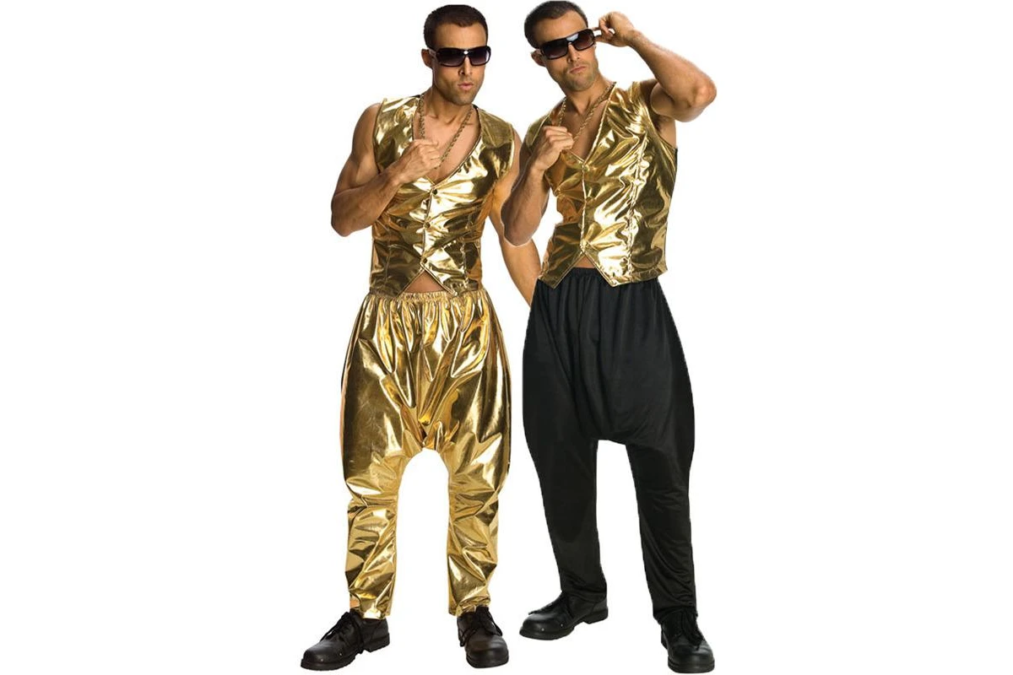

When people hear the phrase pants MC Hammer, they usually picture one unforgettable fashion statement: enormous, flowing trousers that seemed to move like fabric clouds around the legs. The look became closely associated with rapper and entertainer MC Hammer during the height of his fame in the late 1980s and early 1990s. His music, dancing, and energetic performances made him a household name, but his distinctive trousers became almost as memorable as his biggest songs.
MC Hammer’s pants were more than just oversized clothing. They represented a particular moment in pop culture when music, dance, television, and fashion were becoming increasingly connected. The trousers gave him the freedom to perform his signature dance moves while creating a visual identity that audiences could recognise immediately. Even decades later, people still use the term “Hammer pants” when talking about this unusual and influential style.
The story behind the pants is more interesting than simply saying they were baggy trousers. Their design was connected to movement, performance, cultural influences, and MC Hammer’s personal image. The style also helped introduce a wider audience to a fashion silhouette that had roots beyond American hip-hop. Today, Hammer pants remain a nostalgic symbol of an era when artists were not afraid to build an entire visual identity around something bold and unconventional.
What Are MC Hammer Pants?
MC Hammer pants are generally recognised by their extremely loose fit, particularly around the hips and upper legs. Unlike ordinary baggy trousers, the fabric can extend dramatically away from the body before narrowing toward the ankles. This creates a distinctive shape that almost resembles a skirt when the wearer is standing still but becomes highly dynamic during movement.
The most famous versions of the style often feature a very low crotch. In some designs, the crotch seam drops considerably below the natural position of the body, creating a large amount of fabric between the legs. The trousers may then taper toward the ankles, producing a contrast between the enormous upper section and the relatively narrow lower leg.
This unusual construction is one of the main reasons the style became so recognisable. Instead of simply making conventional trousers larger, the design changed the proportions of the entire garment. That gave MC Hammer a unique silhouette that worked particularly well on stage, where performers need clothing that is easy to identify from a distance.
Why Did MC Hammer Wear Such Baggy Pants?
One of the biggest reasons for the style’s popularity was performance. MC Hammer was famous for his fast, energetic choreography, and his clothing needed to move with him. The extra fabric created dramatic visual effects as he danced, making every spin, kick, and shuffle more noticeable to an audience.
His performances were heavily influenced by dance, and the trousers became part of that choreography. When Hammer moved across the stage, the fabric followed his body in exaggerated ways. The trousers almost appeared to have a life of their own, adding another layer of entertainment to his performances.
There was also a practical element to the design. Loose clothing could allow greater freedom of movement than tight trousers, especially for an entertainer performing complex routines. MC Hammer’s dancing was an important part of his identity, so it made sense for his stage wardrobe to support rather than restrict his physical style.
At the same time, the trousers helped distinguish him from other performers. In an increasingly competitive music industry, having a recognisable appearance could be just as important as having a memorable song. Hammer’s trousers immediately gave audiences something visual to associate with him.
The Cultural Influences Behind Hammer Pants
Although the term “Hammer pants” became closely linked to MC Hammer, the style did not emerge from nowhere. The silhouette has connections to traditional clothing from different parts of the world, particularly garments featuring very loose fabric around the legs and a dropped crotch.
One often-mentioned influence is the harem-style trouser, a broad category of garments associated with various cultures and historical periods. These trousers typically feature a generous amount of fabric and a relaxed shape, although the exact designs and cultural origins differ significantly. It is important not to treat every loose, dropped-crotch garment as identical because similar silhouettes have appeared in many different places and periods.
MC Hammer brought a highly theatrical version of this general concept into mainstream American entertainment. By combining dramatic proportions with bright colours, coordinated outfits, and energetic choreography, he transformed the silhouette into something strongly connected with his own public persona.
This is one reason the history of Hammer pants is more complicated than a simple fashion trend. The style became commercially associated with one artist, but its broader visual language draws from a much longer history of clothing design. MC Hammer’s contribution was to make that dramatic silhouette part of contemporary pop culture in a way that millions of people could instantly recognise.
MC Hammer’s Rise and the Popularity of His Pants
MC Hammer’s rise to fame helped push his fashion choices into the mainstream. His breakthrough period arrived when hip-hop was becoming an increasingly powerful force in popular entertainment. His music reached audiences far beyond traditional rap circles, and his highly choreographed videos were frequently seen on television.
Songs such as “U Can’t Touch This” became major cultural moments, and the visual presentation of MC Hammer was inseparable from the music. His dancing, energetic personality, and wardrobe all worked together to create a complete entertainment package.
The trousers became particularly memorable because they were so different from everyday clothing. People could see them for only a few seconds and still understand that they were looking at an MC Hammer performance. That kind of visual recognition is valuable for any entertainer.
As his popularity grew, the style moved beyond music videos and concerts. Fashion retailers and costume designers began producing their own interpretations of the look. Suddenly, trousers inspired by Hammer’s silhouette were appearing in shops, parties, comedy sketches, television programmes, and Halloween costumes.
The Connection Between Hammer Pants and Dance
To understand why the trousers worked so well, it helps to look at MC Hammer’s dancing. His performances were fast, precise, and full of movement. He frequently combined hip-hop choreography with elements that were influenced by earlier dance traditions and popular performance styles.
The enormous trousers made his movements easier to see. When he kicked a leg outward or shifted his body quickly, the fabric exaggerated the motion. Instead of watching only the dancer’s body, the audience also saw the clothing responding to each movement.
This effect is particularly important in live entertainment. A performer on a large stage needs to communicate movement to people sitting far away. Clothing can become a visual tool, almost like lighting or stage design. MC Hammer’s trousers played exactly that role.
The result was a powerful connection between fashion and choreography. The pants were not simply something he happened to wear. They became part of the performance itself, helping create the visual rhythm that made his shows so distinctive.
What Were MC Hammer Pants Made From?
There was no single material used for every pair of Hammer pants. Different versions were made from fabrics chosen for appearance, comfort, and movement. Lightweight materials were particularly useful because they allowed the trousers to flow during dancing.
Some stage outfits featured shiny or colourful fabrics that reflected light and made the performer more noticeable. Others used softer materials that created a more relaxed appearance. The exact fabric could change the way the trousers behaved when the wearer moved.
The construction was also important. Because the pants contained so much extra material, the design had to be carefully made to prevent the garment from becoming unnecessarily heavy or difficult to control. The goal was to achieve volume without completely sacrificing mobility.
In modern fashion, Hammer-style trousers may be made from cotton blends, polyester, rayon, or other lightweight textiles. Contemporary designers often adjust the proportions, making the style more wearable for everyday use while keeping the signature low-crotch and loose-leg appearance.
Why Did Hammer Pants Become So Popular?
The popularity of Hammer pants came from a combination of factors. First, MC Hammer himself was extraordinarily famous. When an artist becomes a major cultural figure, the things they wear can quickly become part of the public conversation.
Second, the trousers were visually simple to understand. You did not need to be a fashion expert to recognise the look. The exaggerated shape was immediately memorable, which helped it spread through popular culture.
Third, the late 1980s and early 1990s were a period when fashion was often bold and experimental. Oversized silhouettes were popular in many areas of clothing, from sportswear to hip-hop fashion. Hammer pants fit naturally into a broader cultural interest in larger proportions and expressive outfits.
Finally, television played a major role. Music videos, award shows, commercials, and entertainment programmes gave audiences repeated exposure to MC Hammer’s image. The more people saw the trousers, the more familiar the style became.
Hammer Pants Beyond the 1990s
Like many highly distinctive fashion trends, Hammer pants eventually became associated with a particular era. As musical styles changed and fashion moved in new directions, the extreme silhouette became less common in everyday wardrobes.
However, the style never completely disappeared. It continued to appear in costume design, comedy, dance performances, and nostalgic references to 1990s pop culture. The phrase “Hammer pants” itself remained part of the cultural vocabulary.
Fashion is also cyclical. Styles that once seemed outdated can return when designers and younger generations reinterpret them. Modern versions of dropped-crotch trousers and exaggerated silhouettes have appeared in contemporary fashion, sometimes with a more refined or minimalist approach.
The modern revival is often less theatrical than MC Hammer’s original stage outfits. Designers may use neutral colours and simpler fabrics, creating trousers that borrow the basic shape without reproducing the full performance costume. This demonstrates how influential the original silhouette became.
How to Wear Hammer-Style Pants Today
For anyone interested in trying the style today, the key is balance. Traditional Hammer pants are extremely dramatic, but modern versions can be styled in a more understated way. A simple fitted T-shirt or cropped jacket can provide contrast against the volume of the trousers.
Footwear also makes a difference. Clean trainers can create a casual streetwear appearance, while boots may give the outfit a more structured edge. The choice depends on whether the goal is to recreate the nostalgic 1990s aesthetic or simply borrow elements of the silhouette.
Colour is another consideration. Bright colours and bold prints create a strong retro effect, while black, grey, beige, or navy can make the trousers feel more contemporary. Someone who wants the influence without looking like they are wearing a costume may prefer a neutral colour.
The most important thing is confidence. Hammer pants are not subtle clothing. Their entire appeal comes from their unusual proportions and willingness to stand out. Anyone wearing them should embrace that distinctive quality rather than trying to make the trousers look like ordinary pants.
Why MC Hammer Pants Still Matter in Fashion
The lasting importance of Hammer pants comes from their ability to show how clothing can become part of an artist’s identity. MC Hammer did not simply wear a particular type of trousers; he created a visual association that has lasted for decades.
His style also demonstrates the relationship between music and fashion. Throughout modern entertainment history, musicians have influenced what audiences wear, from hairstyles and jackets to trainers and jewellery. MC Hammer’s trousers are one of the clearest examples of a single garment becoming closely connected with a performer’s public image.
The style also reminds us that fashion does not always have to be practical or conventional. Sometimes the most memorable designs are those that exaggerate an idea. Hammer pants took the concept of loose trousers and pushed it to an extreme, creating something that was instantly recognisable.
That willingness to experiment is part of what keeps fashion interesting. Trends may come and go, but truly distinctive designs can remain culturally relevant long after their original moment has passed.
Final Thoughts on Pants MC Hammer
The story of pants MC Hammer is ultimately a story about the power of performance, personality, and fashion working together. The oversized, low-crotch trousers became one of the most recognisable elements of MC Hammer’s image because they were perfectly suited to his energetic dance style and larger-than-life stage presence.
Although the silhouette has roots in broader fashion traditions, MC Hammer gave it a new identity within mainstream American pop culture. His success helped transform an unusual trouser design into a symbol of an entire era, one that remains instantly recognisable to audiences today.
Decades later, Hammer pants still appear whenever people revisit the fashion and music of the late 1980s and early 1990s. They may be remembered with nostalgia, humour, or genuine fashion appreciation, but they have certainly earned their place in pop culture history. More than just a pair of oversized trousers, they became part of the visual language of one of hip-hop’s most recognisable entertainers.