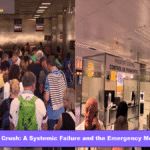


The Tenerife Airport Emergency Meeting: Picture this: you’re lounging by the pool on a sun-drenched Tenerife holiday, idly checking your flight status on your phone, when a notification flashes. “Flight Delayed.” Then another. And another. Soon, the entire airport’s schedule is a sea of red. Social media erupts with grainy videos of crowded terminals and frustrated passengers. News outlets pick up the story, their headlines screaming about “travel chaos” and “operational meltdown.” Behind the scenes, away from the public eye, a critical, structured response is already swinging into action. A specific protocol has been initiated, one designed to wrestle control from the jaws of disorder. This is the moment an emergency meeting is convened at Tenerife–South Airport (TFS) or Tenerife–North Airport (TFN).
The phrase “Tenerife airport emergency meeting” often surfaces in media reports during periods of significant disruption, conjuring images of panicked officials in a smoke-filled room. The reality, however, is far more calibrated and professional. An emergency meeting is not a sign of impending doom but a testament to a robust crisis management framework. It is the central nervous system of the airport’s response, a pre-planned gathering of key stakeholders tasked with making swift, coordinated decisions to protect passenger safety, restore operational stability, and manage the cascading effects of a crisis. This article will pull back the curtain on this critical process. We will explore what truly triggers such a high-level meeting, who is in the room, what gets decided, and how these protocols were forged in the fire of past tragedies, most notably the deadliest accident in aviation history that occurred on the island itself. Understanding this process is to understand the immense, often invisible, effort that goes into managing the complex ecosystem of a modern international airport when things go wrong.
What Triggers a Tenerife Airport Emergency Meeting?
An emergency meeting is not called for a simple, short-lived delay. The triggers are significant events that threaten to overwhelm the airport’s standard operational procedures. These are incidents that have a high impact on safety, security, or the fundamental ability of the airport to function. The decision to convene this meeting is typically made by the senior Airport Manager or the head of the Airport Operations Control Centre (AOCC), the 24/7 hub that monitors all airport activity. The triggers can be broadly categorized, but they often intertwine, creating a complex web of challenges.
One of the most common catalysts is severe weather. Tenerife, while famously sunny, can be subject to dramatic meteorological events. The calima, a wind carrying dense dust and sand from the Sahara Desert, can reduce visibility to near-zero, making takeoffs and landings impossible. Similarly, unexpected torrential rains or high winds can halt ground operations and close airspace. When meteorological forecasts or active conditions indicate a prolonged shutdown, an emergency meeting is triggered to pre-empt the domino effect of stranded aircraft, congested aprons, and thousands of displaced passengers. Another critical trigger is a security breach or a direct threat. This could range from a suspicious package found in a terminal to a credible bomb threat or intelligence indicating a potential risk. In such scenarios, the meeting convenes instantly, bringing together airport security, national police, and airline representatives to coordinate evacuations, sweeps, and communication strategies.
Furthermore, a major technical failure can paralyze the airport and necessitate an emergency response. Imagine the complete failure of the baggage handling system, a critical air traffic control system malfunction, or a significant power outage affecting the terminals. These infrastructure collapses bring operations to a grinding halt. The emergency meeting then becomes the command centre for managing the technical crisis, allocating engineering resources, and deciding on contingency measures like diverting flights to the other Tenerife airport. Finally, a serious incident on the ground, such as a runway incursion, an aircraft veering off a taxiway, or a significant fire alert, will immediately trigger the protocol. The primary focus here is on life safety and securing the scene, but the meeting is essential for managing the subsequent operational fallout.
The Human and Operational Cascade Effect
Beyond the initial trigger, it’s the cascade effect that truly justifies the emergency meeting. A single cancelled flight is a problem; a hundred cancelled flights is a systemic crisis. When the airspace closes, aircraft destined for Tenerife are held at their departure points or diverted, creating a logistical nightmare for airlines. More critically, aircraft already on the ground in Tenerife cannot leave, blocking gates and parking stands. This creates an “aircraft gridlock.” Passengers from cancelled flights remain in the terminals, leading to overcrowding. Resources like toilets, food, and water become strained. Annoyance turns to anger, and customer service challenges escalate rapidly. The emergency meeting is the mechanism to anticipate, monitor, and manage this cascade. It’s about looking three, six, and twelve hours ahead, asking not just “what happened?” but “what happens next?” and “how do we ensure the safety and well-being of everyone caught in this situation?”
The Key Players in the Room: Who Attends an Airport Emergency Meeting?
The effectiveness of an emergency meeting hinges on having the right people in the room, each representing a critical piece of the airport puzzle. This is not a large, unwieldy gathering but a focused assembly of decision-makers with the authority to commit their organizations to a unified action plan. The chair of the meeting is typically the Airport Director or a senior duty manager, who acts as the ultimate arbiter and coordinator. Their role is to facilitate discussion, ensure all voices are heard, and make the final call on contentious issues. They are the single point of accountability for the airport’s overall response.
Sitting alongside the chair are representatives from the Air Traffic Control (ATC) tower. Their input is absolutely vital, as they provide the definitive word on airspace capacity, runway availability, and the flow of aircraft. They can articulate how quickly operations can resume once a weather event passes, for example, and what the rate of takeoffs and landings will be. Another indispensable attendee is the lead for the handling agents. These companies are the unsung heroes of airport operations, responsible for passenger check-in, baggage loading, aircraft cleaning, and refueling. Their perspective on ground crew availability, baggage system status, and their ability to turn around aircraft is crucial for rebuilding the schedule.
The Extended Chain of Command and Support
The meeting also includes senior figures from the National Police and Civil Guard, who are responsible for law enforcement and security within the airport perimeter. They advise on security implications, manage crowd control if necessary, and lead any criminal investigations. A representative from the airline operations centre, often from the carrier most affected or a consortium of major airlines, is also present. They provide the airline perspective on aircraft positioning, crew duty-time limitations, and passenger re-accommodation strategies. Furthermore, the airport’s own communications and public relations manager is a key player. While others focus on operational recovery, this individual is responsible for crafting the public message, coordinating with airlines on passenger communications, and managing the relentless inquiries from the media. Their goal is to ensure a consistent, accurate, and calm message is disseminated to prevent misinformation and panic. In some cases, depending on the nature of the emergency, representatives from the local government, emergency medical services, and the Spanish aviation authority (AESA) may also be involved. This collective brain trust represents the entire ecosystem, ensuring that decisions are made with a full understanding of their operational, security, and human consequences.
Anatomy of an Emergency Meeting: From Chaos to Controlled Response
The physical setting of the meeting is often a dedicated crisis room, equipped with multiple phone lines, computer terminals displaying real-time operational data, and screens showing live feeds from security cameras across the terminals. The atmosphere is purposeful and intense, but it is structured to avoid the chaos unfolding outside. The meeting follows a strict agenda, often guided by the principles of the Incident Command System (ICS), a standardized approach to emergency management. The first order of business is always a situation report, or “sitrep.” Each attendee provides a concise update from their domain: ATC on airspace status, the handling agent on ground operations, the police on security, and so on. This creates a shared, common operating picture for everyone in the room.
Once the situation is clear, the meeting moves to its core function: objective setting. What are the immediate priorities? The hierarchy is always the same: Life Safety, Incident Stabilization, Property Preservation. This means the first discussions revolve around ensuring the physical well-being of passengers and staff. Are medical services required? Does the terminal need to be evacuated? Once life safety is assured, the focus shifts to stabilizing the incident itself. How do we stop the situation from getting worse? This could mean officially closing the runway, suspending all flight operations, or activating backup power systems. Only then does the discussion turn to the longer-term challenges of property preservation and operational recovery, such as protecting aircraft from damage and planning for the resumption of services.
Decision-Making and The Action Plan
The most critical output of a Tenerife airport emergency meeting is a clear, actionable plan. This is not a talking shop; it is a decision-making engine. Key decisions might include formally activating a section of the terminal as a rest area for stranded passengers, authorizing the distribution of water and food, coordinating with local hotels for overnight accommodation, and establishing a clear protocol for which flights will be prioritized once operations resume. Resources are allocated on the spot—assigning staff, opening additional service desks, and deploying extra security personnel to manage crowds. A communications strategy is agreed upon, dictating what information will be released, when, and by whom. Perhaps most importantly, the group establishes a timeline for the next update. These meetings are not one-off events; they reconvene at predetermined intervals—every hour, or every two hours—to assess progress, adapt to changing conditions, and update the action plan. This cyclical process of assessment, planning, and execution continues until the crisis has passed and normal operations can be fully restored.
The Shadow of the Past: How History Shapes Tenerife’s Emergency Protocols
To fully appreciate the gravity and sophistication of a modern-day Tenerife airport emergency meeting, one must understand the profound shadow cast by a single, catastrophic event. The deadliest accident in aviation history did not occur in the air; it happened on the runway of what is now Tenerife–North Airport (TFN) on March 27, 1977. The collision of two Boeing 747s—one from KLM and one from Pan Am—claimed 583 lives. The causes were a tragic confluence of dense fog, communication misunderstandings, and operational pressure. The investigation that followed was a watershed moment for global aviation, leading to sweeping changes that have made flying the safest mode of transport today.
The Tenerife disaster was a brutal lesson in the catastrophic consequences of miscommunication and a fragmented chain of command. In the foggy chaos of that day, there was no single, unified emergency response of the kind we see today. The lessons learned were etched into the very DNA of international aviation protocols. It led to the universal adoption of standardized phraseology in air traffic control, eliminating ambiguous language. It emphasized the importance of Crew Resource Management (CRM), promoting better communication and decision-making within cockpits. And, most relevant to our topic, it highlighted the absolute necessity of a coordinated, multi-agency emergency response plan for airports. The modern Tenerife airport emergency meeting is, in many ways, a direct institutional response to the failures of that day. It exists to ensure that no single point of failure, no communication breakdown, and no lack of coordinated action can ever lead to such a tragedy again.
A Culture of Continuous Improvement
The legacy of the 1977 disaster is not just a set of rules written in a manual; it is a living culture of safety and continuous improvement that permeates the operations at both Tenerife airports. Every emergency drill, every safety audit, and every review of an incident is conducted with the unspoken understanding of what is at stake. The personnel who work at these airports, from the director to the newest baggage handler, are acutely aware of their responsibility. This historical context transforms the emergency meeting from a mere administrative procedure into a solemn duty. It is a mechanism built from the ashes of a past failure, designed to uphold a promise: to never let chaos, miscommunication, or disorganization dictate the outcome of a crisis. This deep-seated cultural memory ensures that when the call for an emergency meeting goes out, every participant understands the weight of their role, driving a response that is both professional and profoundly committed to preventing harm.
Case Study: A Modern Crisis – The Calima Shutdown
To see the emergency meeting protocol in action, let’s examine a hypothetical but highly realistic scenario based on a common Tenerife challenge: a severe calima event. The AOCC at Tenerife-South Airport receives a updated meteorological alert predicting a severe dust storm that will reduce visibility to less than 300 meters, well below the legal minimum for landing, for a period of at least 12 hours. The decision is made: the airport will close in 90 minutes. The alert for an emergency meeting is sent out instantly.
Laurence Penry-Jones: Rekindling Britain’s Culinary Soul Through Fire and Flame
In the crisis room, the initial sitrep is sobering. ATC confirms the imminent closure and is already working with Eurocontrol to hold or divert inbound flights from European hubs. The handling agents report that they have 32 aircraft on the ground, with another 15 in the air that will need to be diverted to Gran Canaria or the mainland once the closure is official. The airline representative is grim-faced; they are looking at the cancellation of over 200 flights, affecting approximately 40,000 passengers. The police are concerned about the potential for overcrowding as thousands of passengers whose flights are cancelled descend on the terminals. The communications manager is already drafting the first public announcement.
The Action Plan in Motion
The chair of the meeting steers the group towards decisive action. The primary objective is life safety and passenger welfare. The group agrees on the following action plan:
- Activate the “Passenger Welfare Protocol,” converting Gate 40 areas into temporary rest zones.
- Authorize the immediate procurement and free distribution of water and basic snacks.
- Task the airline and handling agents with setting up dedicated rebooking desks.
- Coordinate with the local hotel association to secure a block of rooms for passengers requiring overnight accommodation, with a priority for families with young children and the elderly.
- Deploy additional police and airport security to key areas like the information desks and gate areas to provide guidance and maintain order.
- Issue a joint press release from the airport and major airlines every two hours, providing clear, consistent updates on the situation and the expected timeline for reopening.
The meeting adjourns, with a plan to reconvene in two hours. As the calima descends, turning the sky a hazy orange and grounding all movement, the airport is chaotic, but it is a managed chaos. The decisions made in that room are now being executed by hundreds of staff on the front lines. This coordinated effort, born from a structured Tenerife airport emergency meeting, is what prevents a bad situation from becoming a catastrophic one.
The Ripple Effect: How an Airport Emergency Impacts the Entire Island
The closure of a major airport like Tenerife-South is not an isolated event; it sends economic and social shockwaves across the entire island. Tenerife’s economy is profoundly dependent on tourism, with millions of visitors arriving by air each year. A multi-day shutdown, therefore, has a direct and immediate financial impact that extends far beyond the airport perimeter. Hotels experience a wave of cancellations and no-shows. Tour operators are forced to cancel excursions and refund payments. Restaurants, bars, car rental companies, and attractions that were counting on a fresh influx of tourists suddenly see their revenue streams dry up. The economic cost of a single day of closure runs into the tens of millions of euros.
This ripple effect underscores the immense pressure on the officials in the emergency meeting. While their primary focus is always safety, they are acutely aware that their decisions have monumental consequences for the island’s prosperity. The urgency to reopen is not just about appeasing stranded passengers; it’s about resuscitating the lifeblood of the local economy. This pressure must be balanced meticulously against the safety case presented by ATC and operations staff. Reopening too early, before visibility has sufficiently improved or before ground operations are fully ready, is not an option. The shadow of past tragedies and the imperative of safety must always trump commercial pressure. This delicate balancing act is a constant, unspoken tension in the room.
The Social and Logistical Nightmare
Beyond the economics, the social and logistical challenges are staggering. Stranded tourists require not just food and water but also information, empathy, and often, medical care. The local infrastructure is strained as the search for hotel rooms intensifies. The island’s other airport, Tenerife-North, has limited capacity and is often subject to the same weather conditions, making it an unreliable pressure valve. Furthermore, the problem doesn’t end when the weather clears. The “recovery phase” is a massive logistical undertaking. Aircraft and crews are out of position across Europe. It can take days, sometimes even a week, to fully clear the backlog of passengers and restore a normal flight schedule. The emergency meeting’s work, therefore, continues long after the skies have cleared, overseeing this complex recovery and ensuring the lessons learned from the event are documented and used to improve the response for the next time—because in the world of aviation, there will always be a next time.
Communication is King: Managing the Message During a Crisis
In the age of smartphones and social media, the narrative of a crisis can be shaped and twisted in real-time by anyone with a Twitter account. A five-minute wait for a security check can be portrayed as a three-hour ordeal. A necessary safety procedure can be misrepresented as incompetence. This is why the communications lead in the emergency meeting holds a role of equal importance to the operations managers. While the ground crews work to stabilize the physical situation, the communications team is fighting the battle for public perception and trust.
Their strategy is built on the pillars of speed, accuracy, and empathy. The first public statement must be issued quickly to establish the airport as the authoritative source of information. It must be accurate, admitting what is not yet known rather than speculating. And it must be empathetic, acknowledging the frustration and inconvenience of passengers. A typical initial communication might read: “Due to a sudden and severe calima dust storm, all flight operations at Tenerife-South Airport have been temporarily suspended for safety reasons. The safety of passengers and staff is our absolute priority. We understand this is frustrating and we are working with all partners to provide updates every two hours. Please do not travel to the airport at this time.” This message is then disseminated across all channels: the airport website, Twitter, Facebook, and through direct feeds to news agencies.
The Battle Against Misinformation
The communications team also actively monitors social media for the spread of misinformation and rising passenger anger. They work to correct falsehoods calmly and professionally. They also coordinate closely with the airlines, as passengers are often more connected to their airline’s app and social media than the airport’s. A unified message is critical to avoid confusion. For instance, if the airport states that food and water are being distributed, but an airline tweets that provisions are low, it creates panic and erodes trust. The communications manager in the emergency meeting ensures that all parties are “on message,” turning the airport and its partners into a single, reliable voice of authority amidst the noise. This careful management of the message is not about spin; it is a critical tool for crowd management. A well-informed passenger, even an unhappy one, is more likely to remain calm and cooperative. A misinformed, frightened passenger can become a security risk. Effective communication, therefore, is not a public relations exercise; it is a fundamental component of crisis management and safety itself.
Beyond the Emergency: The Recovery and Lessons Learned
The moment the calima clears and the first aircraft takes off, or the technical fault is repaired and the baggage system whirrs back to life, the immediate crisis is over. However, the work of the emergency response team is far from complete. The airport now enters the complex and often protracted recovery phase. This is a massive logistical puzzle. The emergency meeting continues, but its focus shifts from crisis response to recovery coordination. The key question is no longer “how do we keep people safe?” but “how do we get everyone to their destination as quickly and safely as possible?”
The recovery phase is often more challenging than the initial shutdown. Resources are stretched thin. Aircraft and flight crews are out of position across the continent. Airport staff are exhausted from working extended shifts. The priority now is to rebuild the schedule. This is not as simple as reopening the airport and telling airlines to fly. ATC will implement a “flow control” program, managing the rate of incoming aircraft to prevent the airspace from becoming congested. The emergency meeting group will work with airlines to prioritize flights: perhaps allowing long-haul flights and aircraft with minimal crew duty-time left to depart first. They will also continue to manage the passenger welfare situation, as terminals may remain crowded for another 24-48 hours until the backlog is cleared.
The After-Action Review
Perhaps the most critical step in the entire process occurs after the last stranded passenger has finally flown home and the schedule has returned to normal: the After-Action Review (AAR). This is a formal, blameless debriefing session involving all the key players from the emergency meetings. The purpose is not to assign fault but to learn and improve. The discussion is structured around what worked, what didn’t, and what could be done better next time. The table below outlines typical focus areas in an AAR:
| AAR Focus Area | Sample Questions |
|---|---|
| Communication | Was our public messaging effective? Was coordination with airlines seamless? How can we disseminate information to passengers in the terminal more effectively? |
| Passenger Welfare | Was the distribution of food and water efficient? Were the rest areas adequate? How was the process for hotel accommodation? |
| Operational Coordination | Was the decision-making chain of command clear? Were resources allocated effectively? How was the handover between the crisis team and the recovery team? |
| External Partnerships | How well did we coordinate with hotels, local government, and bus companies? What can be improved in these relationships? |
The findings from the AAR are formalized into a report, and actionable recommendations are integrated into the airport’s emergency response plans. This cycle of action and learning ensures that each crisis, while unique, makes the system stronger and more resilient for the future. It embodies the aviation industry’s core philosophy of continuous improvement, ensuring that the protocols governing the next Tenerife airport emergency meeting are even more robust than the last.
Conclusion The Tenerife Airport Emergency Meeting
The term “Tenerife airport emergency meeting” is a headline-grabber, a phrase that signals drama and disruption. But as we have seen, the reality is a testament to order, professionalism, and meticulous planning. It is the activation of a sophisticated protocol designed to manage the unmanageable. From its triggers in severe weather or technical failure, to the assembly of a dedicated team of experts, to the structured process of assessment and decision-making, this meeting is the calm at the center of the storm. It is a system forged by the hard lessons of history and refined by each subsequent challenge it faces. The next time you see a news report about chaos at an airport, remember the invisible machinery working behind the scenes. The crowded terminals and cancelled flights represent the problem; the emergency meeting represents the coordinated, determined, and safety-first solution. It is the embodiment of the aviation industry’s unwavering commitment to protecting lives and restoring order, no matter what forces of nature or circumstance conspire to create chaos.
Frequently Asked Questions (FAQs)
What exactly is decided in a Tenerife airport emergency meeting?
The decisions made are wide-ranging but focused on immediate crisis management. The group will formally decide to close or reopen the airfield, activate passenger welfare protocols like distributing water and food, authorize the use of terminal space as rest areas, coordinate with local hotels for accommodation, deploy additional security personnel, and establish a unified public communications strategy. Every decision is aimed at stabilizing the situation and safeguarding passengers and staff.
How does the 1977 Tenerife disaster influence today’s emergency meetings?
The 1977 disaster is the foundational event that shaped modern airport crisis management globally. It highlighted the catastrophic consequences of miscommunication and a lack of coordination. Today’s emergency meetings are a direct response to those failures, enforcing a strict, collaborative chain of command where every stakeholder—from ATC to airlines to police—shares a common operational picture and works from a unified action plan to prevent any single point of failure.
Who has the final say during an emergency meeting at the airport?
The Airport Director or the senior duty manager chairing the meeting typically has the ultimate authority and final say. However, this is not a dictatorial role. The chair’s job is to synthesize the expert advice from all attendees, particularly from critical roles like Air Traffic Control regarding safety-of-flight issues. The final decision is almost always a consensus-based one, informed by the collective expertise in the room, with the chair responsible for making the call if a consensus cannot be reached.
As a passenger, what should I do if I hear that an emergency meeting has been called?
Your best course of action is to avoid traveling to the airport unless specifically instructed to do so by your airline. Monitor the official channels of both the airport (Tenerife South or North’s website and social media) and your airline for real-time updates. The emergency meeting is about managing the situation; your job is to stay informed through official sources to avoid adding to the congestion and chaos at the terminals. Be patient, as the information flow may be gradual as the situation develops.
How often do these kinds of emergency meetings actually happen?
Full-scale emergency meetings that involve the entire chain of command are relatively rare, thankfully. They are reserved for severe, high-impact events that disrupt the core operation of the airport. However, the airport’s Operations Control Centre is in a perpetual state of monitoring and conducts smaller, more focused coordination calls daily to manage routine delays and minor incidents. The major emergency protocol is only activated when standard procedures are no longer sufficient to manage the crisis.