

When considering international destinations in the Caribbean, many travelers wonder about the current security situation in the region. Global authorities overwhelmingly agree that Haiti is not safe for tourism in 2026. Multiple international governments have issued their highest-level warnings, urging citizens to avoid all travel due to an unprecedented collapse of public security.
For those who must undertake essential journeys, such as critical humanitarian work or unavoidable business, navigating this high-risk environment requires meticulous preparation, professional security support, and comprehensive emergency planning. This guide explores the stark realities on the ground and outlines the mandatory precautions for anyone who absolutely must cross its borders.
What is the official safety assessment for traveling to Haiti in 2026?
Major government advisories in 2026 classify Haiti as a highest-risk destination, uniformly advising individuals to cancel all non-essential visits. The United States State Department maintains a Level 4 Do Not Travel advisory, explicitly citing:
- Widespread kidnapping
- Violent crime
- Terrorist activity
- Civil unrest
Similarly, the governments of Canada, the United Kingdom, and Australia have issued strict avoid all travel directives.
These authorities warn that personal safety is at extreme risk and explicitly state that they cannot reliably provide emergency consular assistance or extraction if a citizen finds themselves in distress. Consequently, all mainstream leisure travel, including cruise ship port calls, has been suspended or completely halted.
What are the primary security risks and threats on the ground?
The security landscape is dominated by pervasive gang violence and an ongoing collapse of public order. Assessments indicate that armed gangs control a vast majority of the capital, Port-au-Prince, and surrounding departments such as Ouest, Artibonite, and Centre. This gang dominance fuels frequent:
- Armed robberies
- Carjackings
- Home invasions
- Sexual assaults
Kidnappings for ransom targeting both locals and foreigners have surged significantly, prompting security analysts to advise anyone traveling for essential reasons to establish strict proof-of-life protocols with their families.
The government has repeatedly declared states of emergency to combat the escalating violence, yet local police lack the resources to respond effectively to serious criminal incidents. Furthermore, this volatility is compounded by severe shortages of basic necessities, including fuel, clean water, and food, making daily survival a profound challenge and leaving visitors highly vulnerable.
Are there any safe regions for tourists to visit?
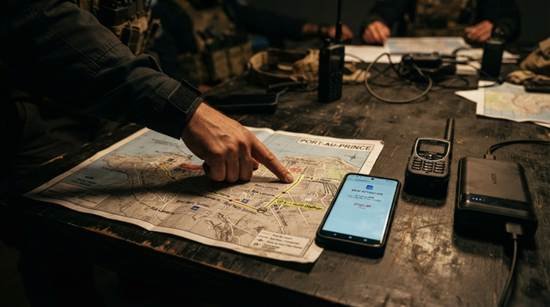
Despite occasional claims from niche travel blogs suggesting that certain northern areas might be more stable, security analyses in 2026 state unequivocally that no legitimate, reliably safe tourism infrastructure operates anywhere across the country. Claims that northern regions like Cap-Haïtien are safer directly contradict blanket government warnings, which carve out no safe zones. Even those who advocate for northern travel acknowledge that the overall context remains highly dangerous and requires secure transfers and vetted local partners. Therefore, overriding official guidance to visit these supposedly calmer pockets should be treated as high-risk travel rather than casual leisure, as the underlying threat of violence and infrastructure failure persists nationwide.
How should you plan and mitigate risks for essential travel?
If your journey is strictly for critical humanitarian missions or unavoidable business, it must be approached as a hostile-environment assignment. Thorough preparation requires engaging professional security services or specialist firms to manage all transportation and physical protection. Travelers must pre-arrange armored or heavily vetted vehicles, secure accommodations with controlled access, and reliable local drivers. Register with your embassy or consulate before departure, such as enrolling in the Smart Traveler Enrollment Program, to receive real-time alerts.
High-risk travel guidance also strongly recommends preparing legal and personal affairs in advance, including:
- Drafting a will
- Designating insurance beneficiaries
- Arranging powers of attorney
On the ground, maintaining a very low profile, avoiding the display of any wealth, and strictly limiting movement—especially walking or driving at night—are critical survival tactics. In the event of an attempted robbery, the official protocol is to avoid physical resistance and hand over valuables immediately to prevent violent escalation.
What are the medical and emergency evacuation considerations?
The health care system is severely under-resourced, understaffed, and often incredibly difficult to access, particularly during periods of intense civil unrest. Foreign advisories warn that medical care and emergency services are inadequate for visitors, and local pharmacies frequently suffer from depleted stocks. Consequently, prospective visitors must consult healthcare providers about required vaccinations well in advance and bring a comprehensive personal medical kit. This kit should include enough prescription and over-the-counter medications to cover the entire stay, plus several additional weeks in case security conditions prevent a scheduled departure.
Because foreign governments will not fund extractions and private evacuations are extraordinarily expensive, purchasing robust travel insurance is a non-negotiable requirement.
How can you ensure reliable communication and connectivity during your trip?
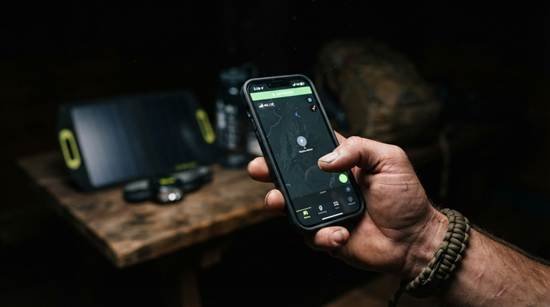
Maintaining uninterrupted communication is a life-saving necessity in an environment where the security situation can deteriorate without warning. High-risk travel guidance mandates establishing a rigorous communication plan with designated external contacts, specifying exact times for daily check-ins and clear emergency procedures if a check-in is missed. Because the local infrastructure suffers from highly unstable electricity and frequent fuel shortages, travelers must carry multiple independent power sources, such as high-capacity power banks and portable solar chargers.
Beyond hardware, securing a stable mobile internet connection is critical for monitoring local media, receiving urgent embassy alerts, and coordinating with security personnel in real time. Relying on physical local SIM cards can be risky and logistically challenging upon arrival, making digital connectivity alternatives the preferred choice for modern crisis management.
Setting up a dedicated connection for Haiti
Securing immediate internet access the moment you land is paramount for coordinating secure airport transfers and receiving initial security briefings. Traditional roaming charges can be exorbitant, and navigating local kiosks to purchase physical network access exposes travelers to unnecessary risks in unsecured public areas.
Instead, installing an eSIM for Haiti before departure allows for instant activation and reliable connectivity upon arrival, avoiding the risks and hassle of physical cards. This technology ensures that your primary line remains active for crucial two-factor authentication and emergency voice calls, while the digital profile handles all local data needs affordably and securely.
Setting it up before you fly takes only a few minutes: choose your plan, scan the QR code, and your data is active the moment you land. Travelers can use the code AMIGO-HT-0626 at checkout to get 15% off their Haiti eSIM. With prepaid, transparent pricing and no exposure to public kiosks, you stay connected and in control from the first minute on the ground.
Utilizing global data solutions for international travel
For humanitarian workers, journalists, and security professionals whose deployments often span multiple borders or require sudden rerouting through neighboring countries, having a flexible connectivity strategy is essential. Managing different network providers for every layover or emergency detour is highly inefficient during a crisis.
Solutions like an international eSIM card from Amigo eSIM provide instant, high-speed data across 194+ countries. This eliminates the friction of purchasing new data packages on the fly and avoids predatory roaming fees, keeping your focus on safety.