

The Alpine Grandeur of the Bernese Oberland
The Swiss Alps represent the quintessential image of European mountain topography, characterized by sharp peaks, crystalline lakes, and a deep-seated cultural heritage of mountaineering. Within this region, the Bernese Oberland stands as a testament to geological drama, dominated by the formidable triumvirate of the Eiger, Mönch, and Jungfrau. These massifs, sculpted by glacial activity over millennia, offer an environment where the infrastructure of high-altitude transport meets the raw isolation of the perennially frozen peaks. For the discerning traveler, the appeal lies not merely in the visual spectacle but in the precision of the experience—the seamless integration of cogwheel railways and cable systems that allow access to the Jungfraujoch, the highest railway station in Europe, situated at 3,454 meters above sea level.
The Haute-Savoie and the Chamonix Needle
In France, the Haute-Savoie department is home to the Mont Blanc massif, the highest point in the European Union. Chamonix, often cited as the world capital of mountaineering, provides an immersive experience into the history of alpine exploration. The Aiguille du Midi, a 3,842-meter needle of rock, offers an unparalleled vantage point over the Mer de Glace, France’s largest glacier. The region is characterized by a rigorous approach to mountain sports, attracting an international cohort of alpinists and researchers. Beyond the adrenaline of the slopes, the area maintains a commitment to preserving the delicate alpine ecosystem, balancing the demands of global tourism with the necessity of environmental stewardship.
The Dolomites: A Geological Masterpiece
Moving eastward into Northern Italy, the Dolomites present a starkly different aesthetic and geological profile. Recognized as a UNESCO World Heritage site, these mountains are composed of carbonate rock, which reacts to the shifting light of dawn and dusk in a phenomenon known as enrosadira, or the alpenglow, turning the pale rock into shades of deep crimson and violet. Unlike the granite spires of the central Alps, the Dolomites are defined by sheer vertical walls, karst plateaus, and jagged pinnacles such as the Tre Cime di Lavaredo. This region is a sanctuary for those who appreciate the intersection of Ladin, German, and Italian cultures, offering a sophisticated blend of high-altitude trekking and refined viticulture in the valleys of Alta Badia and Val Gardena.
The Aosta Valley and the Presence of the Matterhorn
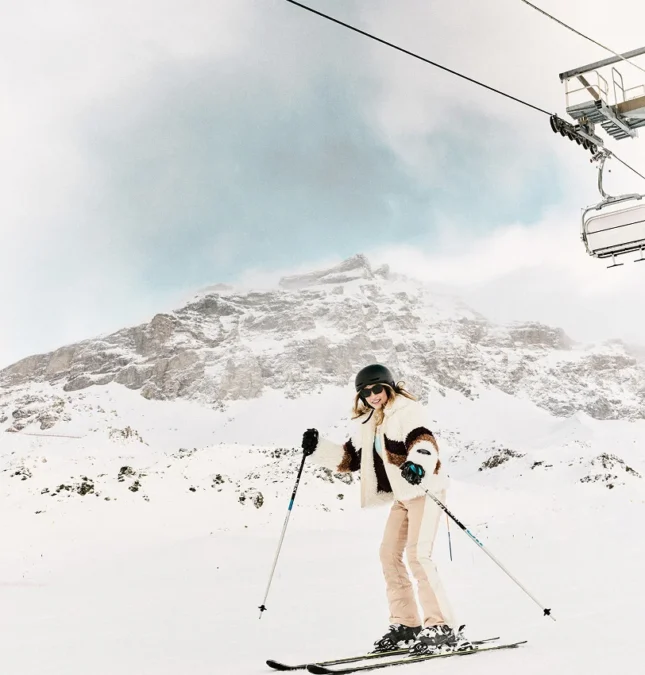
Situated at the intersection of Italy, France, and Switzerland, the Aosta Valley serves as a gateway to some of the highest massifs in Western Europe, including Mont Blanc and the Matterhorn (Monte Cervino). The Italian side of the Matterhorn, accessible through the high-altitude resort of Breuil-Cervinia, offers a unique perspective on this iconic pyramidal peak. The region is distinguished by its vast, interconnected ski domains and its historical significance as a Roman outpost. Visitors seeking seclusion and architectural elegance often gravitate toward a luxury mountain hideaway in Cervinia, where the emphasis is placed on contemplative comfort amidst the high-altitude glacial landscape. The microclimate here ensures a prolonged season of snow, making it a premier destination for those who prioritize environmental consistency and technical skiing opportunities.
The High Tatras: Central Europe’s Granite Bastion
While the Alps often dominate the discourse on European highlands, the High Tatras, forming a natural border between Slovakia and Poland, offer a concentrated wilderness of exceptional beauty. As the highest range in the Carpathian Mountains, the Tatras are notable for their alpine character despite their relatively small geographical footprint. The landscape is defined by deep post-glacial cirques, turquoise mountain lakes known as plesá, and sharp granite ridges. This destination appeals to the informed traveler who seeks a more intimate encounter with nature, away from the expansive commercialization found in Western Europe. The region remains a vital habitat for indigenous species such as the Tatra chamois and the brown bear, embodying a pristine state of ecological preservation that is increasingly rare across the continent.