
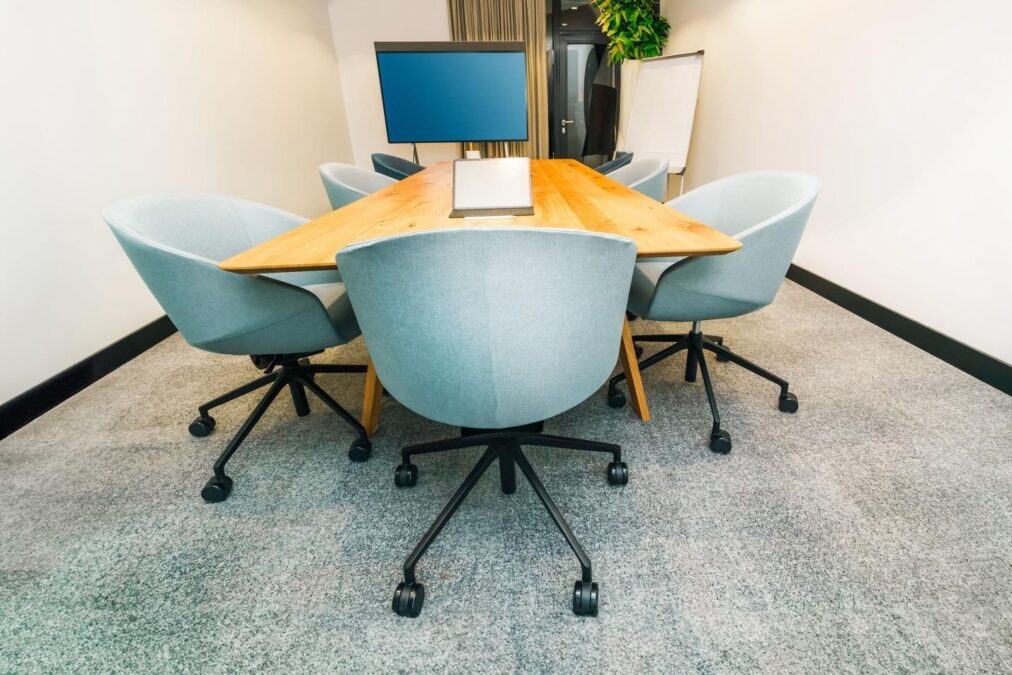

Carpets usually get decided in the last week of an office fit-out, after the partitions, the desks, and the meeting rooms are locked in, and that’s how companies end up with a floor that pills in the corridors within a year or shows every coffee spill in the boardroom. The choice carries more weight than the timing suggests, because the carpet is the one surface that touches noise levels, the impression a client gets walking in, and how the floor looks after two years of wheeled chairs. Getting it right is a matter of matching the carpet to how each part of the office actually gets used.
Why Office Carpet Is a Smart Investment
Sound is the return that shows up first. In an open-plan floor with thirty people on calls, hard flooring bounces every voice and keystroke around the room, and the noise wears people down by mid-afternoon. Carpets absorb that, and the difference between a carpeted and a tiled open office is something staff feel in their concentration even if they never name it.
A client walking into a reception with worn, stained flooring reads it instantly, fairly or not, as a company cutting corners. A carpet that still looks sharp after heavy use protects that impression.
There’s also the plain comfort of it underfoot for staff who are up and moving between desks all day, which feeds back into how the space gets used.
Carpet Tiles vs Wall-to-Wall: Which Fits Your Office?
Carpet tiles earn their place in any office with real foot traffic, and the reason is what happens when something goes wrong. A chair caster shreds one patch, someone drops a full mug of coffee that won’t come out, a section by the entrance wears faster than the rest. With tiles you lift the damaged ones and drop in replacements from your spare box, matching the existing floor, and the repair costs a few tiles instead of recarpeting the room. That alone makes them the default for corridors, workstation clusters, and anywhere chairs roll.
Wall-to-wall makes more sense in the spaces that don’t take that kind of abuse and where the seams between tiles would cheapen the look, like a boardroom, a CEO’s office, or a formal reception. It gives an unbroken, premium surface, but a stain or a burn in the middle of it is a much bigger problem to fix, so it belongs where traffic is light and controlled.
Most Dubai offices end up using both: tiles across the working floor, broadloom in the executive and client zones.
Key Factors to Consider Before Choosing
The wear-layer rating is the first thing to check, before color, before pattern, before price. A carpet rated for light residential use put into a busy office corridor flattens and frays within months, and no amount of cleaning brings it back. When you’re specifying an Office carpet dubai for a working floor, look at the traffic-grade rating first and match it to the heaviest-use zone it’ll cover, because the carpet only performs as well as its rating allows.
Fiber comes next. Nylon is the workhorse for offices: it takes constant chair and foot traffic, springs back from compression, and resists matting better than the alternatives, which is why it dominates commercial specs. Wool blends bring a richer feel and a more premium look and suit an executive suite or a low-traffic client area, but they cost more and stain less forgivingly, so they’re the wrong call for a canteen or a busy thoroughfare. Stain resistance matters wherever food, drink, or outdoor dirt travels, so it’s worth specifying a treated fiber for anything near a pantry or an entrance.
Color and pattern do practical work beyond matching your brand. A solid pale carpet shows every mark in a high-traffic lane, while a mid-tone with a subtle fleck or pattern hides the daily grit and the occasional spill between cleans, which keeps the floor looking maintained without constant attention. Use your brand colors where they’ll be seen and stay clean, and lean on dirt-disguising tones where the traffic is heaviest.
Safety & Compliance Standards
Fire rating is the standard a building’s facilities or fit-out approval will check before anything else. Office carpet needs to meet the flammability class your building and Dubai Civil Defence requirements call for, and a carpet that isn’t rated for commercial use can stall your fit-out approval or fail an inspection later, so confirm the certification before you commit to a product.
Slip resistance matters most at the transitions, where carpet meets tile or stone near entrances and pantries, because that’s where a poorly secured or wrong-pile carpet causes the falls that turn into liability claims. Low-VOC certification is the one that’s risen up the list lately: carpets and their adhesives can off-gas into a sealed, air-conditioned office for weeks, and for any company chasing a green building rating or simply protecting staff air quality, a low-emission product and adhesive is part of the spec rather than an upgrade.
Office Carpet Budgeting & Cost
Price the job per square meter across the whole floor, not per roll, because that’s how the real number lands once you factor in the underlay, the adhesive, and the fitting labor on top of the carpet itself. Larger projects usually pull the per-meter rate down, since the install team’s setup time gets spread across more area, so a full-floor order rarely costs proportionally more than a single room.
The cheaper carpet is rarely cheaper over the lease. A low-grade product in a high-traffic office wears out and gets replaced inside two or three years, with the disruption of clearing the floor and shutting down a zone each time, while a properly rated carpet runs the length of a typical office lease without that. Budget against the years you’ll keep it, not the day you buy it.
Maintenance for High-Traffic Workspaces
Daily vacuuming is the single thing that most extends an office carpet’s life, because the grit that gets walked in from the street acts like sandpaper at the base of the fibers and grinds them down every time someone steps on it. Pull that out before it settles and the carpet ages far slower. Spot-clean spills the same day so they don’t set, and schedule a professional deep clean a couple of times a year to lift what the daily vacuum can’t reach.
Tiles give you one more lever here: rotate the ones from low-traffic spots into worn high-traffic lanes so the wear evens out across the floor instead of carving a visible path, which stretches the years before any replacement is needed.
Conclusion
Match the wear rating to the traffic, put tiles where things get spilled and broadloom where they don’t, confirm the fire and emission certifications before you sign off, and cost it across the lease rather than the invoice. Run the choice through that and the floor holds up for as long as you need it to.