
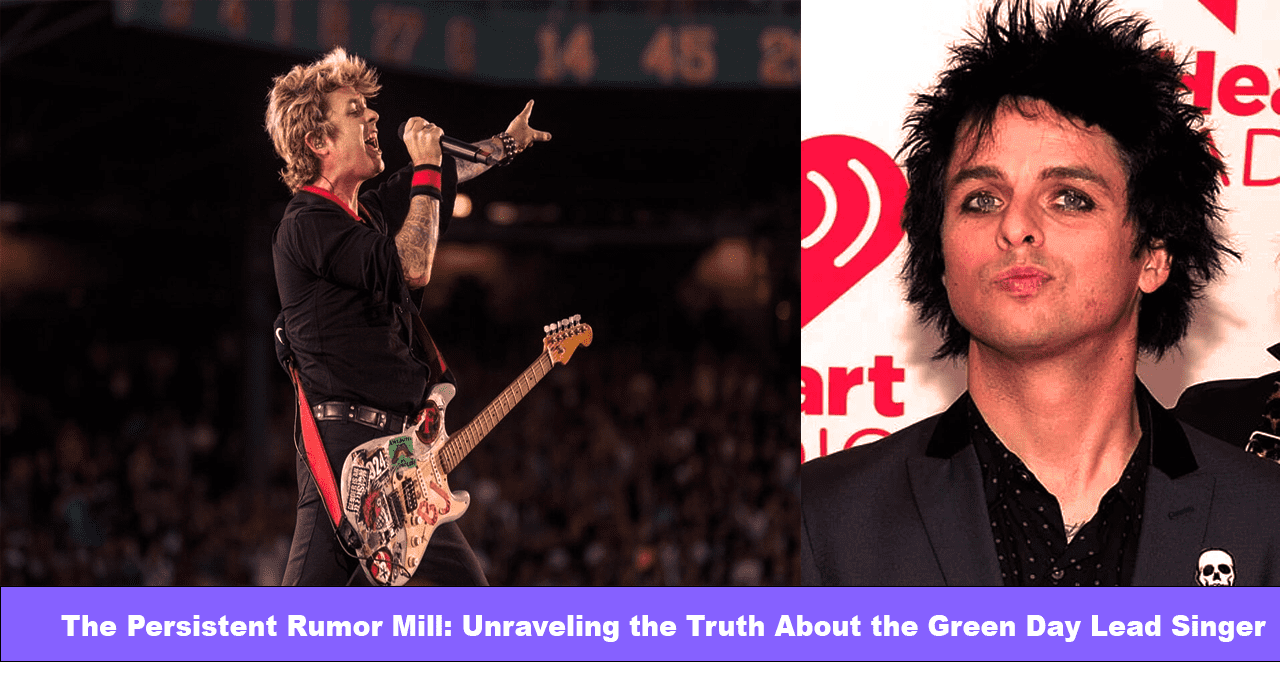

The internet, for all its wonders, is a breeding ground for misinformation, and perhaps one of the most jarring and persistent categories of online falsehoods is the celebrity death hoax. Few bands have been as consistently targeted by these macabre rumors as the iconic punk rock trio Green Day. A simple, morbid search for “green day lead singer death” yields a disturbing mix of fabricated news articles, manipulated video thumbnails, and panicked forum posts. For decades, a segment of the internet has been gripped by a bizarre and false narrative surrounding the demise of Billie Joe Armstrong.
This article aims to be the definitive, final word on this subject. We will not only definitively debunk the false claims about the Green Day lead singer but also explore the reasons why these rumors start, how they spread like digital wildfire, and the real, compelling story of Billie Joe Armstrong’s life, his struggles, and his triumphant resilience. The truth is far more interesting than the fiction. Billie Joe Armstrong is very much alive, still writing anthems, and still leading one of the most influential rock bands of all time. The story of his fictional demise is a fascinating case study in internet culture, while the story of his actual life is one of punk rock passion, personal demons, and profound artistic endurance.
The Origin of the Hoax: Why Do People Think Billie Joe Armstrong Died?
It’s a question that has baffled fans and media analysts alike. There is no single, smoking-gun event that sparked the initial wave of rumors about the Green Day lead singer. Instead, the false narrative of his death is a patchwork quilt of misunderstood events, malicious pranks, and the internet’s innate ability to amplify any story, regardless of its truthfulness. The phenomenon seems to have gained significant traction in the early 2000s, coinciding with the rise of social media platforms and websites dedicated solely to celebrity death hoaxes, which use shocking headlines to generate clicks and ad revenue.
One of the most commonly cited “sources” for these rumors is a misinterpretation of Green Day’s own artistic output. The band’s 2004 rock opera, American Idiot, features a character, Jesus of Suburbia, who experiences a form of existential crisis. Some listeners took the themes of despair and rebellion too literally, weaving them into a false narrative about the singer’s real life. Furthermore, Billie Joe’s very public struggles with substance abuse, particularly his on-stage breakdown at the 2012 iHeartRadio Festival and subsequent entry into rehab, created a period of genuine concern among fans. This concern was, for some, twisted into a confirmation of a far more tragic outcome. The mere mention of a celebrity entering rehab can, in the distorted echo chamber of the internet, morph into rumors of an overdose and death.
The Mechanics of a Modern Myth
The spread of the Green day lead singer death hoax follows a predictable digital pattern. It often begins on obscure forums or fake news websites designed to look like legitimate media outlets. A user will post a fabricated story, complete with grainy, out-of-context photos or misleading video clips. The headline is always engineered for maximum shock value: “Green Day Frontman Billie Joe Armstrong Dead at 48” or “Tragic Loss: Rock World Mourns as Lead Singer Succumbs.” These posts are then shared on social media platforms like Twitter and Facebook, where panic and emotion often outpace fact-checking.
Well-meaning but alarmed fans see the post and share it with comments like, “I hope this isn’t true!” which only serves to amplify the algorithm and spread the lie further. Before long, the hashtag #RIPBillieJoe might start trending, adding a veneer of credibility. It creates a feedback loop of anxiety. Eventually, reputable news sources and the band’s official social media accounts are forced to break their silence to debunk the claims, but by then, the rumor has already been seeded in the digital consciousness, ready to resurface during the next slow news cycle or on the anniversary of some unrelated event.
The Real Billie Joe Armstrong: A Life in Punk, Not a Death Hoax
To understand why the Green Day lead singer death rumors are so jarring, one must understand the vibrant, chaotic, and incredibly productive life of the man himself. Billie Joe Armstrong was born on February 17, 1972, in Oakland, California. His life has been a testament to the power of punk rock as a vehicle for not just rebellion, but also for storytelling, melody, and massive cultural impact. He is the heart, soul, and voice of Green Day, a band that started in the East Bay punk scene and went on to sell over 75 million records worldwide, be inducted into the Rock and Roll Hall of Fame, and win multiple Grammy Awards.
From the age of five, Billie Joe was drawn to music, a passion encouraged by his mother after the death of his father to esophageal cancer when Billie Joe was just ten years old. This early loss undoubtedly shaped his worldview and infused his songwriting with a sense of urgency and a preoccupation with themes of mortality, time, and suburban disillusionment. He formed his first band, Sweet Children, with Mike Dirnt in 1986, which would soon evolve into Green Day. Their early years were spent in the DIY punk scene of 924 Gilman Street, a venue that valued authenticity and community over commercial success.
From Dookie to American Idiot: A Career of Constant Reinvention
The real story of the Green Day lead singer is one of phenomenal success and artistic fearlessness. The band’s major-label debut, Dookie (1994), became a global phenomenon, catapulting punk rock into the mainstream and making Billie Joe Armstrong a household name. With his bleached hair, eyeliner, and relentless energy, he became the face of a new generation of rock stars. However, instead of resting on their laurels, Green Day continued to evolve. They faced a commercial slump in the late ’90s, only to come roaring back with what is arguably their magnum opus, American Idiot (2004).
This rock opera was a staggering artistic achievement that redefined the band’s legacy. It showcased Billie Joe’s growth as a lyricist and composer, tackling complex political and personal themes. The character of St. Jimmy, the hyper-energetic, drug-fueled alter-ego, became a central part of his stage persona. This blurring of lines between art and life, between Billie Joe and St. Jimmy, would later contribute to his very real personal struggles. The success of American Idiot cemented his status not just as a punk rocker, but as a significant American songwriter, leading to a Broadway musical adaptation that won two Tony Awards. This is the true narrative—one of creation and reinvention, not the fictional demise peddled by death hoaxes.
Facing Real Demons: Billie Joe Armstrong’s Public Struggles with Health and Addiction
While the rumors of the Green day lead singer death are entirely false, Billie Joe Armstrong has indeed faced significant public challenges that have tested his health and his career. The most prominent of these was his struggle with substance abuse, which came to a very public head on September 21, 2012, at the iHeartRadio Music Festival in Las Vegas. With Green Day in the middle of performing, Armstrong launched into an expletive-filled rant after realizing the set was being cut short, smashing his guitar before walking off stage. It was a shocking moment that laid bare the pressures he was under.
In the aftermath, the band announced they were postponing their upcoming tour dates and that Billie Joe would be entering rehab for prescription medication and alcohol abuse. This was a moment of profound vulnerability, not a tragedy. It was a public admission of a private battle. For a period, the future of Green Day was uncertain. Fans were concerned, but the narrative was one of hope and recovery, not of loss. This real-life crisis is likely a primary source of fuel for the death hoaxes, as individuals conflate a public health struggle with a fatal outcome.
Recovery, Return, and Renewed Purpose
The story of the Green Day lead singer following his 2012 rehab stint is one of triumphant recovery. After successfully completing treatment, Billie Joe Armstrong emerged with a renewed focus on his health, his family, and his music. Green Day returned stronger than ever, releasing the album Revolution Radio in 2016, an album that many critics noted had a refreshed and focused energy. Songs like “Still Breathing” were widely interpreted as powerful statements about his journey through addiction and recovery.
Armstrong has been open about his sobriety, discussing the importance of therapy and the daily work it takes to maintain his health. He has also become an advocate for mental health awareness, using his platform to destigmatize the issues he faced. This chapter of his life adds a layer of depth and humanity to his public persona. He is not a rock star caricature; he is a person who faced a formidable challenge, sought help, and came out the other side with his creativity and passion intact. This narrative of resilience is the true counterpoint to the lazy, fictional rumors of his death.
The Enduring Legacy of Green Day and Their Frontman
To focus on a fictional Green day lead singer death is to miss the incredible, ongoing legacy of Billie Joe Armstrong and Green Day. For over three decades, the band has been a dominant force in rock music, influencing countless other artists and defining the sound of multiple generations. From the snot-nosed pop-punk of Kerplunk to the ambitious scope of American Idiot and the political fury of 21st Century Breakdown, their discography is a map of modern rock evolution. Billie Joe’s songwriting, with its knack for merging irresistible melody with incisive, often witty lyrics, is the constant thread.
Their influence extends far beyond record sales. Green Day, with Billie Joe as their charismatic leader, helped bring punk rock aesthetics and sensibilities to a massive, global audience. They proved that punk could be both politically charged and immensely popular, that it could be played on stadium stages without losing its soul. Bands like Fall Out Boy, My Chemical Romance, and The Offspring all operate in a world that Green Day helped to create. The Green Day lead singer is not a figure of the past; he is a living, active architect of contemporary music.
The Band’s Present and Future
As of the writing of this article, Billie Joe Armstrong and Green Day are as active as ever. They released a new album, Saviors, in 2024, and embarked on a massive global stadium tour, proving their drawing power remains immense. Billie Joe’s voice and stage presence continue to be as powerful as they were in the 1990s. Furthermore, he has pursued other creative ventures, including his side band The Longshot and a role in the film Like Sunday, Like Rain. The narrative is one of forward momentum.
The constant churn of online rumors about the Green Day lead singer death feels especially hollow when contrasted with the vibrant reality of the band’s current activities. They are creating new music, playing to millions of fans, and continuing to engage with the cultural and political landscape. The legacy of Green Day is still being written, with Billie Joe Armstrong very much holding the pen. To believe the hoaxes is to ignore the overwhelming evidence of a career that is very much in progress.
The Bigger Picture: Why Celebrity Death Hoaxes Persist Online
The false narrative surrounding the Green day lead singer is not an isolated incident. It exists within a much larger and more disturbing trend of celebrity death hoaxes. Figures like Paul McCartney, Adam Sandler, and Morgan Freeman have all been the subject of similar baseless rumors. Understanding why these hoaxes persist requires looking at the psychology of both the creators and the consumers of this false information. For the creators, the motivation is often a twisted desire for attention, the thrill of causing chaos, or the more tangible reward of web traffic and ad revenue from clickbait sites.
For those who spread and believe the rumors, the reasons are more complex. In some cases, it’s a simple lack of media literacy—an inability to distinguish between a legitimate news source and a fabricated one. In other cases, there is an almost subconscious desire to be part of a dramatic, shared event, even a tragic one. The act of posting “RIP” on a social media page for a beloved celebrity can create a sense of community and shared grief, however misplaced it may be. The hoax about the Green Day lead singer taps into a genuine emotional connection that fans have with Billie Joe Armstrong, making the false news feel more personal and therefore more believable.
The Real-World Impact of Digital Lies
While it may be easy to dismiss these hoaxes as harmless pranks, they can have real and damaging consequences. For the celebrities themselves and their families, being confronted with rumors of their own death can be a deeply distressing and invasive experience. Imagine the horror of a family member logging online to see a flood of messages mourning their passing. For fans, especially younger ones, the experience can be genuinely traumatic, causing unnecessary anxiety and grief.
Furthermore, these hoaxes contribute to the overall erosion of trust in online information. When people are repeatedly fooled by fake news, they can become cynical and distrustful of all media, including legitimate journalism. The constant noise of misinformation makes it harder for people to find and focus on facts. The persistent rumor of the Green Day lead singer death, while ultimately debunked, is a small but potent example of how the digital ecosystem can be manipulated, with real emotional fallout for real people.
How to Spot a Celebrity Death Hoax and Find the Truth
In an age of digital misinformation, it is more important than ever to be a critical consumer of information. The next time you see a shocking headline about the Green day lead singer or any other celebrity, there are several concrete steps you can take to verify its authenticity before you react or share. First and foremost, check the source. Is it a reputable news organization like the Associated Press, BBC, or Reuters? Or is it a website you’ve never heard of, with a URL that seems slightly off? Legitimate news of a major celebrity’s death would be reported by hundreds of established outlets simultaneously.
Second, look for official confirmation. In the case of a public figure like Billie Joe Armstrong, news of his passing would be confirmed through Green Day’s official website, their verified social media accounts, or a statement from their record label or management. The absence of any official word is a huge red flag. Third, be wary of the evidence presented. Hoax articles often use old photos from movie sets, photoshopped images, or videos taken wildly out of context to support their claims.
Trusted Resources and Fact-Checking
If you are ever in doubt, use dedicated fact-checking websites like Snopes.com, PolitiFact, or Reuters Fact Check. These organizations specialize in investigating and debunking viral rumors. A quick search on Snopes for “Billie Joe Armstrong death” will immediately bring up a page definitively labeling the claim as false. Similarly, a visit to Green Day’s official Instagram or X (formerly Twitter) feed will show you the band promoting new music and tours—activities that are rather difficult to undertake if the Green Day lead singer were actually deceased.
By taking a moment to pause and verify, you break the chain of misinformation. You protect yourself from unnecessary distress and prevent yourself from inadvertently spreading a lie that causes distress to others. The story of the fictional Green day lead singer death is a perfect case study in why these digital literacy skills are not just useful, but essential in the modern world.
Cracking the Code: The Multimillion-Dollar Net Worth of the Game
A Comparison: The Fiction vs. The Reality
It can be instructive to place the false narrative and the true story side-by-side. The following comparison highlights the stark contrast between the internet’s morbid fiction and the documented, vibrant reality of Billie Joe Armstrong’s life and career.
| Aspect | The Fiction (The Death Hoax) | The Reality (The True Story) |
|---|---|---|
| Billie Joe’s Status | Deceased, often from a purported overdose or accident. | Alive, active, sober, and continuously creating new music and performing. |
| Source of Information | Fake news websites, unverified social media posts, manipulated videos. | Official band channels, reputable news outlets, live public appearances, new album releases. |
| Narrative Arc | A tragic, sudden end to a life and career. | A story of resilience, recovery from addiction, and decades-long artistic evolution. |
| Impact on Fans | Causes unnecessary panic, grief, and confusion. | Inspires through music, provides a soundscape for generations, and offers a story of overcoming adversity. |
| Evidence | Grainy photos, out-of-context clips, fabricated quotes from unnamed “sources.” | A consistent and public output of music, tours, interviews, and social media activity spanning over 30 years. |
| The True Legacy | A morbid and false footnote in internet culture. | A Rock and Roll Hall of Fame career, iconic albums, and a profound influence on the sound of modern rock music. |
In Their Own Words: Quotes from Billie Joe Armstrong and the Band
The best way to understand the spirit of Green Day and its leader is to hear from them directly. Their words about life, music, and their own journey provide the most powerful rebuttal to the false rumors.
On Life and Perspective:
“I think the older you get, the more you realize that life is just about being happy. It’s not about being successful or being famous or being rich. It’s about being happy and finding what you love to do and doing it.” — Billie Joe Armstrong
This quote, from a man who has experienced the highest highs of fame, speaks to a maturity and appreciation for life that directly contradicts the grim finality of the death hoaxes.
On the Band’s Longevity:
“We’re not a band that’s trying to be the flavor of the month. We’re trying to have a career and make music that lasts.” — Mike Dirnt
Mike Dirnt’s statement underscores the band’s long-term vision, a vision that is inherently forward-looking and incompatible with the narrative of a tragic, premature end for the Green Day lead singer.
On Overcoming Struggles:
“I’m a firm believer in that you have to go through hell to get to heaven.” — Billie Joe Armstrong
This reflection on his own struggles with addiction is a testament to his resilience. It frames his challenges as a difficult chapter in a longer story, not as the story’s conclusion.
Conclusion
The relentless online search for “green day lead singer death” is a digital ghost story, a persistent myth born from a combination of misunderstanding, malice, and the strange mechanics of viral internet culture. Yet, when held up to the light of reality, this fiction evaporates completely. The truth is that Billie Joe Armstrong is not a tragic figure from the past, but a vibrant and active artist in the present. His story is not one of a life cut short, but of a life fully lived, with all its celebrated triumphs and very public struggles. It is a story of a young punk who helped change the face of rock music, faced down his personal demons, and emerged with a stronger sense of self and purpose.
The legacy of Green Day and its iconic Green Day lead singer is written in the millions of records sold, the stadiums filled with roaring fans, and the anthems that have become part of our cultural fabric. It is a legacy that continues to grow with every new song and every powerful live performance. So, the next time you encounter the morbid rumor, you can confidently dismiss it, knowing that the real story—one of passion, punk rock, and perseverance—is far more compelling than any fictional demise could ever be. Billie Joe Armstrong is very much alive, and the music is very much alive with him.
Frequently Asked Questions (FAQ)
Is the Green Day lead singer really dead?
No, this is completely false. Billie Joe Armstrong, the lead singer of Green Day, is alive and well. The rumors of his death are a long-running internet hoax with no basis in fact. He continues to write, record, and tour with Green Day, with their most recent album, Saviors, released in 2024.
What started the rumor about the Green Day lead singer’s death?
There is no single origin, but the rumors gained traction from a mix of factors. These include misinterpretations of the band’s concept albums like American Idiot, his very public struggle with substance abuse and rehab in 2012, and the general prevalence of celebrity death hoaxes designed to generate clicks and shock value online.
Did Billie Joe Armstrong ever have a serious health scare?
While Billie Joe Armstrong has never had a public health scare that involved a near-death experience, he has been very open about his serious struggle with addiction to alcohol and prescription medication. This culminated in a public breakdown in 2012 and his subsequent entry into rehab, from which he successfully recovered and has maintained his sobriety.
How does Billie Joe Armstrong feel about the death hoaxes?
While he hasn’t addressed every specific instance, Armstrong has generally expressed bemusement and frustration with internet rumors and misinformation. He and the band primarily ignore the hoaxes, letting their continued active work—making music and touring—serve as the most powerful denial.
Where can I find reliable information about Green Day and its members?
The only reliable sources for information are official channels. This includes Green Day’s verified website and their official social media accounts on platforms like Instagram, X (Twitter), and Facebook. For news, always rely on established, reputable music journalism outlets and mainstream news organizations that will verify facts before publishing.