
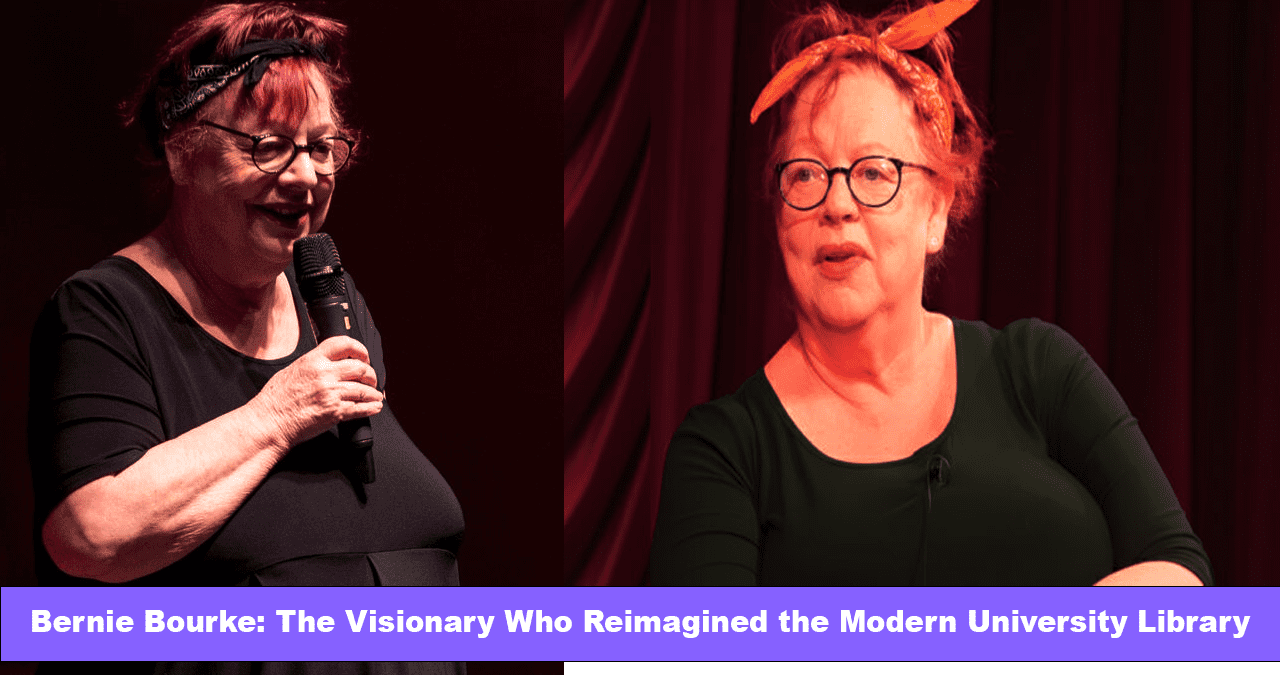

Walk into the library of a major university today, and you expect certain things. You expect to find not just quiet rows of books, but vibrant social spaces where students collaborate. You expect to see banks of computers, digital studios, and cozy cafes. You expect a building that is as much a community hub as it is a repository of knowledge. This modern conception of an academic library—a dynamic, user-centered, and technologically integrated space—did not emerge by accident. In many ways, it was pioneered by a forward-thinking librarian and leader named Bernie Bourke. While his name may not be a household word, his influence has profoundly shaped the experiences of countless students, academics, and information professionals across Australia and beyond.
Bernie Bourke’s legacy is intrinsically tied to La Trobe University, where he served as the University Librarian for over two decades. His tenure, spanning from a period of traditional print-based collections to the dawn of the digital age, was marked by a relentless drive to anticipate the future needs of the academic community. He was not a custodian of the past but an architect of the future. Bourke understood earlier than most that the library’s role was shifting from being a passive warehouse of information to an active, service-oriented engine of learning and research. His story is one of visionary leadership, a deep belief in the power of collaboration, and a commitment to creating spaces and services that empower people. This article delves into the life, philosophy, and enduring impact of Bernie Bourke, the man who saw the library not for what it was, but for what it could become.
The Early Career and Formative Philosophy of Bernie Bourke
To understand the significance of Bernie Bourke’s work at La Trobe, it is helpful to look at the context from which he emerged. The world of librarianship in the 1970s and 1980s was one on the cusp of monumental change. The card catalog was still king, collections were measured in linear meters of shelving, and the primary function of a librarian was often seen as acquisition, cataloging, and preservation. However, a new wave of thought was beginning to challenge this traditional model. This wave focused more on the user, on access rather than just ownership, and on the library as a service point. It was within this evolving professional landscape that Bernie Bourke developed his core philosophy.
The Sonic Architect: Unpacking the Enduring Influence of Terry Bullen
Before his landmark tenure at La Trobe, Bernie Bourke was already building a reputation as a capable and innovative professional. His early career involved roles that likely exposed him to the practical challenges of library management and user services. These experiences forged in him a conviction that libraries must be adaptable, responsive, and fundamentally focused on the people they serve. He was not content with a system that prioritized the collection over the user. This user-centric approach would become the north star of his entire career, guiding every major decision he would later make. He believed that for a library to remain relevant, it had to be an inviting, accessible, and supportive environment that actively facilitated learning and discovery, rather than simply making materials available for those persistent enough to find them.
The La Trobe University Transformation: A Legacy Forged in Concrete and Code
When Bernie Bourke arrived at La Trobe University, he inherited an institution with immense potential. The university itself was relatively new, having been established in the 1960s with a modern and progressive outlook. The library, however, like most of its contemporaries, was operating on a largely traditional model. Bourke saw an opportunity to build something truly revolutionary, not just for La Trobe, but as a model for academic libraries everywhere. His vision was comprehensive, touching upon every aspect of the library’s existence: its physical space, its technological infrastructure, its collections, and, most importantly, its staff and services. The transformation of the La Trobe University Library under Bernie Bourke is a masterclass in strategic, long-term institutional change.
One of the most visible and lasting testaments to the influence of Bernie Bourke is the physical library building itself. He was a driving force behind the design and construction of the library that would be renamed in his honor. Bourke understood that architecture shapes behavior. He championed a design that broke away from the monolithic, intimidating reading rooms of older institutions. Instead, he advocated for a building filled with natural light, varied seating arrangements to accommodate both solitary study and group work, and open, flexible floor plans that could adapt to changing needs over time. This was a radical departure from the norm. He was instrumental in integrating a cafe into the library, a move that was controversial at the time but is now standard practice. He knew that fostering a sense of community and allowing for informal intellectual exchange was just as important as providing access to books. The physical space, under his guidance, became a statement of intent: the library is for people.
Integrating Technology and Fostering Innovation
While the physical transformation was stunning, Bernie Bourke’s vision extended far beyond bricks and mortar. He was a pioneer in recognizing that digital technology would fundamentally alter how information is created, stored, and accessed. During his leadership, La Trobe University Library became a national leader in the adoption of new technologies. He oversaw the transition from card catalogs to sophisticated online public access catalogs (OPACs), a change that revolutionized how students and faculty discovered resources. He invested early in electronic databases and digital resources, understanding that the future of scholarship was increasingly digital.
Bourke’s approach to technology was never about the gadgets for their own sake; it was always about enhancing the user experience and expanding access. He supported initiatives that leveraged technology to break down barriers. This included developing robust off-campus access systems for digital resources, ensuring that distance education students and researchers working from home had the same level of access as those physically in the building. He also fostered a culture of innovation among his staff, encouraging them to experiment with new tools and services. Under the leadership of Bernie Bourke, the library became a living laboratory for testing and implementing the next generation of academic support services, firmly establishing La Trobe as a forward-thinking institution.
The Bourke Philosophy: User-Centricity, Collaboration, and Empowerment
The physical and technological changes orchestrated by Bernie Bourke were merely the tangible expressions of a much deeper philosophical core. His success can be largely attributed to a consistent and powerfully held set of beliefs about the purpose of a library in an academic community. This philosophy can be distilled into three key principles: an unwavering focus on the user, a profound belief in the power of collaboration, and a commitment to empowering both staff and students. These principles were the engine room of his transformative work.
The user-centric model championed by Bernie Bourke meant that every decision, from a major multi-million dollar building project to the layout of a service desk, was evaluated through a simple but powerful lens: how does this improve the experience for the student, the researcher, or the faculty member? This represented a seismic shift in mindset. Instead of asking users to adapt to the library’s systems and rules, Bourke insisted that the library adapt to the workflows and needs of its users. This philosophy manifested in extended opening hours, more intuitive wayfinding, the development of research support services tailored to specific disciplines, and the creation of those varied learning spaces. The library was no longer a gatekeeper; it was a partner in the academic endeavor.
Fostering a Culture of Collaboration
Bernie Bourke was a master collaborator. He understood that the library could not achieve its ambitious goals in isolation. He actively built bridges with other departments across the university, from IT services to faculty deans. He positioned the library not as a standalone unit, but as a central, integrating force within the university ecosystem. By collaborating closely with academic staff, the library could better align its collections and services with the curriculum and research priorities of the university. This collaborative spirit also extended beyond the campus walls. Bourke was a key figure in national and international library consortia, working with other institutions to negotiate better deals for electronic resources, share expertise, and develop shared cataloging systems. He knew that in a connected world, collaboration was the key to efficiency, innovation, and greater impact.
The Honors and a Lasting Legacy
The profound impact of Bernie Bourke’s work has been recognized through numerous honors and awards, but the most significant tribute is the one that bears his name. In 2005, the main library at La Trobe University’s Melbourne campus was officially renamed the Bernie Bourke Library. This was not a ceremonial gesture for a retired leader; it was a fitting acknowledgment of the man who had, in many ways, willed the library into its modern form. Having a major university library carry his name ensures that his legacy is remembered daily by the thousands of students and scholars who pass through its doors.
The legacy of Bernie Bourke extends far beyond a name on a building. It lives on in the DNA of the library’s operations and in the professional ethos of the librarians he mentored and inspired. He created a culture of excellence, innovation, and user service that continues to guide the library’s evolution long after his retirement. The systems he put in place, the spaces he designed, and the service models he pioneered provided a strong foundation upon which future generations of librarians could build. When new challenges emerged, such as the open access movement or the rise of research data management, the library was well-positioned to respond because it had inherited a culture of adaptability and forward-thinking from the era of Bernie Bourke.
The Ripple Effect Across the Profession
The influence of Bernie Bourke was not confined to La Trobe University. Through his publications, his presentations at conferences, and his active role in professional organizations, he became a thought leader and a benchmark for excellence in the global library community. Librarians from other institutions would visit the Bernie Bourke Library to see its design and learn about its service models. They would take these ideas back to their own libraries, creating a ripple effect that has helped to shape the modern academic library landscape across Australia and in other parts of the world. His career serves as a powerful case study in how visionary leadership can transform an entire institution and, by extension, influence an entire profession.
Lessons from the Bourke Leadership Model for Today’s Professionals
In an era of rapid technological disruption and shifting user expectations, the leadership model exemplified by Bernie Bourke is more relevant than ever. His career offers a rich source of lessons for current and future leaders in libraries, education, and indeed, any knowledge-based organization. His success was not the result of a single brilliant decision, but of a consistent, principled, and long-term application of a clear vision.
One of the most critical lessons from the career of Bernie Bourke is the importance of anticipating change rather than simply reacting to it. While many of his contemporaries saw the digital revolution as a threat to the traditional library, Bourke saw it as an opportunity to expand the library’s reach and relevance. He invested in technology before it became an absolute necessity, positioning his library at the forefront of the change. This proactive stance requires courage, foresight, and a willingness to take calculated risks. It means constantly scanning the horizon, understanding emerging trends in education and technology, and being ready to pivot strategies to meet future needs. For today’s leaders, this means thinking about the implications of artificial intelligence, new modes of digital scholarship, and the evolving learning habits of a new generation of students.
Building a Resilient and Adaptive Organization
Another key lesson is that transformation is not just about systems and spaces; it is fundamentally about people. Bernie Bourke was highly effective at building a resilient and adaptive organization by empowering his staff. He fostered a culture where innovation was encouraged and where staff were given the training and the trust to develop new services. He understood that the library’s most valuable asset was not its collection, but its people. By investing in his team, he created an organization capable of continuous self-renewal. This people-first approach to management is essential for navigating the uncertainties of the modern world. An empowered, skilled, and motivated staff is the best defense against obsolescence and the greatest engine for innovation.
The Future of the Library in the Spirit of Bernie Bourke
What would Bernie Bourke make of the 21st-century library? While the specific technologies and challenges have evolved, the core principles he championed remain the essential guideposts. The future library will continue to be a hybrid space—both physical and digital—that is intensely user-focused, collaborative, and empowering. The spirit of Bernie Bourke challenges us to continually ask: how can we better serve our community?
The digital ecosystem of the library will only grow in importance. The legacy of Bernie Bourke suggests that future innovations will focus on seamless, personalized access to information. This could involve AI-driven discovery tools that anticipate a researcher’s needs, immersive technologies like virtual reality for exploring historical collections, and even more sophisticated support for managing and publishing complex digital research data. The library will continue to be a curator and a guide in an increasingly complex and overwhelming information universe. The foundational work done by Bernie Bourke in integrating technology with service provides a robust platform for this future.
The Enduring Value of Place and Community
Despite the digital shift, the career of Bernie Bourke also teaches us that the physical library as a place is not disappearing; its purpose is being refined. The library will remain a vital intellectual and social hub for the campus community—a “third place” that is neither the classroom nor the home. It is a space for serendipitous discovery, for cross-disciplinary collaboration, and for focused, deep work. The careful design of flexible, welcoming, and technology-rich spaces that Bourke championed is now the global standard for a reason. The library as a place provides a sense of identity and belonging, something that cannot be replicated online. The future will likely see libraries further diversifying their physical spaces to include makerspaces, podcast studios, data visualization labs, and other specialized environments that support new forms of creativity and scholarship, all in keeping with the visionary path laid down by Bernie Bourke.
Conclusion
Bernie Bourke was more than a librarian; he was a builder. He built a landmark library, he built innovative services, and, most importantly, he built a culture of excellence and user-centricity that has stood the test of time. His story is a powerful reminder that transformative leadership is about having a clear, human-centered vision and the determination to see it through over the long term. He looked at the traditional, quiet, and often intimidating library of the past and imagined a vibrant, welcoming, and empowering center of academic life for the future. The thousands of students who study, collaborate, and discover new ideas within the walls of the library that bears his name are the living testament to his success. The legacy of Bernie Bourke is not simply a building or a collection of past achievements; it is an ongoing invitation to every information professional to dream boldly, to put the user first, and to never stop reimagining what a library can be.
Frequently Asked Questions About Bernie Bourke
Who was Bernie Bourke and why is he important to libraries?
Bernie Bourke was a transformative University Librarian at La Trobe University in Australia whose visionary leadership throughout the late 20th century fundamentally reshaped the modern academic library. He is important because he pioneered the shift from a traditional, collection-focused library model to a dynamic, user-centered one. His work influenced the design of library spaces, the early integration of technology, and the development of service models that prioritized the needs of students and researchers, leaving a lasting legacy on the profession.
What was Bernie Bourke’s main philosophy for library management?
The core philosophy of Bernie Bourke was an unwavering focus on the user. He believed that every aspect of the library—from its physical layout and technology infrastructure to its staff and services—should be designed to facilitate and enhance the experience of the student, researcher, or faculty member. This user-centric approach was supported by a deep belief in collaboration, both across the university and with other institutions, and a commitment to empowering library staff to innovate and provide exceptional service.
Which library is named after Bernie Bourke and why?
The main library at La Trobe University’s Melbourne (Bundoora) Campus was renamed the Bernie Bourke Library in 2005. This honor was bestowed in recognition of his immense contribution to the university and the library itself. During his more than twenty years of leadership, Bernie Bourke was the driving force behind the library’s transformation into a modern, innovative, and nationally recognized institution, making it a fitting tribute to name the building after its most influential architect.
How did Bernie Bourke incorporate technology into the library?
Bernie Bourke was an early adopter and champion of technology as a tool to improve access and services. He led the transition from card catalogs to online systems, invested significantly in electronic databases and digital resources, and developed systems for remote access long before they became standard. For Bourke, technology was never an end in itself but a means to create a more efficient, accessible, and user-friendly library environment.
What can today’s librarians learn from the legacy of Bernie Bourke?
Today’s librarians can learn several critical lessons from Bernie Bourke. First, to be proactive and anticipate change rather than react to it. Second, to maintain an absolute focus on the needs of their user community in all decision-making. Third, to foster a culture of collaboration and empowerment among staff, recognizing that people are the library’s greatest asset. Finally, his legacy teaches the importance of vision and courage in continuously reimagining the library’s role to ensure its ongoing relevance and value.