
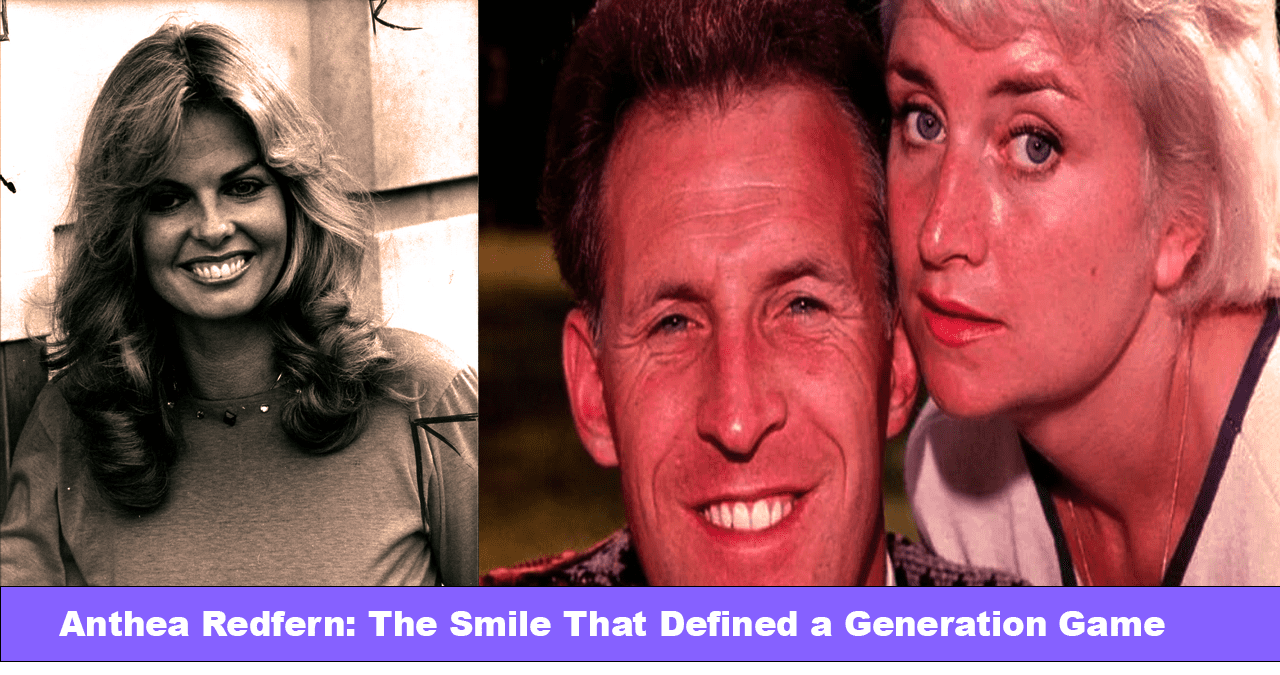

If you close your eyes and cast your mind back to the swirling patterns, bold colours, and unmistakable sound of 1970s British television, one face is sure to emerge from the haze with a warm and gentle smile. That face belongs to Anthea Redfern, a woman whose name became synonymous with Saturday night entertainment for millions. For a period in the mid-1970s, she was an inescapable part of the cultural fabric, not just as a presenter or a model, but as a central, calming presence on one of the biggest shows of the era. Her story, however, is more than just a brief flash of glamour on the small screen. It is a tale of an era when television was a shared national experience, of a unique partnership both on and off screen, and of a woman who, after her time in the relentless spotlight, chose a path of quiet privacy, cementing her status as an enigmatic and beloved figure from a golden age of broadcasting.
To understand the phenomenon of Anthea Redfern is to understand the landscape of British television in the 1970s. There were only three channels, and a hit show could command audiences of over 20 million people. In this world, The Generation Game, hosted by the irrepressible force of nature that was Bruce Forsyth, was a titan. It was a show about families, about fun, and about the charming clumsiness of ordinary people trying to complete ridiculous tasks. And right beside “Brucie,” as the world came to know him, was the “hostess,” a role that Anthea Redfern would come to define. She wasn’t just there to look beautiful, though she undoubtedly did. She was the serene counterbalance to Bruce’s manic energy, the reassuring smile for the flustered contestants, and the glamorous assistant who became a star in her own right. Her journey from model to a household name, and her subsequent retreat from public life, creates a compelling narrative that continues to fascinate those who remember the warmth she brought into their living rooms.
The Early Years of Anthea Redfern
Long before the television cameras found her, Anthea Redfern was a young woman growing up in post-war Britain. Born on May 5th, 1948, in Worthing, West Sussex, her early life was far removed from the glittering studios of the BBC. Details of her childhood and family life are scarce, as she has always maintained a dignified silence about her life before fame, a trait that would define her later years. What is clear is that she possessed a natural poise and beauty that would inevitably steer her towards a career in front of the camera. The post-war era was a time of shifting opportunities for young women, and the worlds of modelling and fashion were becoming increasingly accessible pathways to a different kind of life.
Her career began in earnest in the world of fashion modelling. During the 1960s, she built a successful and respectable portfolio, gracing magazine pages and appearing in various advertising campaigns. She had the classic, girl-next-door beauty that was highly sought after, with her warm eyes and approachable smile. It was this very combination of professionalism and relatable glamour that caught the eye of television producers. The transition from print to television was a natural one for models with the right presence, and Anthea had it in spades. Her first significant foray into TV was on the popular music show, The Basil Brush Show, where she served as the hostess, introducing the irrepressible fox puppet and his guests. This role was a perfect training ground, teaching her the rhythms of live television and how to interact with a major personality. It was here that she honed the skills that would soon make her a national treasure.
The Generation Game Phenomenon
To truly grasp the scale of Anthea Redfern’s fame, one must first comprehend the cultural behemoth that was The Generation Game. Launched in 1971 with Bruce Forsyth at the helm, the show was an instant hit. Its format was deceptively simple: two teams, usually composed of family members from different generations, would compete in a series of playful, often chaotic, challenges. These ranged from learning a dance routine to attempting to operate pottery wheels, always with hilarious consequences. The show was a masterclass in light entertainment, built on a foundation of warmth, inclusivity, and the sheer, unadulterated charisma of its host. Bruce Forsyth was the ringmaster, the comedian, and the cheerleader all rolled into one, with his catchphrases like “Nice to see you, to see you nice!” becoming part of the national lexicon.
It was into this high-energy environment that Anthea Redfern stepped in 1974, taking over the role of hostess from the previous assistant, Rosemarie Ford. Her role was multifaceted. On the surface, she was there to present the prizes, guide the contestants, and demonstrate the games with an effortless elegance. But her true contribution was far more nuanced. In the often-chaotic studio, with Bruce Forsyth ad-libbing and contestants nervously giggling, Anthea was an island of calm. Her serene smile and gentle demeanour provided a visual and emotional balance to the madness. She was the reassuring presence who made the contestants, and by extension the audience at home, feel at ease. She wasn’t competing with Bruce for attention; rather, she was complementing his performance, making the entire show feel like a cohesive and joyful family affair. This symbiotic partnership was the show’s secret weapon, and it turned Anthea Redfern into a star almost overnight.
The On-Screen Partnership and Off-Screen Romance
The chemistry between Anthea Redfern and Bruce Forsyth was palpable from the moment they appeared on screen together. Bruce, with his slicked-back hair, theatrical gestures, and cheeky-chappy persona, was the dynamic centre of the universe. Anthea, with her flowing blonde hair, stylish 70s outfits, and quiet confidence, was the graceful anchor. Viewers were captivated by their interaction. Bruce would often playfully flirt with her, and Anthea would respond with a knowing smile or a gentle roll of her eyes, a reaction that the audience adored. It was a classic double-act, the confident showman and the graceful straight woman, and it made for compelling television. This professional partnership created a unique dynamic that felt genuine and warm, a key ingredient in the show’s massive success.
What the audience didn’t know initially was that the sparks they were seeing on screen were igniting a real-life romance away from the cameras. Bruce Forsyth was, at the time, married to his second wife, former Miss World Anthea Redfern. The off-screen relationship between Bruce and Anthea began discreetly but soon became the subject of intense media speculation. The British press, always hungry for a story involving the nation’s favourite entertainers, latched onto the narrative of the on-screen duo becoming an off-screen couple. This added an extra layer of fascination for viewers of The Generation Game. Every glance, every smile, every interaction was now scrutinized through the lens of their rumoured romance. The public’s investment in the pair was no longer just about the television show; it was about a real-life love story unfolding in front of them, a dramatic subplot to the weekly entertainment. This blurring of lines between professional performance and personal life created a television moment that was uniquely of its time.
Becoming Mrs. Bruce Forsyth
The media speculation and public fascination culminated in a real-life fairy tale, or so it seemed to the outside world. In 1973, Bruce Forsyth divorced his second wife, and his relationship with Anthea Redfern was confirmed. The couple decided to tie the knot in a ceremony that was, true to the era, a major media event. They were married on July 19th, 1973, at the St. Bartholomew-the-Great church in London. The wedding was a spectacle, attracting huge crowds of well-wishers and press photographers, all eager to catch a glimpse of the television royalty. Anthea, the blushing bride, was a vision of 1970s style, and Bruce, the groom, was every bit the showman. It was a wedding that captured the public’s imagination, cementing their status as one of Britain’s most famous couples.
For a time, their life together seemed to be the perfect extension of their on-screen partnership. They were the king and queen of Saturday night television, and their marriage was seen as the happy ending to a very public courtship. They had two children together, a daughter named Charlotte and another named Louisa, creating a family unit that was often portrayed in the media as the ideal showbiz family. The public saw them as a powerful duo, dominating light entertainment and living a glamorous life. However, the reality of maintaining a marriage under the constant glare of the public eye, combined with the pressures of two high-profile careers, is a challenge for any couple. While they presented a united and happy front, the strains of fame and a significant age difference—Bruce was 21 years her senior—would eventually begin to show. For nearly a decade, however, Anthea Redfern was not just a TV star; she was half of one of the most recognizable couples in Britain.
Life in the Spotlight and Other Ventures
While The Generation Game was the platform that made her a household name, Anthea Redfern’s career during the 1970s was not limited to that single show. Her popularity and recognizability led to a variety of other opportunities across the media landscape. She became a regular face on panel shows and light entertainment programmes, a staple of the TV schedules at the time. Her warm and engaging personality made her a natural fit for shows that relied on banter and charm. She also continued her work in modelling, and her status as a style icon of the era was undeniable. With her feathered hair, maxi dresses, and sophisticated yet accessible fashion sense, Anthea Redfern embodied the glamour of the 1970s for many women across the country.
One of her most notable ventures outside of The Generation Game was her role as a co-presenter on the BBC’s Eurovision Song Contest coverage in 1974. This was a prestigious assignment, highlighting her standing as a leading female presenter at the BBC. Furthermore, she and Bruce Forsyth attempted to recreate their television magic in other formats. They co-hosted a show called Bruce and Anthea, a short-lived series that attempted to build a new programme around their proven chemistry. Despite the public’s affection for them as a duo, the show didn’t achieve the same monumental success as The Generation Game, perhaps proving that their magic was inextricably linked to that specific format and its unique energy. The following table illustrates some of her key career moments during this prolific period:
| Year | Show / Event | Role |
|---|---|---|
| 1971-1972 | The Basil Brush Show | Hostess |
| 1974-1977 | The Generation Game | Hostess |
| 1974 | Eurovision Song Contest (UK coverage) | Co-presenter |
| 1975 | Bruce and Anthea | Co-host |
Despite these varied efforts, it was her role alongside Bruce on The Generation Game that remained her defining professional achievement. As one contemporary critic noted, > “She has a quiet glamour that is both soothing and captivating; she is the calm in the centre of Brucie’s storm.” This ability to command attention without demanding it was her unique gift, and it’s why her image from that era remains so potent.
The End of an Era and a Shift Away from the Public Eye
All golden ages must come to an end, and for Anthea Redfern, the late 1970s marked a period of significant personal and professional transition. In 1977, after four years as the iconic hostess, she left The Generation Game. Her departure coincided with Bruce Forsyth’s own exit from the show, marking the end of a definitive chapter in British television history. The public was sad to see them go, and their final show together was a moment of genuine national nostalgia. Their partnership had defined the show for a generation of viewers, and their absence created a void that subsequent hosts and hostesses, despite their own talents, would find difficult to fill.
The changes in her professional life were mirrored by shifts in her personal life. Her marriage to Bruce Forsyth, which had begun as a fairy-tale media event, started to show signs of strain. The couple separated in 1977 and were officially divorced in 1979. The end of their marriage was a quiet affair, handled with a dignity that both would become known for in their later years. There was no public mudslinging or tabloid feuds; instead, they both focused on co-parenting their two young daughters. This period marked the beginning of Anthea Redfern’s conscious and deliberate retreat from the public eye. Having experienced the intense glare of fame at its brightest, she made a conscious decision to step away and prioritise a life of privacy and family. It was a choice that demonstrated a strength of character often overlooked in the world of celebrity, setting her apart from many of her contemporaries.
Where is Anthea Redfern Now?
In the decades since her divorce from Bruce Forsyth, Anthea Redfern has masterfully crafted a life away from the spotlight. She remarried in the 1980s to a businessman named John R. Smith, and with him, she embraced a life of quiet domesticity. She largely withdrew from television work, making only the rarest of public appearances, often at events related to her children or for occasional nostalgic reunions. This conscious decision to leave fame behind has only added to her enigmatic allure. In an age where every minor celebrity has a social media profile, her complete absence from the public sphere is notable and speaks to a person who valued a normal life over a famous one.
Her primary focus became raising her two daughters, Charlotte and Louisa, away from the pressures of media attention. By all accounts, she succeeded in providing them with a stable and grounded upbringing. While Bruce Forsyth remained a public figure until his passing in 2017, Anthea lived a life of deliberate privacy. Reports from those who know her suggest she is happy and content, enjoying her role as a grandmother and living a life that is a world away from the noisy studios of the BBC. She did appear, briefly and poignantly, at Bruce Forsyth’s memorial service, a reminder of the significant chapter they shared together. Today, Anthea Redfern exists in the public consciousness not as a current celebrity, but as a cherished memory—a beautiful and serene face from a beloved era of television, who chose a different path and found happiness on her own terms.
The Lasting Legacy of a 1970s Icon
The legacy of Anthea Redfern is a fascinating one to unpack. In the traditional sense, her television career was relatively brief, a bright flame that burned intensely for a few years in the mid-1970s. She did not have a decades-long filmography or a string of major presenting roles. Yet, her cultural impact is undeniable. She is frozen in time as the quintessential 1970s TV hostess, a symbol of an era when television was a collective, family-oriented experience. Her image is instantly recognizable to anyone who lived through that period, and her story continues to intrigue new generations discovering classic clips of The Generation Game online. She represents a specific archetype of female presence on television—graceful, professional, and powerfully calming.
More than that, her story is one of quiet agency. In an industry that often consumes its stars, Anthea Redfern made a conscious choice to walk away. She experienced the pinnacle of fame, lived through a very public marriage and divorce, and then chose a path of privacy and normality. This decision itself is a powerful part of her legacy. It speaks to a woman who knew her own mind and valued personal happiness over public adoration. In today’s world of curated social media personas and relentless self-promotion, her story feels almost revolutionary. She is remembered not for a dramatic downfall or a long career of scandals, but for her professionalism, her warm smile, and her dignified exit. The legacy of Anthea Redfern is not just about what she did on television, but about the graceful and purposeful life she built after the cameras stopped rolling.
The Cultural Context of the Television Hostess
To fully appreciate the role that Anthea Redfern played, it’s important to place it within the broader cultural context of the time. The role of the “hostess” or “assistant” on game shows and light entertainment programmes was a standard feature of 1970s television. These women were often models or dancers, hired for their beauty and poise to complement the male host. They would present the prizes, often on a turntable, with a dazzling smile, and occasionally demonstrate the games. On the surface, the role could be seen as decorative, a reflection of the less progressive gender dynamics of the era. However, the most successful hostesses, like Anthea Redfern, transcended this limited definition.
What set Anthea apart was her ability to inject genuine personality and warmth into the role. She wasn’t just a silent, smiling mannequin. Her interactions with Bruce and the contestants felt authentic and kind. She became a friend to the audience, a relatable figure of glamour who never seemed distant or unapproachable. This allowed her to connect with viewers, particularly women, in a profound way. She navigated the constraints of the role with such grace and intelligence that she effectively redefined it, making the hostess an integral and emotionally central part of the show’s success. Her success in this role paved the way for other women in television to be seen not just as accessories, but as essential components of the entertainment itself, capable of building a deep and lasting rapport with the public.
Conclusion
The story of Anthea Redfern is a captivating slice of British social and television history. It is a narrative that spans the dizzying heights of prime-time fame and the quiet satisfaction of a private life well-lived. She was, for a brief and brilliant moment, the smiling face at the heart of the nation’s favourite Saturday night pastime, a calming and glamorous presence who perfectly complemented one of entertainment’s greatest showmen. Her on-screen partnership with Bruce Forsyth was lightning in a bottle, a chemistry so potent it sparked a real-life romance that captivated the public. Yet, her enduring appeal lies not just in what she achieved in the spotlight, but in what she chose to do when she left it. By turning her back on fame and embracing a life of quiet anonymity, Anthea Redfern demonstrated a profound strength and self-awareness. She remains an icon not for a long career, but for a perfect moment in time—a reminder of the warmth of shared television experiences and the power of a graceful exit. Her legacy is that of a genuine and beloved enigma, the woman with the unforgettable smile who chose to share it with the world on her own terms, and then, just as gracefully, turned it toward a happier, quieter life.
Pauline Prescott: The Unwavering Strength Behind the Political Figure
Frequently Asked Questions About Anthea Redfern
What is Anthea Redfern best known for?
Anthea Redfern is best known for her role as the hostess on the BBC’s hugely popular Saturday night show, The Generation Game, from 1974 to 1977. She was the calm and glamorous assistant to host Bruce Forsyth, and her warm on-screen chemistry with him made her a household name. Her presence became synonymous with the show during its peak years in the mid-1970s.
How did Anthea Redfern and Bruce Forsyth meet?
Anthea Redfern and Bruce Forsyth met professionally on the set of The Generation Game. She joined the show as the new hostess in 1974, and their professional partnership quickly blossomed into a romantic relationship. Their chemistry was evident to viewers, and their off-screen romance became a major topic of interest in the British press before they eventually married in 1973.
How long were Anthea Redfern and Bruce Forsyth married?
Anthea Redfern and Bruce Forsyth were married for six years. They tied the knot in a highly publicized ceremony on July 19th, 1973, and their divorce was finalized in 1979. During their marriage, they had two daughters together, Charlotte and Louisa, and were considered one of the most famous couples in British show business.
Why did Anthea Redfern disappear from the public eye?
Anthea Redfern made a conscious decision to step away from public life following her divorce from Bruce Forsyth and her departure from The Generation Game. She prioritized raising her two daughters and sought a life of privacy and normality. She remarried a businessman and has consistently declined to engage with the media, valuing her family and personal peace over the trappings of fame.
What was Anthea Redfern’s career before The Generation Game?
Before finding fame on The Generation Game, Anthea Redfern had a successful career as a fashion model. She also worked in television, most notably as the hostess on The Basil Brush Show, where she introduced the puppet fox and his musical guests. This experience provided her with the skills and screen presence that would later make her so effective on The Generation Game.